







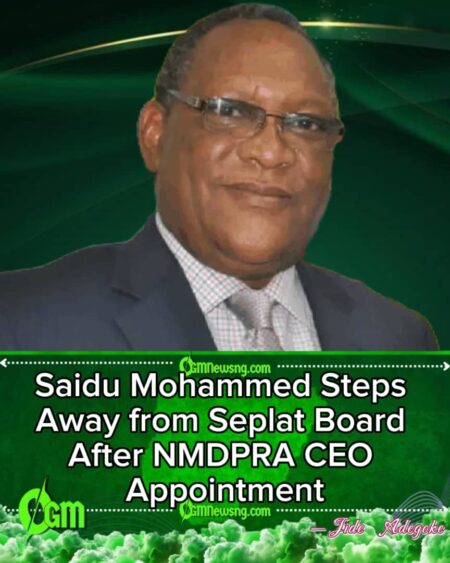
Saidu Mohammed has withdrawn from the board of Seplat Energy Plc after his recent appointment as the chief executive officer (CEO) of the Nigerian Midstream and Downstream Petroleum Regulatory Authority (NMDPRA). The decision comes barely days after Seplat announced his appointment as an independent non-executive director, highlighting concerns over regulatory ethics and potential conflicts of interest within Nigeria’s oil and gas sector.
Seplat Board Appointment and Sudden Withdrawal
Seplat Energy had on December 17 announced Mohammed’s appointment as an independent non-executive director, with the role scheduled to take effect from January 1. The appointment was seen as a strategic move, given Mohammed’s extensive experience in the energy sector and regulatory environment.
However, developments later that same day altered the trajectory of the appointment. President Bola Ahmed Tinubu nominated Mohammed as the CEO of the NMDPRA, Nigeria’s key regulatory body overseeing midstream and downstream petroleum operations. The nomination followed the resignation of the former chief executive, Farouk Ahmed.
In a statement issued on Monday by Edith Onwuchekwa, Seplat’s company secretary, the company confirmed that Mohammed had formally withdrawn his acceptance of the board role. According to the statement, Mohammed cited a “conflict of interest” arising from his new regulatory appointment as the reason for his decision.
Regulatory Appointment and Leadership Transition at NMDPRA
Mohammed’s appointment as CEO of the NMDPRA
marks a significant
leadership transition at the authority. He replaces Farouk Ahmed, who stepped down amid allegations of economic sabotage and corruption. While the allegations are yet to be fully resolved, the resignation created a vacancy at a critical time for Nigeria’s petroleum industry.
As CEO of the NMDPRA, Mohammed is expected to play a central role in implementing regulatory reforms, ensuring compliance, and stabilising the midstream and downstream segments of the oil and gas sector. His position places him at the heart of policy enforcement and oversight, making any concurrent board role in a regulated company inappropriate.
The swift withdrawal from Seplat’s board is therefore seen as an effort to preserve regulatory independence and public confidence in the authority’s leadership.
Implications for Corporate Governance and Industry Ethics
The episode underscores the growing emphasis on corporate governance and ethical standards within Nigeria’s energy sector. By stepping aside from the Seplat board, Mohammed has aligned with best practices that discourage regulators from holding positions that could compromise impartial decision-making.
For Seplat Energy, the development means the company will need to review its board composition ahead of the new year. Nevertheless, the company’s prompt disclosure of the withdrawal reflects transparency and adherence to governance principles expected of publicly listed firms.
More broadly, the situation highlights the delicate balance between industry expertise and regulatory responsibility, especially in a sector as strategically important as oil and gas.
Table of Contents
Discover more from OGM News NG
Subscribe to get the latest posts sent to your email.