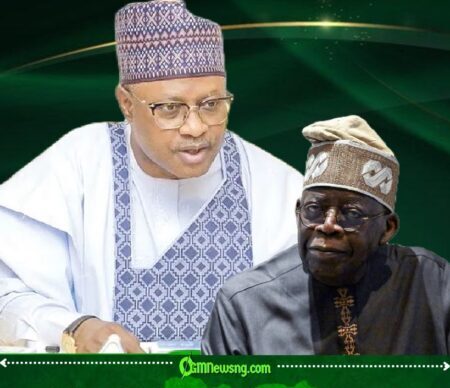





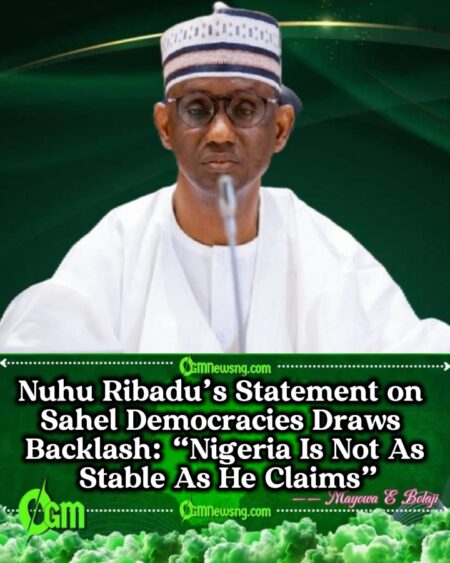
Nuhu Ribadu has asserted that Nigeria remains the only functioning democracy in the entire Sahel region, warning that the country’s political stability must be guarded with renewed vigilance. Speaking during a high-level security engagement in Abuja, the National Security Adviser stressed that military takeovers across the region have left Nigeria isolated as the last surviving constitutional democracy in a belt troubled by coups, terrorism, and institutional collapse.
Nuhu Ribadu emphasized that the fragile state of governance across the Sahel should heighten Nigeria’s sense of responsibility in defending its democratic structures. He explained that while several neighbouring countries have fallen to military rule, Nigeria has endured threats, transitions, and tensions yet continues to maintain elections, civil authority, and democratic institutions—even under intense pressure from violent extremists and transnational criminal networks.
Nuhu Ribadu cautioned that Nigeria’s exceptional standing comes with substantial risks, insisting that enemies of democracy may increasingly target the country as a symbol of what the Sahel has lost. He urged citizens, institutions, and political leaders to unite above partisan lines to ensure that the nation does not succumb to the instability spreading across the region.
Nuhu Ribadu Links Democratic Survival to Security Reforms and Regional Vigilance
Nuhu Ribadu stated that Nigeria’s continued democratic survival is inseparable from its security architecture and ongoing reforms aimed at weakening insurgency and armed banditry. According to him, groups destabilising the Sahel region are actively evolving and adapting, making cooperation between military, intelligence, and law-enforcement institutions more essential than ever. He noted that Nigeria’s posture as the region’s democratic anchor makes it an inevitable target for violent networks that thrive in lawless zones.
Nuhu Ribadu further highlighted that Nigeria cannot view the political crises in Mali, Niger, Burkina Faso, Guinea, and Chad as distant events. He argued that each fallen democracy in the Sahel creates more space for arms trafficking, jihadist expansion, and criminal sanctuaries that eventually spill into Nigeria’s borders. He called for intensified border security, better intelligence sharing, and a more structured regional security partnership—especially with states currently undergoing political transitions.
Nuhu Ribadu warned that Nigeria must not underestimate the sophistication of actors seeking to destabilize democratic societies across Africa. He urged security forces to adopt modern surveillance systems, deepen counterterrorism strategies, and strengthen early-warning mechanisms capable of detecting threats before they escalate. Democracy, he said, cannot survive without safety, public trust, and secure national borders.
Nuhu Ribadu Calls for Collective Responsibility to Protect Nigeria’s Democracy
Nuhu Ribadu appealed to citizens, civil society groups, political parties, and the private sector to view Nigeria’s democracy as a shared inheritance that must be preserved. He stated that the responsibility to safeguard democratic institutions cannot rest solely on government agencies but must be embraced by all Nigerians. He maintained that misinformation, political extremism, and weakening civic values are internal threats that can erode democracy from within if not properly addressed.
Nuhu Ribadu stressed that national unity is critical, especially at a time when regional uncertainty is rising. He urged Nigerians to resist narratives that undermine state institutions or glorify military intervention, noting that many countries in the Sahel now regret transitions that dissolved democratic structures and replaced them with authoritarian rule. According to him, Nigeria must learn from these examples and protect its institutions before crises emerge.
Nuhu Ribadu concluded that Nigeria stands at a decisive moment in its history. He argued that if the country successfully strengthens its democracy while the Sahel grapples with instability, it will emerge as the undisputed political and economic leader of West Africa. But if internal division or insecurity is allowed to fester, Nigeria risks falling into the same destructive cycle consuming its neighbours. Democracy, he said, “must be defended deliberately, consistently, and collectively.”
Table of Contents
Discover more from OGM News NG
Subscribe to get the latest posts sent to your email.