







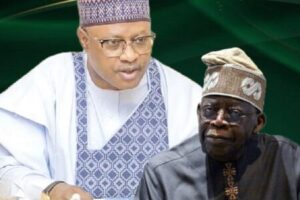


The Senate has confirmed the nomination of former Chief of Defence Staff (CDS), General Christopher Musa, as Nigeria’s new Minister of Defence, following an extensive five-hour screening session on Wednesday. His confirmation comes at a time of heightened national anxiety, with mass abductions—particularly in schools—growing increasingly frequent. President Bola Tinubu, who nominated the retired general on Tuesday, requested the Senate’s swift approval to fill the vacancy created by the resignation of Mohammed Badaru due to ill health.
Security Under Scrutiny as General Musa Assumes Office
General Musa’s screening unfolded against the backdrop of recent kidnappings that have shocked the nation, including the abduction of 25 students from the Government Comprehensive Girls Secondary School in Maga, Kebbi State. Reports indicated that troops may have left their duty posts just before the attackers struck—an allegation the minister-designate pledged to investigate immediately.
Speaking at the Senate chamber, General Musa firmly rejected suggestions of military indifference:
“We are going to investigate fully. The Armed Forces are not known for cowardice,” he said. “We will go after them fully, working with all security agencies and relevant government institutions.”
General Musa, dressed in a kaftan and hula cap and accompanied by family members, assured lawmakers of his commitment to restoring public confidence in the military’s operational capability and oversight.
Ransom Payments and Technology-Based Security Reforms
The former CDS stated unequivocally that Nigeria must end the practice of paying ransom to kidnappers—an activity he described as financially empowering criminal groups. According to the National Bureau of Statistics (NBS), Nigerians paid an estimated N2.23 trillion in ransom between May 2023 and April 2024, highlighting the scale of the crisis.
General Musa emphasised the importance of technology-driven reforms, particularly the development of a unified national database.
“If every Nigerian has a single number linked to their digital records, tracking ransom payments and monitoring criminal networks becomes more feasible,” he argued.
Senate President Godswill Akpabio welcomed General Musa’s stance, reiterating the Senate’s opposition to negotiating with terrorists. He urged the minister-designate to overhaul non-kinetic strategies that have yielded limited results and to push for quicker trials of criminal suspects.
“It has never worked,” Akpabio said. “Deradicalising terrorists demoralises society. Many communities do not accept them back, and they often return to crime.”
Community Resilience and the Path Forward
Addressing senators’ concerns about recurring school attacks, General Musa called for a “holistic” approach to the Safe Schools Initiative, which he said requires urgent review. He described community empowerment as central to effective crime prevention.
“Crime is localised,” he said. “If we build the capacity of local communities, they become the first responders. Strengthening community resilience is essential.”
He reiterated his resolve to investigate the controversial withdrawal of troops in Kebbi State and promised broad reforms aimed at preventing similar lapses across the country.
With his confirmation now complete, General Musa is expected to begin work immediately, inheriting one of the most challenging portfolios in the Tinubu administration. The Senate, through Akpabio, pledged full support for the minister as the country continues to battle complex security threats.
Table of Contents
Discover more from OGM News NG
Subscribe to get the latest posts sent to your email.