





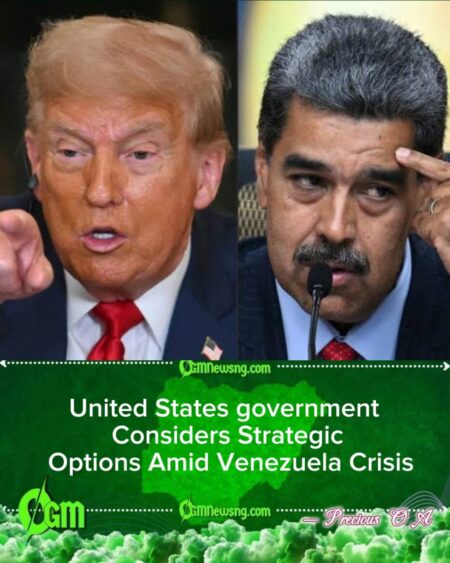
Trump United States government is facing heightened scrutiny following emerging reports that internal discussions may include strategies directed at removing the Venezuelan government from power. These deliberations, which are understood to be at an early conceptual stage, have quickly attracted attention not only within diplomatic and national security circles but also among international analysts and media organizations. The fact that these discussions are taking place has already generated a complex mixture of concern, speculation, and cautious anticipation. Analysts observing these developments suggest that the tone and content of these conversations indicate an increased willingness within certain sectors of the administration to consider options that previous U.S. governments might have avoided or deemed too politically risky.
Officials familiar with the matter suggest that although no formal plan has been authorized or publicly disclosed, policymakers have expressed growing concern regarding Venezuela’s political trajectory, its continued centralization of power, and its deepening alliances with nations considered adversarial to U.S. interests. These concerns appear to be influencing a more assertive and proactive approach within senior national security circles, who argue that early conceptual planning is a prudent step to ensure the United States remains prepared for any eventuality. Observers note that the broader geopolitical implications extend far beyond Venezuela itself, feeding into long-standing debates over the extent and limits of U.S. influence in the Western Hemisphere, as well as the potential ramifications for global strategic partnerships.
Sources privately acknowledge that these discussions remain fluid, contested, and subject to intense internal debate among senior administration officials. While public statements from the White House and related agencies have carefully avoided confirming any intervention-related intentions, the intensity and specificity of these internal conversations indicate a perception among policymakers that the Venezuelan situation is at a particularly critical juncture. The rising focus on Venezuela highlights a renewed sense of urgency in Washington’s approach to Latin American political developments, reflecting broader priorities in foreign policy planning and regional stability considerations.
Regional Leaders Express Concern
Diplomats in Latin America have expressed significant alarm over the emerging United States discussions, emphasizing that any external attempt to influence political outcomes in Venezuela could exacerbate already fragile regional security conditions. Many leaders have stressed the importance of dialogue, multilateral engagement, and non-interventionist approaches as mechanisms for stabilizing the hemisphere. Public statements from several countries convey a measured caution, reflecting their collective desire to avoid a resurgence of tensions that could destabilize trade, migration, and diplomatic relationships across the continent.
United States government discussions have also triggered concerns that mere speculation about possible actions can provoke intensified nationalist rhetoric within Venezuela itself. Regional diplomats warn that external pressure, whether real or perceived, can empower hardline factions within the Venezuelan government, allowing them to frame internal political disputes as battles against foreign interference. Neighboring nations, already managing large numbers of Venezuelan migrants and internally displaced persons, fear that renewed instability could trigger additional waves of migration, straining public services, healthcare systems, and border management infrastructure.
Analysts say that U.S. intentions remain highly uncertain and subject to interpretation, making regional organizations increasingly vocal in their calls for clarification. These institutions argue that misreading Washington’s position could result in miscalculations that further destabilize the broader region. Their public and private advocacy for restraint underscores a collective effort to maintain equilibrium, highlighting the delicate balancing act required to navigate this highly sensitive political environment.
International Reactions and Strategic Interests
Global observers note that the United States’ internal considerations regarding Venezuela have drawn strong reactions from multiple international actors, including governments with significant economic, political, and strategic stakes in the country. Countries heavily invested in Venezuela’s energy sector have cautioned that any destabilizing action could threaten critical resource flows, disrupt global supply chains, and amplify market volatility. Their concerns underscore the interconnected nature of global energy markets and the potential for far-reaching consequences that extend beyond the immediate region.
United States government signals of a potentially more assertive approach have encouraged rival nations to articulate their own positions, with several foreign ministries emphasizing sovereignty, adherence to international law, and opposition to interventionist strategies. Analysts suggest these reactions are symptomatic of larger geopolitical rivalries that span multiple continents, reflecting not only economic competition but also contestation over political influence and soft power in Latin America.
International organizations have publicly called for de-escalation and have promoted renewed diplomatic negotiations as a preferred alternative to any potential forceful measures. Their advocacy highlights the importance of upholding norms of sovereignty while balancing the global strategic interests of multiple actors. Observers note that even the perception of U.S. intervention can influence negotiations, alliances, and the behavior of both state and non-state actors in ways that complicate efforts to stabilize Venezuela.
Humanitarian and Economic Dimensions
Aid groups monitoring the crisis emphasize that any destabilizing action could further worsen Venezuela’s already severe humanitarian situation, which includes limited access to healthcare, food insecurity, and deteriorating infrastructure. Many argue that providing increased humanitarian support, strengthening local institutions, and encouraging inclusive governance reforms offer the most effective pathways to alleviate civilian suffering. These groups highlight the potential unintended consequences of externally imposed political change, which may undermine ongoing relief and recovery efforts.
United States government analyses of Venezuela’s economy similarly reflect concerns about the potential for major market disruptions. Economists warn that political upheaval could destabilize energy production, investment flows, and international trade relationships, producing cascading effects across multiple regions. Global markets are especially sensitive to disruptions in Venezuela due to its petroleum exports, and uncertainty surrounding governance could heighten volatility in both financial and commodity markets.
Experts contend that the most sustainable path toward economic recovery involves predictable governance, strengthened democratic institutions, and gradual structural reform. They caution that externally triggered instability risks undermining these efforts, potentially prolonging economic decline and exacerbating poverty, inflation, and unemployment, further complicating regional and global economic stability.
Domestic Political Debate in the United States
Lawmakers note that United States deliberations regarding Venezuela are fueling broader political debates within Washington. Some lawmakers advocate for an assertive stance, arguing that failing to act could embolden authoritarian regimes and undermine democratic norms across the region. Others contend that history demonstrates the risks of foreign interventions and caution against engagement that could produce unintended, long-term consequences. This ideological divide reflects enduring disagreements over America’s role in global governance.
United States government critics insist that any aggressive strategy must meet strict standards of transparency, legal authority, and public accountability. They argue that poorly defined measures could erode domestic trust and complicate international relations, making careful deliberation essential. These debates have intensified calls for the administration to clarify its stance and provide a coherent strategy.
Supporters of stronger action contend that failure to respond risks eroding democratic principles, diminishing United States credibility, and emboldening adversarial regimes. They emphasize the importance of leadership and decisiveness in foreign policy, though acknowledging that deeper involvement carries substantial risk. Public opinion remains divided, with surveys indicating that Americans are cautious about new international commitments that could escalate into prolonged entanglements.
Shifting Dynamics Inside Venezuela
Venezuelan officials have condemned the reports, accusing Washington of attempting to manipulate domestic political outcomes and asserting that any external pressure would be met with firm resistance. Their statements reflect rising defensiveness and an effort to strengthen domestic legitimacy amid reports of potential U.S. involvement.
United States government attention has also influenced the internal dynamics of Venezuela’s opposition, complicating efforts to consolidate unified strategies for reform. While some factions welcome international pressure as a potential catalyst for change, others caution that overt involvement could delegitimize local movements and undermine grassroots credibility. These tensions underscore the precarious nature of Venezuela’s political environment.
Observers warn that even speculative discussions of United States involvement create uncertainty, affecting public perception, political narratives, and potential negotiation dynamics within the country. The perception of external interference may reshape decision-making among Venezuelan actors, further complicating efforts to achieve stability and peaceful political transitions.
Table of Contents
Discover more from OGM News NG
Subscribe to get the latest posts sent to your email.