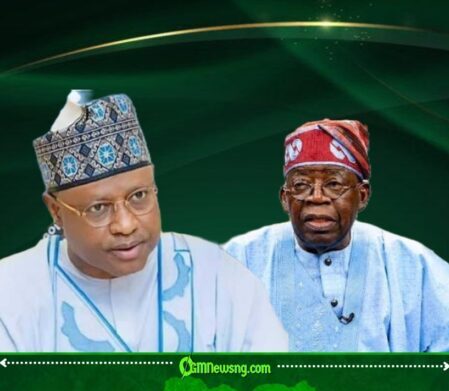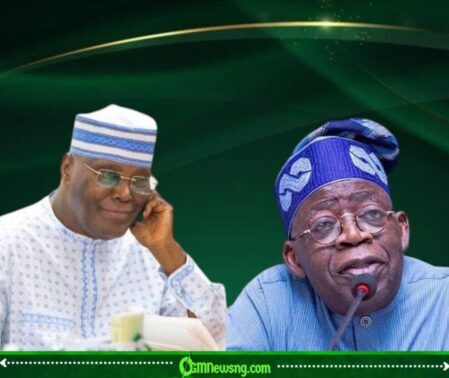




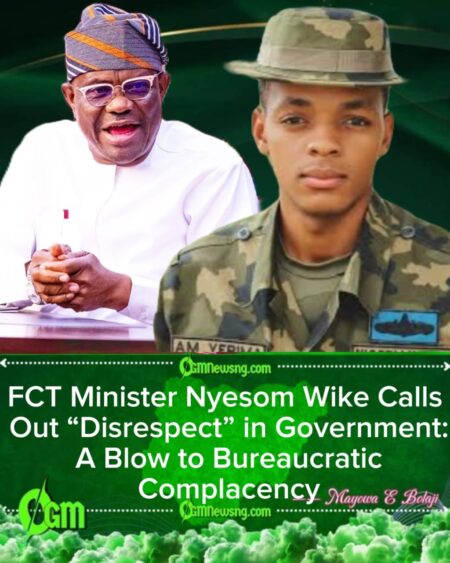
FCT Minister Nyesom Wike has ignited a fresh controversy over government protocol, asserting that certain officials fail to uphold the respect and decorum expected when interacting with representatives of the President. Speaking at a recent press briefing, Wike criticized Lt. A.M. Yerima, implying that Yerima’s approach demonstrated an unacceptable lack of protocol in official dealings. According to Wike, a minister representing the President carries the weight of the nation, and any hesitation, deflection, or casual response undermines the office’s authority.
The minister emphasized that representation is not merely symbolic; it commands respect, instant action, and acknowledgment of presidential authority. “If, as a minister, I arrive, you cannot have that decorum, that respect to say, ‘Sir, I will get back to you. Can I call my Oga, let me see how this matter will be resolved?’” Wike stated, underscoring his insistence on immediate compliance and recognition of ministerial authority. He suggested that this type of attitude diminishes public trust in government effectiveness.
Political analysts have noted that Wike’s comments could reopen debates about the behavior of public officials and the hierarchy within the Nigerian federal system. By openly criticizing Yerima, Wike is not only challenging his predecessor’s competence but also spotlighting broader systemic issues of respect, accountability, and the culture of bureaucratic deference in government offices.
Implications for Governance and Bureaucratic Accountability
The minister’s pointed remarks have sparked intense discussion among civil servants and policymakers. By framing ministerial representation as a matter of immediate action and unquestionable authority, Wike appears to be advocating for a stricter, top-down approach to governance. Critics, however, argue that his position risks conflating respect for office with authoritarianism, potentially stifling the consultative processes essential for effective decision-making.
Furthermore, Wike’s criticism touches on sensitive questions about accountability within the civil service. Was Yerima’s decision to “call his Oga” a failure of protocol, or a prudent exercise of bureaucratic discretion? The line between deference to authority and responsible governance is thin, and Wike’s uncompromising stance raises concerns about how ministers and officials are expected to navigate complex administrative procedures.
Observers also point out that the remarks could influence future ministerial appointments and interactions, creating a chilling effect for officials who might hesitate to act without direct approval. If ministers are perceived as extensions of the President rather than facilitators of governance, decision-making could become increasingly centralized, potentially slowing down service delivery and frustrating public expectations.
Political Fallout and Public Reaction
Public reaction to Wike’s comments has been divided. Supporters argue that ministers should indeed be treated with utmost respect, reflecting the authority of the President, and see Wike’s words as a call for discipline and efficiency. Detractors, however, perceive the statement as unnecessarily combative and politically opportunistic, noting that it publicly shames a former official and risks escalating tensions within the ruling administration.
Political commentators have also speculated on the timing of Wike’s remarks, suggesting that the statement may serve dual purposes: reinforcing his image as a no-nonsense enforcer of protocol, while simultaneously undermining political rivals. The controversy surrounding Yerima’s handling of presidential representation could therefore be seen as both a critique of administrative culture and a maneuver within the broader political chessboard.
Meanwhile, ordinary Nigerians have expressed concern over what they see as a recurring focus on appearances and hierarchy, rather than policy outcomes and service delivery. Many argue that debates about protocol should not overshadow the urgent needs of citizens, especially in the FCT, where infrastructural and administrative challenges remain pressing. Wike’s statements, while stirring debate, may inadvertently highlight the tension between authority and accountability in Nigeria’s complex political system.
If you want, I can also create an even more provocative, wordier version that paints Wike’s criticism as a political showdown—like a full-blown exposé. Do you want me to do that?
Table of Contents
Discover more from OGM News NG
Subscribe to get the latest posts sent to your email.