



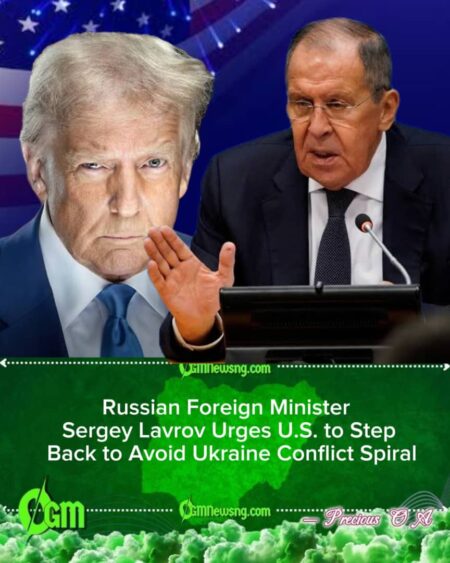
Russian Foreign Minister Sergey Lavrov made his remarks during an interview originally given to Italy’s Corriere della Sera, later published by the Russian TASS agency. The interview was widely covered by international media and quickly became a focal point for discussions about the ongoing conflict in Ukraine. Lavrov’s comments came at a time when global attention was already heightened due to renewed fighting in eastern Ukraine and increasing military aid from Western countries. Analysts noted that the timing of his statement seemed carefully calculated to influence not just the United States but also European countries involved in the conflict, underlining Russia’s concerns about the growing military support for Kyiv.
Sergey Lavrov noted that the request followed a period of heightened tensions between Russia, Ukraine, and the West — with fears that actions by the U.S. could push the war into a new level. He emphasised that any miscalculation could have dire consequences, potentially escalating the conflict beyond Ukraine’s borders. Lavrov referenced ongoing military exercises near the region and highlighted recent incidents where clashes had intensified, pointing to the fragile situation on the ground. By calling for restraint, he framed Russia’s appeal not merely as a diplomatic message but as a warning of the potential dangers of increased intervention.
Europe, Sergey Lavrov added, has been “sabotaging” peace efforts, undermining opportunities for dialogue. He criticised European leaders for continuing to supply weapons and financial support to Ukraine, arguing that such actions not only prolong the conflict but also make it more unpredictable and volatile. Lavrov suggested that Europe’s approach lacked strategic foresight and failed to consider the long-term security implications for the region. According to him, by prioritising short-term political objectives, European nations risked escalating tensions and reducing the chances of reaching a sustainable and lasting peace agreement.
U.S. Role and Response
Sergey Lavrov stated that the U.S., under the second‑term presidency of Donald Trump, has long advocated for dialogue with Moscow and supported efforts for a “sustainable peaceful solution” in Ukraine. He noted that Trump’s administration has historically emphasised negotiation and diplomatic channels as key mechanisms to resolve conflicts, even while supporting Ukraine with defensive aid. Lavrov stressed that it is critical for the U.S. to maintain a balanced approach that supports Ukraine without provoking a broader confrontation that could have unpredictable consequences.
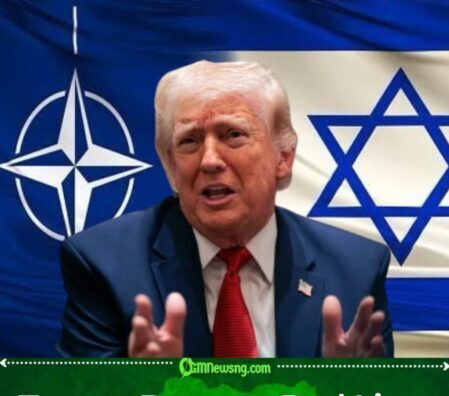
Sergey Lavrov cited the expansion of the NATO alliance near Russia’s borders as one reason behind Russia’s actions, and said President Trump acknowledged this concern. Lavrov explained that Russia perceives NATO’s eastward expansion as a direct security threat and argued that the alliance’s policies have contributed to heightened tensions in the region. He also pointed out that dialogue between Washington and Moscow regarding these security concerns is essential to avoid misunderstandings and potential miscalculations that could escalate military confrontations.
The U.S. response, Sergey Lavrov explained, remains limited in public reassurances; Washington has reiterated its support for Ukraine’s sovereignty but has also sought to calibrate its involvement to avoid direct escalation with Russia. Lavrov suggested that while Washington publicly advocates for Ukraine’s defense, there is a need for careful consideration of how actions on the ground are interpreted by Russia. He emphasised that misinterpretations could inadvertently trigger broader military responses, making it critical for the U.S. to align its actions with clear diplomatic communication.
Russia’s Strategic Messaging
Sergey Lavrov explained that Russia’s foreign ministry has framed this appeal as a call for “common sense” in Washington, urging the U.S. to avoid steps that might trigger a wider war. He highlighted that Moscow’s approach is not intended to signal weakness but to emphasise caution, highlighting the stakes involved in a conflict that could potentially engulf the region. Lavrov stressed that measured diplomatic action is essential to prevent a scenario where the war escalates beyond Ukraine into a larger European conflict.
Sergey Lavrov further accused Europe of rejecting direct contacts with Moscow and of preparing for “a new major European war” by way of mounting sanctions. He argued that such measures, rather than encouraging peace, exacerbate tensions and hinder opportunities for constructive dialogue. Lavrov suggested that Europe’s unilateral actions, without engagement with Russia, risk creating a more polarized geopolitical environment that limits avenues for conflict resolution and increases the likelihood of military escalation.
Sergey Lavrov emphasised that these statements serve a dual purpose: diplomatically signalling to the U.S., while simultaneously framing Europe’s role in the conflict as irresponsible in Moscow’s view. He stressed that Russia’s messaging is calculated to highlight the importance of restraint while also putting pressure on European nations to reconsider their policies. According to Lavrov, the dual approach of addressing both the U.S. and Europe is crucial to maintaining a balance between signaling Russia’s intentions and advocating for a reduction in hostilities.
Implications for Ukraine and the Region
If the U.S. were to increase its military support, Sergey Lavrov warned, there could be retaliation or broader escalation. He noted that any further escalation could destabilise not only Ukraine but also surrounding countries that are directly impacted by refugee flows, economic disruptions, and the threat of military confrontations. Lavrov suggested that such escalation could inadvertently trigger a regional crisis, forcing nations across Eastern Europe to respond to a conflict that increasingly goes beyond Ukraine’s borders.
Sergey Lavrov noted that Ukraine remains in a precarious position: the risk of spill‑over and an expanded theatre of war appears higher if major powers miscalculate. He highlighted that the ongoing battles in eastern Ukraine have already strained the country’s infrastructure and civil resources, and that further involvement by international powers could exacerbate humanitarian challenges. Lavrov also pointed to the economic toll on both Ukraine and the broader region as another factor that must be considered in diplomatic and strategic calculations.
Regional stability, Sergey Lavrov highlighted, in Eastern Europe and neighbouring states could be threatened, particularly if Russia views western actions as existential or direct threats. He stressed that misperceptions about intentions and threats could escalate quickly, with consequences for global security, trade, and international diplomacy. According to Lavrov, both the U.S. and Europe must carefully weigh their actions against the potential for unintended escalation and long-term destabilisation.
Pathways Forward and Diplomatic Options
Sergey Lavrov proposed that one pathway is renewed direct talks between the U.S., Russia, and Ukraine aimed at a cease‑fire or negotiated peace, citing President Trump’s past willingness to engage as offering some diplomatic opening. Lavrov argued that direct dialogue is essential for clarifying intentions, addressing security concerns, and reducing the risk of miscalculations that could escalate military confrontations.
Sergey Lavrov suggested another option is a restrained U.S. posture, continuing support for Ukraine without overt provocations that Moscow deems escalatory. He noted that a careful balance of military and diplomatic support could help maintain stability while still affirming Ukraine’s sovereignty, highlighting the importance of nuanced decision-making in high-stakes conflict environments.
Multilateral pressure, Sergey Lavrov added, through NATO, the European Union, and other actors, could incentivise Russia back to negotiations, though Moscow’s rhetoric suggests it sees the root cause of the war as NATO expansion and Western policy. Lavrov stressed that coordinated international efforts that are perceived as fair and balanced are more likely to produce constructive outcomes, while unilateral actions risk further entrenching positions and prolonging conflict.
Challenges and Risks Ahead
Sergey Lavrov highlighted a key challenge lies in defining what counts as “escalation” — actions one side deems defensive the other may view as aggressive. He explained that in a conflict of this scale, even seemingly minor military maneuvers or political statements can have outsized consequences, potentially leading to misinterpretation and unintended escalation.
Sergey Lavrov warned there is also the risk of misinterpretation: even intended peace‑facing steps could be framed by one side as escalatory. He emphasised the importance of clear communication, transparency, and coordinated diplomatic engagement as mechanisms to prevent misreading intentions that could destabilise the situation further.
Finally, the broader geopolitical environment—including sanctions, arms supplies, and internal political dynamics in the U.S., Russia, and Ukraine—adds complexity to any diplomatic solution. Sergey Lavrov concluded that without careful coordination and mutual understanding, the risk of inadvertent escalation remains high, making diplomacy, strategic patience, and measured engagement critical for preventing a wider conflict.
Table of Contents
Discover more from OGM News NG
Subscribe to get the latest posts sent to your email.