







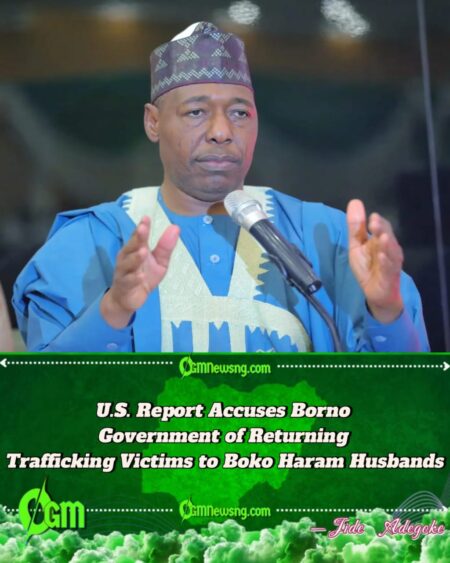
Borno government trafficking return victims have been cited in a new U.S. report, which alleges that state authorities returned women and girls who had survived human trafficking back to their Boko Haram husbands and to known traffickers. The report, compiled by the U.S. Department of State, expressed concern that such actions undermined Nigeria’s anti-trafficking commitments and put survivors at renewed risk of abuse.
Borno government trafficking return victims were reportedly transferred without adequate rehabilitation or protection measures, further exposing them to cycles of exploitation. Human rights advocates have raised alarm that the decision reflects systemic failures in safeguarding vulnerable populations, especially in conflict-affected regions like Borno State.
Borno Government Trafficking Return Victims Undermine Anti-Trafficking Efforts
According to the U.S. findings, represent a disturbing pattern of collaboration between some local authorities and armed groups. By returning survivors to their Boko Haram husbands or traffickers, the authorities not only disregarded Nigeria’s legal frameworks against trafficking but also weakened international efforts to combat terrorism-linked exploitation.
Borno government trafficking return victims illustrate the blurred lines between counterterrorism policies and human rights obligations. Experts note that while reintegration policies are often framed as part of peacebuilding, failing to prioritize victims’ rights risks normalizing gender-based violence and reinforcing impunity for traffickers.
Borno Government Trafficking Return Victims Spark Calls For Accountability
Borno State government trafficking return victims have triggered renewed calls for accountability and oversight from both international observers and Nigerian civil society organizations. The report urged the federal government to investigate these practices and strengthen protection systems for victims of trafficking in conflict zones.
If not adequately addressed, could erode trust in state institutions and hinder rehabilitation efforts in a region already devastated by insurgency. Advocates stress the urgent need for survivor-centered policies, long-term rehabilitation programs, and stricter monitoring of state responses to human trafficking.
Table of Contents
Discover more from OGM News NG
Subscribe to get the latest posts sent to your email.