



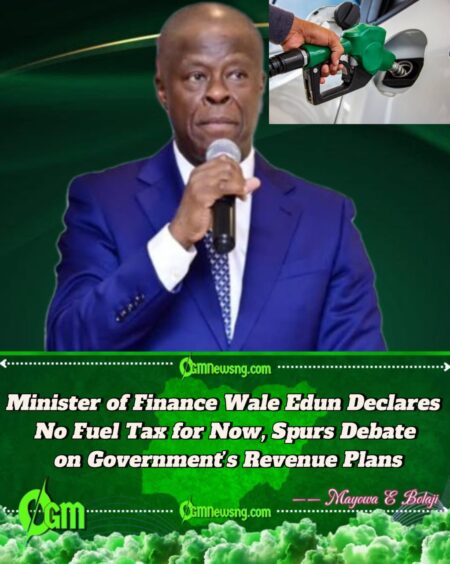
Wale Edun, Nigeria’s Minister of Finance, has stated that the federal government has no immediate intention to enforce a 5% fuel tax, despite widespread speculation. He explained that while the measure has been discussed as part of broader revenue strategies, the administration is cautious not to overburden Nigerians who are already grappling with inflation and high living costs.
Wale Edun emphasized that any potential fuel tax policy would undergo comprehensive stakeholder consultations before implementation. According to him, government priorities remain anchored on stabilizing the economy, controlling inflation, and stimulating growth rather than rushing into new levies that could worsen the burden on citizens.
Economic Rationale Behind the Policy Debate
Wale Edun argued that the fuel tax conversation arose from fiscal reform discussions within the government and international advisory circles. He admitted that taxation is one of the most reliable ways to boost government revenue, but insisted that timing is critical. He maintained that an abrupt imposition of a 5% tax on petroleum products would have a ripple effect on transport costs, food prices, and industrial production.
Wale Edun further clarified that the administration is exploring alternative revenue channels, including digitizing tax systems, curbing leakages in customs operations, and expanding non-oil revenue collection. He stressed that the government would rather strengthen fiscal discipline than impose policies that could trigger public outrage.
Public Concerns and Reactions
Wale Edun acknowledged that Nigerians are increasingly skeptical of new government taxes, especially after the removal of fuel subsidy which already pushed pump prices to record highs. He admitted that public perception plays a huge role in policy acceptance, noting that ordinary citizens fear the proposed tax would be another form of indirect subsidy removal.
Wale Edun pointed out that the government is aware of civil society groups, labour unions, and opposition figures warning against any new levies. He confirmed that President Bola Tinubu’s administration is committed to avoiding actions that could spark mass protests similar to the nationwide strikes witnessed in the past.
Balancing Fiscal Discipline and Social Welfare
Wale Edun stated that the government faces a delicate balancing act between raising revenue and maintaining social stability. He observed that while oil-producing nations often rely on energy taxes to fund development, Nigeria’s fragile economy requires a different approach. He argued that the government must weigh the economic benefits of taxation against the immediate hardship it might create.
Wale Edun also highlighted that social protection programs, such as conditional cash transfers and food palliative schemes, are designed to cushion vulnerable Nigerians from harsh economic realities. He explained that imposing a fuel tax without strengthening these welfare initiatives would contradict the government’s promises of inclusive growth.
Global Pressure and Policy Alignment
Wale Edun admitted that international financial institutions and economic partners often recommend fuel taxes as part of fiscal reform packages. He, however, stressed that Nigeria cannot blindly adopt policies that work in developed economies without considering its domestic realities. He asserted that while fiscal reforms are inevitable, they must be carefully sequenced to avoid deepening poverty.
Wale Edun further revealed that the government is in talks with development partners to attract foreign investments rather than depend solely on aggressive tax regimes. He noted that external pressure should not override Nigeria’s sovereign right to design policies that reflect its unique challenges and opportunities.
The Road Ahead: Government’s Position
Wale Edun concluded that the government will not implement the 5% fuel tax immediately, but the idea remains under review for possible future adoption. He assured that any decision taken will be evidence-based and involve broad consultations with industry players, labour groups, and the Nigerian people.
Wale Edun insisted that transparency and accountability will guide government actions, noting that tax reforms must be accompanied by visible improvements in infrastructure, healthcare, and education. He reiterated that Nigerians deserve to see real benefits from every naira generated through taxes before being asked to bear additional fiscal responsibilities.
Table of Contents
Discover more from OGM News NG
Subscribe to get the latest posts sent to your email.