






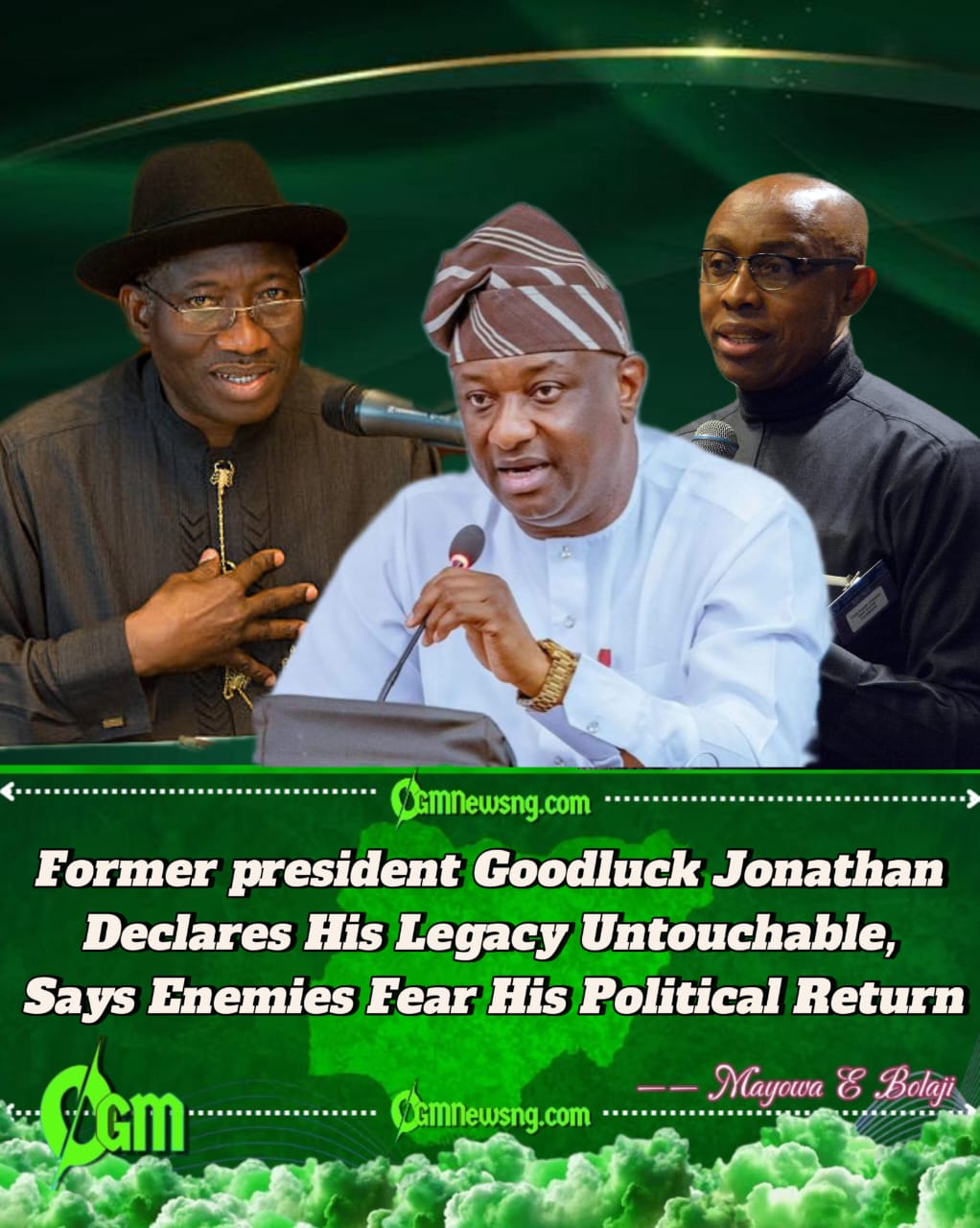
Goodluck Jonathan has dismissed the unsolicited advice from Festus Keyamo and Chidi Odinkalu regarding his rumored interest in the 2027 presidential election. The former Nigerian president declared that he does not require their validation or political roadmap to determine his future. Jonathan emphasized that those who lecture him about political morality are the very people who benefited from the chaos of Nigeria’s democracy.
Goodluck Jonathan insisted that political opportunists cannot dictate his legacy or ambitions. He described the counsel from his critics as “condescending” and “misguided,” warning that history, not political propagandists, will define his contributions. His blunt dismissal has reignited conversations about whether Jonathan is positioning himself for a comeback in 2027.
Jonathan Questions Keyamo’s Loyalty to Democracy
Goodluck Jonathan argued that Festus Keyamo has repeatedly shifted political allegiances to suit personal interests, making him unfit to lecture anyone on democratic principles. He recalled how Keyamo once stood as a fiery critic of the ruling elite, only to become a defender of the same forces he condemned. Jonathan accused him of hypocrisy and self-preservation.
Goodluck Jonathan further suggested that Keyamo’s interventions are less about national interest and more about securing relevance in the power corridor. He stressed that democracy thrives on consistency and integrity, not opportunistic alignments. His scathing remarks have fueled a debate on whether Keyamo’s political trajectory undermines his credibility.
Jonathan Challenges Odinkalu’s Moral High Ground
Goodluck Jonathan did not spare Chidi Odinkalu, describing his commentary as “intellectual elitism weaponized for political blackmail.” He argued that Odinkalu, while respected in civil society, often presents his opinions as final judgments without acknowledging the political complexities that leaders face in governance.
Goodluck Jonathan declared that Odinkalu’s analysis reflects a disconnect between activism and leadership realities. He stated that moral grandstanding is easy from the outside, but governing a diverse nation like Nigeria requires more than Twitter declarations and media essays. This fiery retort has deepened divisions between Jonathan’s defenders and his critics in policy circles.
Jonathan Reclaims His Political Legacy
Goodluck Jonathan reiterated that his years in power cannot be erased by revisionist narratives. He reminded Nigerians that he peacefully handed over power in 2015, setting a precedent for democratic transfer of leadership. Jonathan argued that this singular act of statesmanship remains a cornerstone of Nigeria’s democratic survival.
Goodluck Jonathan asserted that those undermining his legacy are only projecting their insecurities. He declared that history will be kinder to him than his critics imagine, pointing out reforms in education, agriculture, and the electoral process under his administration. By reclaiming his narrative, Jonathan is positioning himself as a statesman whose relevance cannot be dismissed.
Jonathan Hints at 2027 Calculations
Goodluck Jonathan refused to explicitly confirm his 2027 presidential ambitions but noted that Nigerians have the right to decide who governs them. He suggested that if the people call on him to serve, he would not require permission from political detractors. His carefully worded statement left room for speculation, sparking heated debates about his intentions.
Goodluck Jonathan explained that leadership is not about age or recycled rhetoric but about competence, compassion, and vision. By neither accepting nor rejecting the idea of running, he has cleverly kept his political enemies guessing while keeping his loyalists hopeful. Analysts argue this strategy mirrors his pragmatic approach to politics.
Jonathan Warns Against Political Intimidation
Goodluck Jonathan cautioned that attempts to silence him or reduce him to a bystander in Nigeria’s political discourse will fail. He declared that political intimidation, whether from party loyalists or self-proclaimed moral guardians, cannot determine his choices. Jonathan reminded his critics that his political journey has always been defined by resilience and destiny.
Goodluck Jonathan concluded by emphasizing that Nigeria’s democracy must embrace open competition rather than gatekeeping. He noted that attempts to restrict his political space only expose the insecurities of his opponents. This defiant position suggests that Jonathan is not only defending his legacy but also preparing the ground for possible re-entry into Nigeria’s highest political arena.
Table of Contents
Discover more from OGM News NG
Subscribe to get the latest posts sent to your email.