





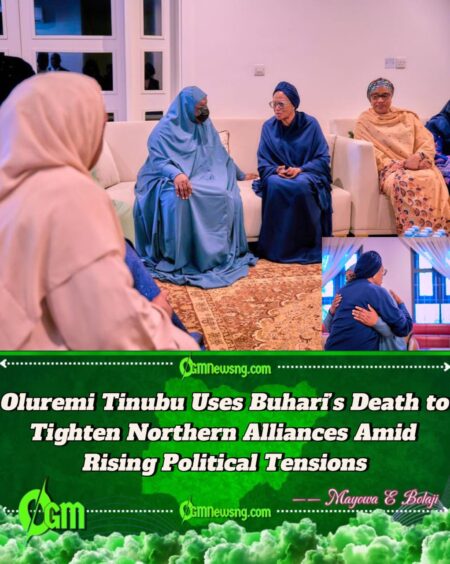
Oluremi Tinubu, Nigeria’s First Lady, on Friday spearheaded an unprecedented show of political solidarity as she led a high-ranking delegation of governors’ and lawmakers’ wives to the Kaduna home of the late President Muhammadu Buhari. The visit, marked by tight security and a visibly solemn atmosphere, underscored the intricate ties binding Nigeria’s ruling elite across administrations.
Oluremi Tinubu described Buhari’s death as a loss that transcends politics, stressing that the former president’s legacy would remain etched in Nigeria’s democratic history. Her words appeared carefully measured, balancing personal grief with a subtle reaffirmation of political unity—a move many analysts see as both a condolence gesture and a quiet political signal.
Oluremi Tinubu Emphasizes Female Political Influence
Oluremi Tinubu highlighted the unique role women in governance play during moments of national mourning. Flanked by wives of governors and lawmakers from across party lines, she presented the visit not merely as a condolence call, but as a demonstration of women’s solidarity in shaping Nigeria’s political narrative.
Oluremi Tinubu’s remarks hinted at a quiet but potent influence exercised by these women in back-channel politics. While their roles are often overshadowed by their husbands’ public profiles, the Kaduna visit was a reminder that political wives are not just ceremonial figures but critical stakeholders in the country’s socio-political stability.
Oluremi Tinubu Receives Aisha Buhari’s Warm Welcome
Oluremi Tinubu was met at the door by former First Lady Aisha Buhari, who embraced her warmly before leading the delegation into the family compound. Their public display of unity defied speculation about political tension between the two influential women—speculation that had long simmered in Abuja’s political grapevine.
Oluremi Tinubu noted that the warm reception was a testament to the enduring bonds formed in Nigeria’s First Family circle. Political observers, however, were quick to suggest that such optics are often calculated, aimed at projecting stability in a political climate where silent rivalries frequently play out behind closed doors.
Oluremi Tinubu Calls for Preservation of Buhari’s Legacy
Oluremi Tinubu urged Nigerians to preserve and protect the legacy of the late Muhammadu Buhari, calling on historians, policymakers, and the public to critically engage with his contributions to governance. She stressed that Buhari’s policies—whether praised or criticized—formed a pivotal chapter in the nation’s democratic journey.
First Lady’s choice of words subtly acknowledged that Buhari’s tenure was polarizing, with achievements in infrastructure and anti-corruption drives weighed against criticisms of economic hardship and security lapses. By doing so, she appeared to position herself as a bridge between contrasting narratives about the late president’s time in office.
Oluremi Tinubu Uses Visit to Strengthen Northern Political Ties
Oluremi Tinubu’s trip to Kaduna was also interpreted as a strategic move to reinforce the Tinubu administration’s relationship with northern political power brokers. The choice of a large, diverse delegation signaled an intent to demonstrate national inclusivity at a time when political alliances are constantly shifting.
First Lady’s body language during the visit conveyed more than condolences—it carried a diplomatic undertone. Political analysts believe such gestures help soften regional divides, ensuring that the Tinubu administration maintains legitimacy and goodwill across Nigeria’s geo-political spectrum.
First Lady’s Visit Sparks Public and Political Debate
First Lady’s high-profile condolence mission has sparked debate among Nigerians, with some praising her for upholding tradition and others questioning whether such political visits are more about optics than genuine empathy. Social media platforms were abuzz with discussions about the symbolism and hidden political implications of the Kaduna gathering.
First Lady, for her part, dismissed cynicism, stating that grief is a shared human experience beyond political calculation. Yet, in the theater of Nigerian politics, even grief becomes a stage for influence—and her visit to Buhari’s family may well become another defining moment in her growing political stature.
Table of Contents
Discover more from OGM News NG
Subscribe to get the latest posts sent to your email.