



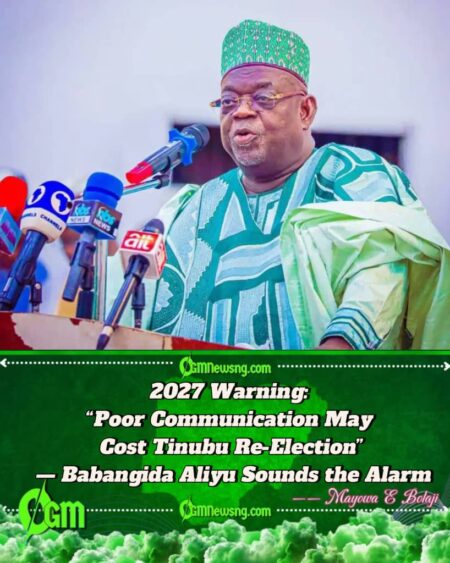
Former Niger State Governor, Dr. Mu’azu Babangida Aliyu, has ignited political debate after asserting that President Bola Ahmed Tinubu’s administration is “doing well but failing woefully in communication.” According to Aliyu, many of the government’s policy strides are drowned in public resentment simply because they are not being articulated in a manner that resonates with the Nigerian populace. He made the statement during a high-level policy dialogue in Abuja, emphasizing that credibility is not just about doing but being seen to be doing.
Babangida Aliyu lamented that the Federal Government has failed to set a clear communication agenda that could help Nigerians grasp the broader vision behind its economic reforms and national development policies. He warned that without a strategic media and messaging framework, even the best of intentions may appear like hostile impositions on citizens already grappling with hardship.
Subsidy Removal and Economic Reforms — “Policies With Zero Public Engagement”
According to Babangida Aliyu, one of the biggest communication disasters of Tinubu’s administration was the abrupt removal of fuel subsidy without sufficient groundwork or citizen-oriented messaging. “You don’t just wake up and announce something that will alter every household’s economy and expect people to clap,” he said, adding that such a policy demanded structured sensitization and cushioning plans.
He stressed that while the removal was economically necessary, the lack of preemptive communication made it appear callous. “If people understand the ‘why’ and ‘how’, they can endure the ‘when’. That’s where this government missed the mark,” Aliyu noted, warning that even successful reforms can collapse under the weight of poor public perception.
Media Disconnect and the Vanishing Presidency Narrative
Babangida Aliyu questioned why President Tinubu’s team has allowed what he termed a “communication vacuum” to exist around the presidency. “It’s as if we don’t have a communications team. Nigerians are confused, angry, and desperate — but all they see are official silence and elitist jargon,” he said during the session, attended by policy strategists and former public officials.
He accused the government of treating communication like an afterthought, instead of integrating it as a core strategy in governance. “We need relatable voices, not technocratic echoes. The street doesn’t read white papers; they respond to narratives,” Aliyu asserted. He called for a national storytelling reset that bridges the gap between policy intent and public understanding.
Digital Governance and the Lost Opportunity
Highlighting missed opportunities, Babangida Aliyu pointed out that the Tinubu administration has underutilized digital platforms that could have amplified its achievements and countered misinformation. “In an age where perception often overrides reality, not using digital tools effectively is political suicide,” he remarked. He also criticized the lack of real-time data dashboards and interactive government updates.
Babangida Aliyu suggested that ministries and agencies ought to maintain daily or weekly updates that simplify government actions into digestible facts. “The digital gap is not about technology—it’s about mindset. If you can run billion-dollar reforms, you can certainly run a Twitter account that informs the masses,” he jabbed.
The Image Problem — “Tinubu Must Speak More to Nigerians”
Babangida Aliyu emphasized that President Tinubu himself must take the lead in rebuilding public trust by engaging more directly with citizens. “Silence breeds suspicion. Nigerians want to hear from their president, not from a filtered voice or distant spokesperson,” he declared. He urged Tinubu to embrace regular nationwide addresses, town halls, and even spontaneous interactions.
He described the current leadership style as “executive isolation,” warning that failure to break that wall could further alienate the administration from the people. “Leadership is performance and presence. Without presence, even the performance is questioned,” Aliyu concluded, suggesting that political capital is eroded when people feel ignored.
Political Messaging and the 2027 Election Under Current Shadow
In a closing remark that drew the attention of political observers, Babangida Aliyu warned that the government’s poor messaging could cost it re-election in 2027, regardless of performance. “Nigerians vote based on their lived realities and communicated visions—not budget spreadsheets,” he said. He challenged APC strategists to overhaul their public relations strategy or risk becoming prisoners of misinformation.
Babangida Aliyu urged the Tinubu-led government to urgently develop a national narrative that speaks to resilience, hope, and shared sacrifice. “If people can’t connect with your vision, they’ll reject your mission. And that rejection won’t happen in silence—it’ll roar at the ballot box,” he warned. The former governor’s remarks have sparked reactions across political and civic spaces, reigniting the debate about governance and communication in a digital age.
Table of Contents
Discover more from OGM News NG
Subscribe to get the latest posts sent to your email.