
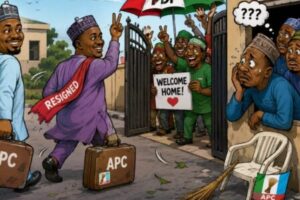

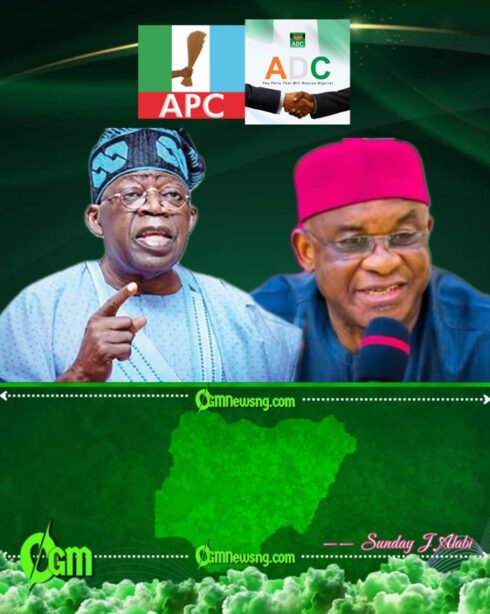
As Nigeria edges closer to the 2027 general elections, a fierce political battle has erupted between the ruling All Progressives Congress (APC) and the opposition coalition led by the African Democratic Congress (ADC) over which party commands the loyalty of the North and can best serve its interests. The ADC, recently adopted by several top opposition figures as a united front, is intensifying efforts to solidify its base in the region.
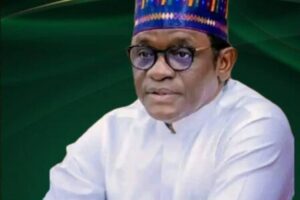
At the third expanded meeting of the National Political Consultative Group (North) in Abuja on Saturday, ADC interim National Chairman and former Senate President, David Mark, made bold assertions that northern challenges stemmed from internal failings, not external neglect. Echoing this view, former Secretary to the Government of the Federation, Babachir Lawal, stated that the North had formally embraced the ADC as its preferred platform to challenge APC dominance.
Lawal’s declaration underscores a growing consensus among key northern political stakeholders disillusioned with the APC. He argued that the ADC offers a more inclusive vision and practical solutions to long-standing regional problems, particularly insecurity and economic deprivation that continue to ravage the North.
David Mark: North Must Own and Fix Its Problems
In his keynote address titled “Unity and Social Cohesion as a Panacea to the Challenges Facing Northern Nigeria”, David Mark delivered a stark message: the North must stop blaming others and start confronting its challenges head-on. Describing the region as “bleeding,” he cited widespread insecurity, poverty, and social decay as evidence of collective negligence by northern leaders.
Mark called on political elites to abandon the politics of division, warning that ethnic and religious manipulation had led to a fractured region devoid of shared purpose. “We must first admit that we are the architects of our problems,” he said. “The culture of blame will never provide a solution.”
He lamented the deterioration of unity once cherished in Northern Nigeria, urging leaders to rekindle the principles of justice, equity, and mutual respect. According to him, the decline in these values has transformed communities into battlegrounds and eroded economic vitality, making the North the poorest region in the country despite its vast natural and human resources.
ADC Positions Itself as a Northern Platform for 2027
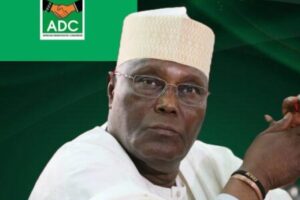
With support from high-profile politicians like Atiku Abubakar, Peter Obi, Rotimi Amaechi, and Nasir El-Rufai, the ADC is strategically positioning itself as the principal opposition platform to confront President Bola Tinubu and the APC in 2027. These leaders unveiled the party on July 1 as a coalition committed to reclaiming Nigeria from what they describe as divisive and failed governance.
According to Babachir Lawal, the ADC will prioritize fairness, education, employment, and inclusive governance — the very issues he believes the APC has failed to address adequately in the North. “The perception of marginalisation is the root cause of division in Northern Nigeria,” said Mark. “Politics should be about service, not manipulation.”
The ADC has begun vigorous consultations with northern leaders, traditional institutions, and youth groups to consolidate its base. Its campaign emphasizes restoring dignity and progress to a region that, despite its political weight, continues to struggle with development benchmarks.
APC Fires Back: ‘Tinubu Still Commands National Trust’
Reacting to the ADC’s claims, the APC’s Director of Publicity, Bala Ibrahim, dismissed the opposition’s narrative as political posturing. He insisted that the APC enjoys support across all regions, including the North, and that President Tinubu’s administration remains focused on delivering good governance and national stability.
Ibrahim stated that the ADC’s criticisms reflect desperation and fail to acknowledge the complexity of rebuilding a nation strained by decades of structural decay. “The APC is not only a national party but the only party that currently represents every part of Nigeria. Our president has continued to consult widely and act in the best interest of the country,” he said.
While acknowledging the challenges facing the North, Ibrahim argued that they are not unique to the region and that Tinubu’s reforms — from agricultural investments to security overhauls — are designed to benefit all Nigerians, not just a particular region or political bloc.
Northern Unity or Fragmentation? A Decisive Moment Looms
As tensions rise between the APC and ADC, the North appears to be at a political crossroads. On one hand, the region is increasingly vocal about its disillusionment with the ruling party; on the other, it faces the risk of deeper fragmentation if leaders fail to build consensus around a common agenda.
David Mark issued a final call to action: for the North to regain its voice and influence, it must reject sectarian politics and embrace unity rooted in justice and shared prosperity. “Let us not be prisoners of the past,” he urged. “We must be torchbearers of a future where no northerner is left behind.”
With less than two years to the polls, the battle for the North is set to be one of the most defining narratives of the 2027 elections. Whether the ADC can transform its momentum into electoral victory remains to be seen. What is clear, however, is that the North is no longer content to be a passive observer in Nigeria’s political trajectory.
Table of Contents
Discover more from OGM News NG
Subscribe to get the latest posts sent to your email.