







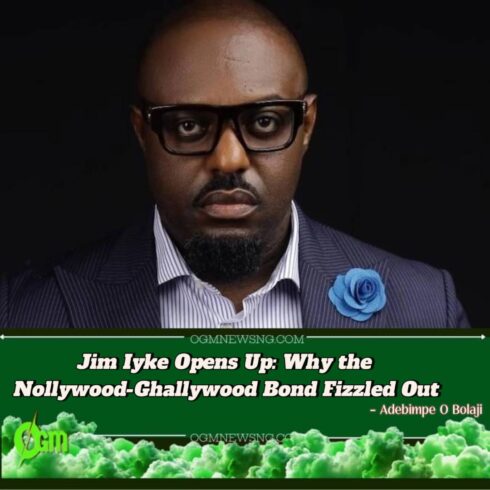
Nigerian actor and entrepreneur, Jim Iyke, has candidly addressed the collapse of what was once a flourishing partnership between Nollywood and Ghana’s film industry, popularly known as Ghallywood. In a recent interview, Iyke didn’t mince words as he described the missed opportunity between the two industries as a casualty of “external influence” and misplaced priorities.
The actor, who was one of the pioneers of the cross-industry collaborations in the early 2000s, noted that Ghanaian actors brought immense talent and screen presence to the table. However, according to him, their eventual drift away from Nollywood was largely due to poor counsel and overreliance on fame from local fanfare rather than long-term strategy.
A Blossoming Partnership Cut Short
Nollywood and Ghallywood once shared a golden era of collaboration that gave rise to some of West Africa’s most iconic films. From romantic dramas to suspense thrillers, actors from both industries frequently shared sets, scripts, and stardom. Stars like Jackie Appiah, Majid Michel, Nadia Buari, and Van Vicker became household names in Nigeria, while Jim Iyke, Ramsey Nouah, and Omotola Jalade-Ekeinde gained major traction in Ghana.
According to Jim Iyke, this cross-pollination was mutually beneficial and had potential to create a pan-African cinema powerhouse. However, he alleges that certain media voices and nationalistic sentiments began to question Ghana’s dependence on Nollywood. That subtle criticism, he believes, swayed Ghanaian producers and actors toward insularity.
The Role of Industry Politics and Identity Crisis
Jim Iyke points to “industry politics” and a lack of unified vision as root causes of the rift. “They listened to the wrong voices,” he said, referencing local critics in Ghana who accused their actors of being ‘overshadowed’ by Nigerian colleagues. This, he believes, triggered an unnecessary identity crisis among Ghanaian creatives who felt the need to break away and prove independence.
Rather than capitalizing on their cross-border popularity, Jim Iyke argues that Ghanaian actors gradually retreated into a shrinking domestic market, losing out on the global exposure that Nollywood partnerships had once offered. He also noted that the film industries failed to develop a framework for sustained collaboration, allowing division and pride to derail their joint momentum.
Lost Legacy and Stalled Growth in Ghallywood
Ghallywood, once viewed as a strong secondary force to Nollywood, has since experienced a significant slowdown in production. While Nollywood has evolved with streaming giants like Netflix and Prime Video investing in local content, Ghana’s industry has struggled to maintain relevance beyond its borders. Jim Iyke suggests this divergence could have been avoided had the two industries continued working together.
“The global stage is not looking at borders; they want African stories told well,” Jim Iyke stressed. He emphasized that storytelling, production quality, and market reach should be the focus—not egos or borders. He laments the lost legacy, stating that many talented Ghanaian actors could have maintained international relevance if the initial momentum wasn’t interrupted.
A Call for Rekindling the Spark
Despite the fracture, Jim Iyke remains hopeful that a new wave of collaboration can be reignited. He called on younger actors, producers, and content creators from both countries to embrace partnerships once again. “This generation has tools we never had—digital platforms, global reach, easier distribution. Why waste it on division?” he questioned.
The actor also proposed the creation of a cross-national African Film Guild, which would promote collaborative productions, co-funding, talent exchange, and joint marketing. According to him, the future of African cinema lies not in regional pride, but in collective strength that can compete on the global stage.
Industry Reactions and the Way Forward
Jim Iyke’s comments have stirred debate across social media and industry circles in both Nigeria and Ghana. While some Ghanaian creatives agree that pride and politics did play a role, others argue that Nollywood’s dominance often left little room for equal footing. The conversation has reignited interest in what could be the rebirth of Afrocentric cinema collaborations.
For now, it remains to be seen whether stakeholders in both industries will heed Iyke’s call. But one thing is clear—Africa’s creative industry is ripe with talent, and united efforts between Nollywood and Ghallywood could bring about a cultural renaissance the continent has yet to fully witness.
Table of Contents
Discover more from OGM News NG
Subscribe to get the latest posts sent to your email.