






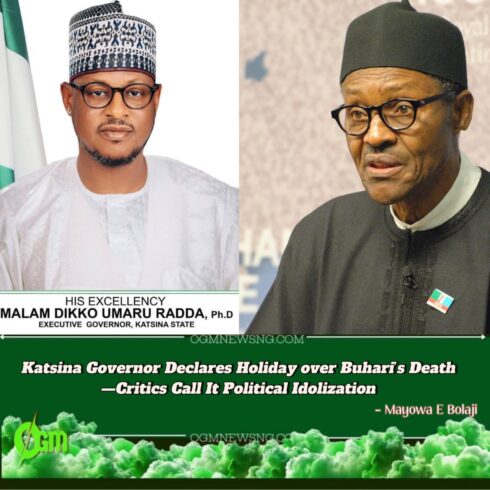
Governor Dikko Umaru Radda has declared Monday, July 14, 2025, a public holiday in Katsina State to mourn the passing of former President Muhammadu Buhari. The announcement was made late Sunday evening, catching residents and institutions across the state by surprise.
The abrupt declaration has raised eyebrows, particularly as many question the logic of grounding state operations on such short notice. While Governor Radda described the gesture as a mark of respect for “a son of the soil who redefined patriotism,” others have called it “political theatre” that disrupts governance and public service delivery.
Mixed Reactions Trail the Holiday Announcement
Governor Dikko Umaru Radda’s decision has sharply divided public opinion across Katsina and beyond. While some see it as a dignified tribute to Buhari’s legacy, others argue that it reeks of excessive political loyalty rather than genuine public interest.
Civic organizations and education stakeholders expressed frustration over the disruption to planned activities and examinations. “Respecting the dead is vital, but not at the cost of destabilizing the living,” said one local rights advocate in Daura, Buhari’s hometown.
Critics Accuse Governor Dikko Umaru Radda of Political Idolization
Governor Dikko Umaru Radda’s move has been slammed by political analysts and opposition figures who see it as an attempt to curry favor with loyalists of the late president. Some argue that it sets a dangerous precedent of politicizing public holidays to honor controversial leaders.
“Buhari was not a monarch; he was an elected official whose legacy remains highly contested,” said one outspoken SDP member. Critics point to widespread poverty, insecurity, and economic stagnation under Buhari’s tenure, insisting that such a public holiday only deepens the wounds of his rule.
Religious Leaders Join the Debate—Not All Are Pleased
Governor Dikko Umaru Radda’s declaration has also triggered debates among religious leaders in the state. While some imams held special prayers for the deceased president, others expressed concern that elevating Buhari’s death to the level of a state-wide shutdown could border on idolatry.
An influential cleric in Funtua noted, “Death is inevitable, but no leader—no matter how prominent—should become a symbol of disruption.” Meanwhile, Christian groups in the state questioned whether a similar gesture would ever be extended for Christian dignitaries.
Economic Fallout: Markets and Businesses Suffer Losses
Governor Dikko Umaru Radda’s holiday directive took a financial toll on traders and local businesses already battling economic hardship. With major markets in Katsina City, Malumfashi, and Daura shut down, millions of naira in revenue were reportedly lost.
“This is a blow to our daily survival,” lamented a roadside seller in Kankia. The informal economy, which supports a significant chunk of the state’s population, bore the brunt of the decision—adding fuel to the fire for those calling the holiday excessive and poorly timed.
Legacy of Buhari: A Holiday or a Haunting Memory?
GovernorDikko Umaru Radda’s intent may have been to honor a native son, but it has reignited a national conversation about how Nigeria remembers its leaders. While some hail Buhari’s anti-corruption drive and discipline-first mantra, others remember inflation, insecurity, and human rights abuses.
As Nigerians continue to dissect the implications of Governor Dikko Umaru Radda’s directive, one thing is clear: the ghost of Buhari’s presidency is far from buried. Whether the holiday was an honorable tribute or a misguided indulgence remains a hot-button issue that will echo in Katsina’s political landscape for months.
Table of Contents
Discover more from OGM News NG
Subscribe to get the latest posts sent to your email.