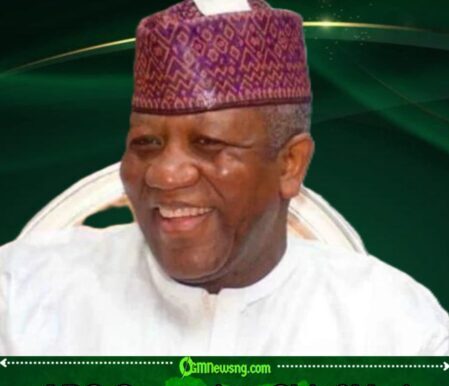









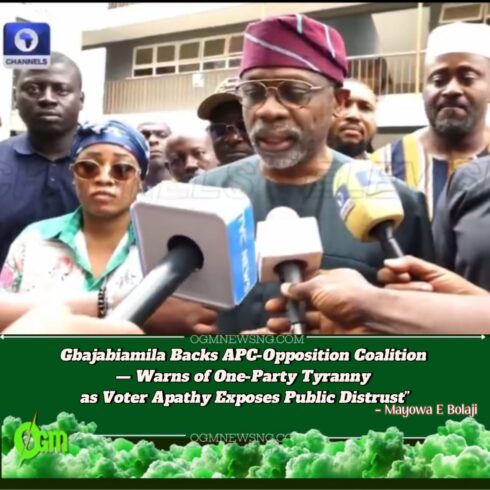
Femi Gbajabiamila, Chief of Staff to President Bola Tinubu, stirred political waters on Saturday as he praised the emerging coalition between opposition parties and the ruling APC during the Lagos Local Government elections. While addressing journalists after casting his vote, he emphasized that such alliances are not unprecedented in Nigeria’s democratic journey and are essential in preventing a total collapse into one-party dominance.
According to Gbajabiamila, “It’s a welcome development. In every democracy, we must have some level of opposition otherwise we’ll run into a one-party state.” The remark, though seemingly diplomatic, was interpreted by critics as a veiled acknowledgment of the APC’s dominance and the weakening of Nigeria’s multiparty system.
Free and Fair But Deserted: Gbajabiamila Decries Voter Apathy
Though he lauded the conduct of the elections as peaceful and largely free of irregularities, Gbajabiamila did not hide his disappointment over the glaringly low voter turnout. “It’s disappointing to see this level of voter apathy, especially in a state like Lagos where civic engagement has historically been strong,” he said.
Political analysts noted that several polling units across major LGAs like Ikeja, Surulere, and Alimosho recorded fewer than 50 voters by midday. Observers are now raising urgent concerns about the electorate’s disillusionment with local governance and the need to rebuild grassroots trust in the democratic process.
Democracy on the Edge: The One-Party State Warning
Gbajabiamila’s caution against a one-party state strikes at the core of an emerging crisis in Nigerian politics. With several opposition figures aligning themselves with the APC, either through silent alliances or formal endorsements, fears are growing that political diversity is eroding.
His comments, though brief, suggest a deeper unease within the corridors of power. “A healthy opposition is necessary to hold any ruling party accountable,” Gbajabiamila stressed, in what many see as a subtle rebuke of APC’s long-standing stranglehold on Nigerian politics, especially in Lagos State.
The Coalition Calculus: What’s Really at Stake?
Beneath the surface of Gbajabiamila’s endorsement lies a strategic recalibration. The so-called coalition — a loosely structured alignment of minority parties with APC — may offer short-term stability but poses long-term ideological risks. Analysts argue that these alliances are often transactional, lacking shared governance principles.
Insiders reveal that several political deals are being quietly brokered in anticipation of the 2027 general elections. “It’s about consolidation, not ideology,” noted one party strategist, hinting that the real aim is to neutralize threats from newly energized opposition movements like the Obidient bloc and regional advocacy parties.
Civil Society and the Vanishing Voter
The muted enthusiasm for Saturday’s election is a symptom of a broader malaise. Civil society groups, including Yiaga Africa and SERAP, have raised alarms about democratic fatigue, especially among youth voters. “Our democracy is not just about casting votes — it’s about believing those votes count,” one activist said.
Gbajabiamila’s acknowledgment of this reality adds weight to these concerns. He urged party leaders across the divide to return to the drawing board and “re-engage with the people in meaningful ways.” Without this, experts warn, future elections — even national ones — could witness even more dramatic levels of disengagement.
APC’s Next Move: Consolidation or Reformation?
With Gbajabiamila hinting at both support and skepticism about the coalition, questions arise about the ruling party’s internal cohesion. Will APC use this coalition moment to embrace reform, or simply absorb dissenting voices into its powerful political machinery?
Sources within the presidency suggest that President Tinubu is watching closely, urging his inner circle to maintain unity but stay wary of ideological dilution. Gbajabiamila’s remarks could serve as both a green light and a red flag — signaling openness to alliances, but not at the expense of genuine political competition.
Table of Contents
Discover more from OGM News NG
Subscribe to get the latest posts sent to your email.