




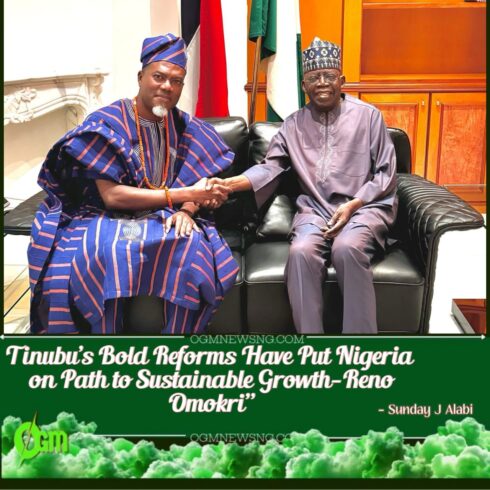
Former presidential aide and social commentator, Reno Omokri, has asserted that Nigeria’s current economic direction under President Bola Ahmed Tinubu is far more sustainable than the trajectory witnessed under former President Muhammadu Buhari. Speaking on Politics Today, a popular programme on Channels Television, Omokri argued that the country had been living in what he called an “economic illusion” during Buhari’s eight-year tenure.
“We were living in a fool’s paradise. Tinubu has taken that away and we are now living within our means,” Omokri stated. He explained that the economic model under the past administration relied heavily on unsustainable borrowing to create an artificial sense of prosperity, which, in his view, has now been exposed.
Omokri emphasized that the country could no longer afford to borrow excessively to finance consumption and unproductive ventures. He pointed out that President Tinubu’s bold policy decisions, although painful in the short term, are aimed at creating a more self-reliant economy driven by production and reduced dependency on imports.
Tough Decisions Necessary to End Nigeria’s Debt Addiction
Highlighting the gravity of the economic situation inherited by President Tinubu, Omokri criticized the excessive borrowing under the previous government, especially under the watch of former Central Bank Governor Godwin Emefiele, who is currently facing legal proceedings over financial misconduct.
According to Omokri, loans amounting to ₦28 trillion were taken without the necessary legislative approvals, and the borrowed funds were used to artificially prop up the value of the naira instead of investing in productive sectors. “Should we continue to go into debt because we want to give our people an artificial luxury?” he asked rhetorically.
He maintained that Tinubu’s administration has made the hard but crucial decision to halt this cycle of borrowing and has instead prioritized domestic production, which is already showing positive signs with increasing exports and reduced imports. Omokri argued that while this shift may cause short-term hardship, it is the only path toward long-term economic stability.
Addressing the Hardships: A Necessary Sacrifice for a Better Future
Responding to questions on the present economic hardship facing ordinary Nigerians, including rising costs of living and declining purchasing power, Omokri acknowledged the difficulties but insisted that the discomfort is a necessary consequence of economic correction.
“The impression people have is that things are worse, but the truth is we have to look inward,” he said. Omokri stressed that similar economic reforms were part of the campaign promises of opposition figures like Peter Obi and Atiku Abubakar, suggesting that regardless of who had emerged as president, Nigerians would have faced tough reforms.
He urged Nigerians to endure the current hardship with the understanding that Tinubu’s policies aim to lay the groundwork for sustainable economic recovery rather than relying on short-term fixes that would further balloon the country’s debt burden.
Debt Profile Shows Improvement Under Tinubu—Omokri
In a key revelation during the interview, Omokri claimed that Nigeria’s debt profile has actually improved under President Tinubu, countering the popular narrative of economic decline. He provided figures to support his argument, stating that Nigeria’s debt stood at $63 billion in 2015, rose to $113 billion by the end of Buhari’s tenure, but has since dropped to $97 billion under Tinubu’s leadership.
“That’s a reduction of over $14 billion. We should be appreciating this man,” Omokri remarked, highlighting what he described as the administration’s prudent fiscal management and efforts to rein in excessive borrowing.
He called on critics to acknowledge the gains made in debt reduction and economic rebalancing, noting that this fiscal discipline is essential for Nigeria’s long-term prosperity and global economic credibility.
Moving From Consumption to Production: Omokri Urges National Support
Omokri concluded his remarks by calling for greater national unity and patience as Nigeria transitions from a consumption-driven economy to one anchored on production and exports. He argued that this transformation, though challenging, is already yielding early signs of progress with rising export volumes and declining imports.
He also pointed to the importance of homegrown solutions, stressing that Nigerians must shift their expectations from government handouts fueled by debt to embracing a culture of productivity and self-reliance. “We cannot be borrowing just to give people food. We have to produce—and that’s why we’re now producing,” he reiterated.
The former presidential aide called on citizens to support Tinubu’s reforms, warning that reversing the policies for short-term comfort would plunge the nation deeper into economic instability.
Table of Contents
Discover more from OGM News NG
Subscribe to get the latest posts sent to your email.