



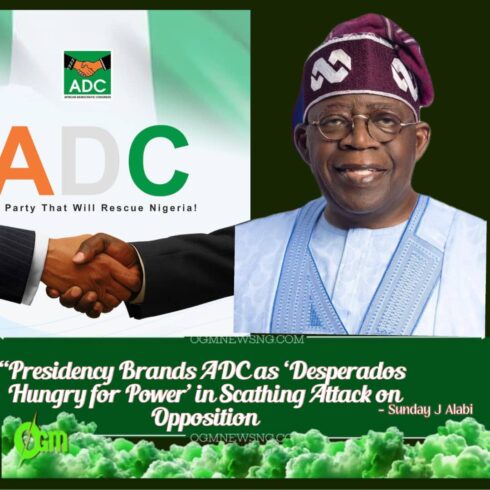
In a sharp rebuke aimed at the newly unveiled leadership of the African Democratic Congress (ADC), the Presidency on Wednesday dismissed the emerging opposition coalition as a “conclave of internally displaced politicians,” warning Nigerians to be wary of their intentions ahead of the 2027 general elections.
The condemnation was delivered by Daniel Bwala, Special Adviser to President Bola Tinubu on Policy Communication, who took to his verified X (formerly Twitter) account to castigate the political realignment. Bwala, himself a former opposition figure, described the ADC’s attempt to rally disenchanted politicians under one banner as both futile and dangerous.
Bwala Condemns ADC as Power-Hungry Coalition
Reacting to the ADC’s unveiling in Abuja, Bwala branded the movement an “association of wild goose chasers,” composed of politicians whose only unifying factor is their shared opposition to President Tinubu. He dismissed the coalition as a “dead on arrival” project devoid of any clear ideology or vision for Nigeria.
Drawing from remarks by Labour Party presidential candidate Peter Obi, Bwala warned that the ADC resembled what Obi once described as a “structure of criminality.” Without naming individuals directly, Bwala’s criticism was widely interpreted as targeting the political heavyweights who have recently aligned under the ADC banner in a bid to challenge the ruling All Progressives Congress (APC).
Bwala further cautioned Nigerians against being deceived by what he termed the opposition’s false narrative of relevance, stating that the ruling APC remains unshaken by their defection or political maneuvering.
Prominent Figures Behind the ADC Movement
The ADC has recently attracted notable politicians from Nigeria’s two dominant political parties—the APC and the PDP—many of whom have defected due to internal disputes, lost ambitions, or ideological disillusionment. Among these political heavyweights are former Vice President Atiku Abubakar, ex-Senate President David Mark, former Kaduna Governor Nasir El-Rufai, former Osun Governor Rauf Aregbesola, and Peter Obi.
These individuals, despite their diverse political backgrounds, have coalesced under the ADC umbrella with the stated aim of offering a robust opposition in 2027. However, critics argue that the group is less about ideology and more about the personal ambitions of its members—many of whom have experienced political setbacks within their former parties.
The ADC is positioning itself as a “third force,” but faces the dual challenges of uniting its disparate elements and proving to the Nigerian electorate that it offers more than just recycled political figures.
Presidency Highlights Defections and Disputes Among ADC Members
Bwala did not mince words in highlighting the disunity and past political failures of several key figures in the ADC. He noted that former Transport Minister Rotimi Amaechi, for instance, effectively distanced himself from the APC in 2022 after losing the presidential primary to Tinubu. Similarly, ex-Attorney General Abubakar Malami reportedly withdrew from active APC politics after failing to secure the Kebbi governorship ticket.
Other figures such as Hadi Sirika, now facing corruption trials, and Rauf Aregbesola, accused of anti-party activities, further illustrate the fractured nature of the ADC’s leadership. Bwala also pointed to the cases of Kashim Imam, who left the APC after losing out on the vice-presidential slot, and octogenarian John Odigie Oyegun, who has become increasingly critical of his former party.
According to Bwala, these politicians represent “desperados hungry for power” who seek office not for the benefit of ordinary Nigerians, but to reclaim their own lost political relevance.
Presidency Warns Against Political Opportunism
In his concluding remarks, Bwala urged Nigerians to be vigilant and not fall for the illusion of unity projected by the African Democratic Congress. He stressed that the coalition lacks a coherent agenda or ideology and is bound to unravel under the weight of the personal ambitions that currently hold it together.
“The only thing uniting them is their hatred for President Tinubu,” Bwala warned. “They cannot endure another four years in political wilderness and are desperately seeking relevance.”
He predicted that internal contradictions, ego clashes, and competing ambitions will soon fracture the coalition, leaving Nigeria’s political landscape unchanged. The Presidency maintained that it remains confident in the APC’s ability to deliver on its promises and dismissed the African Democratic Congress’s potential impact on future elections.
As the political temperature rises ahead of 2027, the battle lines between the ruling party and the emergent opposition coalition are becoming increasingly defined, setting the stage for what promises to be a heated contest for Nigeria’s future.
Table of Contents
Discover more from OGM News NG
Subscribe to get the latest posts sent to your email.