






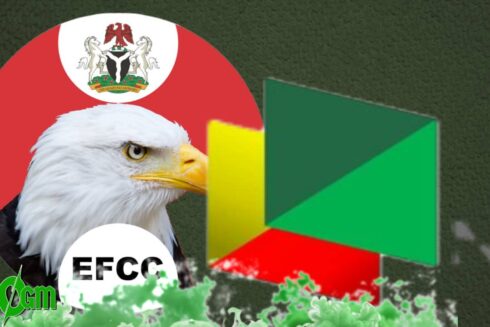
The Economic and Financial Crimes Commission (EFCC) has arrested several former top executives of the Nigerian National Petroleum Company Limited (NNPCL) in connection with a staggering $7.2 billion fraud tied to the controversial rehabilitation of the Kaduna, Warri, and Port Harcourt refineries.
Among those in custody are Umar Isa, the former Chief Financial Officer of the NNPCL, and Jimoh Olasunkanmi, a former Managing Director of the Warri Refinery. The EFCC is investigating them for alleged abuse of office, corruption, diversion of public funds, and illicit kickbacks from contractors involved in refinery turnaround maintenance.
According to sources within the commission, Isa played a central role in the release of funds earmarked for the rehabilitation of the three refineries. The funds, however, allegedly never yielded any tangible result, as all three refineries remain dormant and non-functional.
More High-Ranking Officials Under Investigation
The widening probe has extended to several other high-ranking officials of the oil behemoth. These include Tunde Bakare, the current Managing Director of Warri Refinery; Ahmed Dikko, a former Managing Director of the Port Harcourt Refinery; and Ibrahim Onoja, another ex-MD of the same facility.
While the EFCC has not yet released an official statement, its operatives have intensified interrogations and are combing through financial records related to the multi-billion-dollar turnaround maintenance (TAM) projects. Internal documents suggest a pattern of inflated contracts, ghost contractors, and massive misappropriation of funds.
The arrests come amidst broader questions about NNPCL’s operational inefficiencies and long-standing opacity, with public confidence in the company’s reform efforts severely shaken.
Senate Committee Flags ‘Mind-Boggling’ Financial Discrepancies
The arrests follow recent revelations by the Senate Committee on Public Accounts, chaired by Senator Aliyu Wadada, which described discrepancies in the NNPCL’s financial statements from 2017 to 2023 as “mind-boggling and worrisome.”
After reviewing the company’s audited reports, the committee issued 11 separate queries to the NNPCL finance team. The senators demanded answers within a week, citing inconsistencies involving trillions of naira. They also questioned the value for money on past refinery rehabilitations.
The Senate’s intervention appears to have spurred anti-corruption agencies into action, as public outrage mounts over the poor state of the refineries despite repeated budget allocations under successive administrations.
Tinubu’s Sweeping Reforms and Kyari’s Removal from NNPCL
In April 2025, President Bola Tinubu, frustrated with the company’s underperformance, sacked the entire NNPCL board, including Group CEO Mele Kyari and Board Chairman Pius Akinyelure. The move was seen as part of a major effort to clean house and restore investor confidence in Nigeria’s oil sector.
Presidential spokesman Bayo Onanuga explained that the restructuring was necessary to boost efficiency, promote gas development, and encourage economic diversification. The appointment of Bashir Ojulari as the new Group CEO and Ahmadu Kida as Board Chairman signaled a shift in direction for the national oil company.
Kyari, who had served as NNPCL boss since July 2019 and spent over three decades within the organization, had faced growing calls for his removal before Tinubu finally acted in 2025—particularly after his 60th birthday triggered renewed scrutiny of his tenure.
A Test Case for Anti-Corruption and Petroleum Reform
The EFCC’s ongoing investigation into NNPCL’s past refinery projects may become a litmus test for President Tinubu’s commitment to anti-corruption and reform in Nigeria’s oil and gas sector.
Analysts say that holding top officials accountable—especially those involved in high-profile projects—will be critical to restoring credibility both locally and with international investors. The failure of the refineries, despite billions of dollars in purported investments, has long been a symbol of Nigeria’s mismanagement of its petroleum resources.
Public expectations are high that the EFCC’s probe will not end at arrests, but will lead to prosecutions, asset recovery, and broader systemic reform. With the country still dependent on imported refined fuel, citizens and stakeholders alike are demanding answers—and justice.
Table of Contents
Discover more from OGM News NG
Subscribe to get the latest posts sent to your email.