
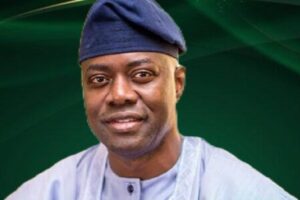

Zamfara State Governor, Dauda Lawal, has waded into the deepening crisis rocking the Peoples Democratic Party (PDP), declaring that the turmoil extends far beyond the party’s 2023 presidential candidate, Atiku Abubakar. Speaking during a media parley with journalists in Zamfara on Wednesday, Lawal identified ego clashes among party stakeholders as the root cause of the discord.
“Everybody has their own issue; it’s not just about Atiku Abubakar; it’s beyond him,” the governor stated. “It’s an internal problem within the PDP, and we are making a conscious effort. I think it’s about people’s egos — everybody, no exception.” When asked if he was also part of the problem, Lawal responded with unusual candor: “Yes.”
His remarks come at a time when the PDP continues to reel from internal divisions, exacerbated by electoral setbacks and high-profile defections. Governor Lawal’s admission highlights the complex interpersonal dynamics fueling the party’s dysfunction — an issue that appears far more entrenched than the candidacy or influence of any single individual.
Wave of Defections Weakens PDP’s Grip
The fallout from the PDP’s internal crisis has manifested in a steady stream of defections to the ruling All Progressives Congress (APC), particularly since the party’s defeat in the 2023 general elections. Prominent among the defectors is Akwa Ibom State Governor Umo Eno, who recently announced his defection to the APC. Similarly, Delta State Governor Sheriff Oborevwori, his deputy Monday Onyeme, former Governor Ifeanyi Okowa, and several commissioners made the same move earlier in April.
These defections have shaken the PDP’s structural foundation, especially at the state level where its influence once ran deep. The exodus underscores the urgency for the party to confront its internal challenges head-on, lest it slip further into political irrelevance.
In response, the PDP National Working Committee (NWC) convened an emergency meeting in Abuja to address growing disunity. Yet, critics argue that without tackling the egotism and factionalism at its core, such meetings may prove ineffectual in restoring the party’s cohesion.
Atiku’s Coalition Plans Face Resistance
As the PDP scrambles for stability, former Vice President Atiku Abubakar has begun reaching out to political figures across party lines in an attempt to build a formidable opposition coalition. Notable figures reportedly approached include Labour Party’s Peter Obi and former Kaduna Governor Nasir El-Rufai. Atiku has warned of a looming “one-party state” under the APC, a sentiment shared by many in opposition circles.
However, his coalition-building efforts are not without internal resistance. Party elder statesman Bode George has voiced confidence in internal reconciliation, emphasizing that the PDP can still reclaim its footing through dialogue and party reforms rather than external alliances.
Amid these competing strategies, preparations are underway for the party’s 100th National Executive Committee (NEC) meeting — a milestone event expected to set the tone for PDP’s approach to 2027. But procedural missteps have already marred its buildup, with the Independent National Electoral Commission (INEC) rejecting the NEC meeting notice for lacking signatures from both the National Chairman and National Secretary.
INEC Rejection Highlights Leadership Disputes
In a letter dated June 13, 2025, INEC cited procedural violations for rejecting the PDP’s notification for its 30 June NEC meeting. Specifically, the electoral body pointed out that the notice was signed only by Acting National Chairman Umar Damagum and not co-signed by the National Secretary, Samuel Anyanwu, as required by party guidelines.
This setback underscores the leadership vacuum within the PDP. While the party is yet to resolve its disputes over key positions, the inability of top officials to cooperate on procedural matters reflects the extent of the dysfunction. The NEC meeting, now clouded by legitimacy concerns, was expected to address contentious issues such as leadership rotation, zoning of the 2027 presidential ticket, and rebuilding party structures nationwide.
Meanwhile, the influential G5 group led by Minister of the Federal Capital Territory, Nyesom Wike, has renewed calls for the presidential ticket to be zoned to the South. The group’s demands could deepen factional lines, especially among Northern power brokers who remain aligned with Atiku.
Lawal Remains Hopeful About Electoral Future
Despite the chaos within the PDP, Governor Lawal remains optimistic about Nigeria’s electoral process. He cited his own 2023 election victory in Zamfara as evidence that free and fair elections are still possible, even in the face of systemic and political challenges.
“I will say yes, because I experienced it in Zamfara State — with all the powerful people that can turn things around, with the might of the Federal Government and everything,” Lawal said. “Yes, there will still be a free and fair election. That was what made me elected as the governor of Zamfara State. I was the first elected PDP governor in Zamfara State. So, it was a free and fair election, and I believe it will happen. It’s a matter of time.”
Lawal’s confidence provides a glimmer of hope for Nigeria’s democratic process, even as his own party faces an identity crisis. But his candid acknowledgment that ego and internal rivalries are eroding the PDP’s foundation may be the first step toward a much-needed reckoning — and possibly, reform.
If the party fails to seize the moment, the road to 2027 may prove even more treacherous than 2023.
Table of Contents
Discover more from OGM News NG
Subscribe to get the latest posts sent to your email.