









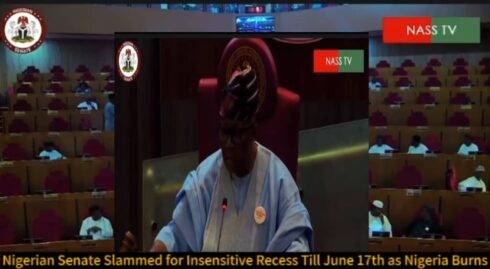
The Senate has formally adjourned its plenary session until Tuesday, June 17, 2025, in a decision that underscores the symbolic importance of Democracy Day and the Eid Mubarak festivities. This recess, though routine in appearance, has raised critical questions about the Senate’s timing and prioritization amidst surging national concerns.
The upper legislative chamber made the announcement during its final sitting on Wednesday, May 28, with Senate President Godswill Akpabio stating that the break was to allow members to engage with constituents and participate in nationwide celebrations. However, analysts are warning that the adjournment may delay crucial legislative decisions on security reforms, economic bailouts, and the much-debated electoral act amendment.
Public Reactions Mixed as Senate Prioritizes Festivities Over Governance
The Senate’s decision has ignited a fierce debate among citizens and political commentators, who argue that the country’s deepening insecurity and economic paralysis warrant uninterrupted legislative attention. Many Nigerians view the recess as tone-deaf, particularly when thousands remain displaced by violence and inflation continues to decimate household incomes.
Civil society organizations like SERAP and Enough is Enough Nigeria have criticized the move, stating that national holidays should not obstruct urgent lawmaking. Critics argue that a hybrid legislative approach, including remote sessions, could have ensured continuity while respecting national traditions—pointing to precedents set during the COVID-19 pandemic.
Critical Bills Now in Limbo as Senate Postpones Deliberations
The Senate had several pressing bills on its order paper before adjournment, including the controversial National Social Investment Programme (NSIP) Reform Bill, amendments to the Petroleum Industry Act, and the National Minimum Wage Adjustment Bill. The postponement of plenary means that these pivotal legislations remain in legislative limbo.
Lawmakers from both the ruling All Progressives Congress (APC) and the opposition People’s Democratic Party (PDP) had expressed eagerness to push these bills before the break. However, with the new resumption date set for mid-June, critics fear the delay could stall reforms necessary to unlock international funding and stabilize national morale.
Senate’s Recess Sparks Allegations of Political Escapism
The Senate’s adjournment is being viewed in some quarters as a deliberate strategy to avoid politically volatile discussions, especially those related to alleged corruption within key federal agencies. Whistleblowers and opposition senators had planned to table motions relating to budget padding, subsidy fraud, and the contentious CBN digital currency probe.
Observers suggest that the timing of the break is suspicious, coming just days after the release of an investigative report implicating top public officials in illicit financial flows. By vacating the legislative floor, some accuse the Senate of engaging in political escapism, shielding powerful interests from scrutiny under the guise of holiday observances.
Senators Under Fire for Drawing Full Salaries Despite Recess
Despite the break, Nigerian senators will continue to earn their full monthly salaries and allowances, estimated to exceed ₦29 million per senator, drawing backlash from tax-burdened citizens. Critics argue that such luxury during a recess period exemplifies the disconnect between the legislative elite and the struggling populace.
The Senate has yet to release an official statement addressing calls for pro-rata pay deductions during non-working periods. Economists and policy analysts are urging the Revenue Mobilisation Allocation and Fiscal Commission (RMAFC) to implement a more performance-based remuneration system that links compensation to actual legislative productivity.
Calls for Constitutional Reform Resurface Amid Legislative Inertia
The Senate’s adjournment has reinvigorated calls for constitutional reform that limits recesses and enforces a more responsive and accountable legislature. Activists and legal scholars are advocating for amendments that will compel lawmakers to convene emergency sessions during periods of national crisis, regardless of holiday schedules.
Leading constitutional lawyer Femi Falana (SAN) emphasized the urgency of a citizen-centered governance model, where lawmakers are obligated to place national interests above ceremonial breaks. With the country navigating a precarious political and economic landscape, stakeholders believe that reforming legislative culture is no longer optional but imperative.
Table of Contents
Discover more from OGM News NG
Subscribe to get the latest posts sent to your email.