









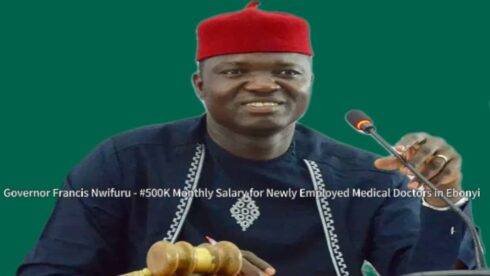
Francis Nwifuru, the Governor of Ebonyi State, has shocked the nation with the announcement of a ₦500,000 monthly salary for newly employed medical doctors under the state government. During a policy address at the Government House in Abakaliki, Nwifuru stated that the increment is part of his administration’s strategic intervention to strengthen the healthcare system and reward the value of medical expertise.
Francis Nwifuru emphasized that Ebonyi must be repositioned to retain medical talent and reverse the exodus of healthcare professionals to foreign countries. He described the move as both a moral and economic decision, designed to prioritize human lives while stimulating local productivity in the health sector.
Francis Nwifuru Faces Mixed Reactions from Medical Circles
Francis Nwifuru’s announcement has received a divided reception from stakeholders within the medical community. While many doctors have hailed it as a groundbreaking policy, others remain wary of the state’s ability to maintain such a financial commitment. The Nigerian Medical Association (NMA) commended the governor, describing his gesture as visionary and long overdue.
Nwifuru, however, has come under fire from some practitioners who argue that the move may raise unrealistic expectations across the federation. They assert that Ebonyi’s financial structure may not withstand long-term pressure from such a significant wage bill without proper reform and increased revenue generation.
Francis Nwifuru’s Policy Triggers Political Shockwaves in the Southeast
Nwifuru’s decision has escalated political tensions, especially within opposition parties and neighboring state governments. Political actors are accusing the governor of using the wage hike as a tool for political consolidation ahead of upcoming local government elections. They argue that while the gesture appears benevolent, it may lack the economic blueprint to support its implementation sustainably.
Francis Nwifuru has responded to critics, insisting that the policy is driven by a genuine need to elevate public healthcare standards in Ebonyi. Nonetheless, political observers believe the move has placed pressure on other Southeast governors, who are now facing public calls to replicate the policy in their respective states.
Francis Nwifuru Defends Funding Strategy Amid Economic Concerns
Francis Nwifuru has defended his administration’s capacity to sustain the new salary scale by unveiling a multipronged funding strategy. He explained that the wage increase will be financed through internal cost-cutting measures, improved tax collection, health-sector-focused grants, and efficient budgetary realignment.
Nwifuru dismissed claims that the policy was fiscally reckless, stating that his administration is committed to transparent and responsible governance. Nonetheless, economists and policy analysts warn that unless the state’s revenue base expands significantly, the salary structure could strain other public services in the near future.
Francis Nwifuru Attracts Nationwide Attention as Doctors Migrate to Ebonyi
Francis Nwifuru’s policy has begun to yield tangible results as young doctors from across Nigeria submit applications to work in Ebonyi. The Ministry of Health has confirmed a sharp rise in recruitment inquiries, with many applicants citing the ₦500,000 monthly salary as a decisive factor in their interest.
Nwifuru remarked that this is just the beginning of a broader health sector transformation plan. He expressed optimism that the influx of professionals will not only improve service delivery but also elevate the state’s reputation as a center for medical excellence and innovation.
Francis Nwifuru Sparks Call for National Salary Reform for Doctors
Nwifuru’s bold policy shift has reignited the long-standing debate over wage harmonization for healthcare professionals across Nigeria. Several lawmakers have cited the Ebonyi case as justification for a standardized minimum wage for doctors nationwide to prevent inter-state poaching and uneven service delivery.
Nwifuru urged the federal government to take a proactive stance, warning that failure to address wage disparities may undermine the integrity of Nigeria’s healthcare system. As discussions gather momentum, the Ebonyi model may serve as a blueprint—or a cautionary tale—for national healthcare policy reform.
Table of Contents
Discover more from OGM News NG
Subscribe to get the latest posts sent to your email.