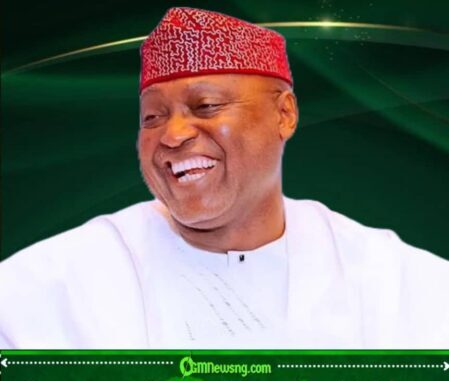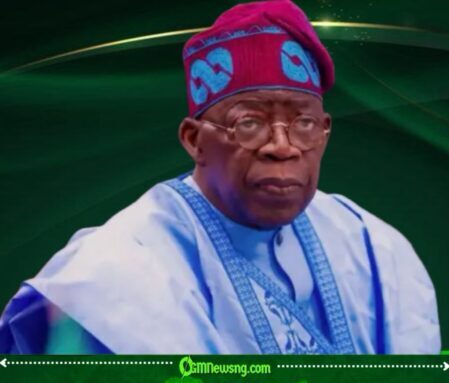
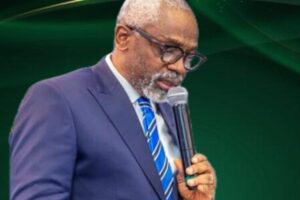
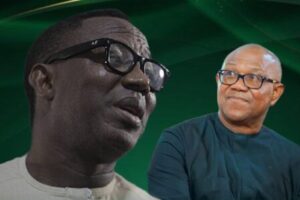
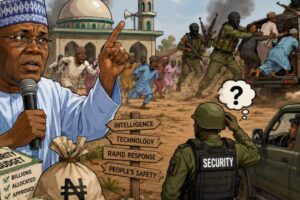
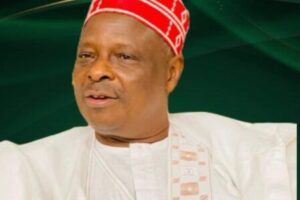
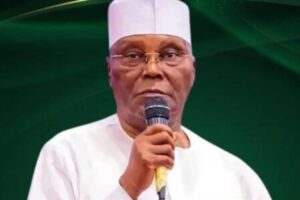
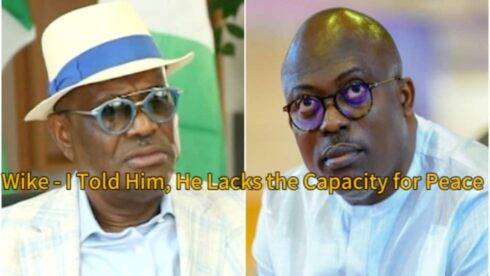
FCT Minister Nyesom Wike, in a stunning declaration that sent shockwaves through Nigeria’s political corridors, questioned the competence of Rivers State Governor Siminalayi Fubara to lead a true peace process in the embattled state. “I told him (Fubara) I don’t think you have the capacity to really make this peace,” Wike said during a media briefing in Abuja, sharply criticizing the governor’s approach to the ongoing political crisis that has engulfed Rivers State since 2023.
Nyesom Wike emphasized the contradictions in Fubara’s peace narrative, pointing out that while the governor claims to seek harmony, his loyalists are simultaneously stoking tensions. “It’s not easy; if you’re making peace, your people are demonstrating every day… your people are busy on television insulting people,” Wike added. His remarks underscore the deepening chasm between the former allies, with the minister casting doubts on Fubara’s sincerity and capacity to de-escalate the political turmoil.
Political Alliance or Provocation? The Visit That Reignited Tensions
Nyesom Wike further elaborated on a recent encounter with Governor Fubara, revealing that the latter was accompanied by two All Progressives Congress (APC) governors during a supposed peace mission. “Yes, he came with two governors. Unfortunately, the two governors are APC governors, so I will not pursue him,” Wike declared, hinting at a calculated political move rather than a genuine reconciliation attempt.
The presence of APC governors during Fubara’s outreach effort was seen by many analysts as a provocative gesture toward Nyesom Wike, a Peoples Democratic Party (PDP) heavyweight. Wike’s interpretation suggests that the gesture lacked neutrality and instead deepened suspicions of partisanship. “He said he wants peace, fine; I want peace,” Nyesom Wike concluded, though his tone suggested anything but readiness to reconcile without political conditions.
The Fallout: How PDP Is Fracturing in Rivers State
The political feud between Nyesom Wike and Fubara has exposed a tectonic crack within the PDP’s structure in Rivers State. Wike, the former governor and PDP’s undisputed strongman, continues to wield significant influence over the state’s political machinery. His feud with Fubara, once a protégé, has splintered the party into rival camps, creating an internal conflict that threatens the PDP’s electoral viability ahead of 2027.
This schism is not merely symbolic—it has real implications on governance. Key legislative and executive functions in the state have slowed, with loyalists of both camps obstructing policies and projects. The ripple effect of this division is already manifesting in halted infrastructural development and growing insecurity, with Rivers citizens caught in the crossfire of a battle for supremacy.
The APC Angle: Strategic Mediation or Political Chess?
Fubara’s decision to enlist APC governors in his attempt to broker peace has raised eyebrows, particularly among PDP loyalists. To Nyesom Wike, the move signified an insult—one that delegitimizes the sincerity of the peace process and suggests a broader scheme to undermine his political base. This alliance, whether tactical or incidental, has blurred party lines and injected fresh intrigue into an already convoluted political saga.
Observers speculate that Fubara’s pivot to APC figures could foreshadow a defection or an attempt to form a broader coalition to neutralize Nyesom Wike’s grip on the state’s PDP structure. If this hypothesis proves accurate, Rivers State could become a microcosm of Nigeria’s shifting political alliances—where ideology is secondary to expediency and survival.
Citizens in Limbo: Governance Held Hostage by Political Ego
While the political elite trade jabs and plot maneuvers, the people of Rivers State continue to suffer the consequences of stalled governance. From delayed salary payments to abandoned projects and deteriorating public services, the average citizen has become collateral damage in a high-stakes game of political brinkmanship. Nyesom Wike’s unrelenting criticisms and Fubara’s defensive postures have created a toxic atmosphere for effective leadership.
Public opinion is increasingly polarized. While some constituents see Wike’s interventions as a necessary check on gubernatorial overreach, others view his actions as overbearing and disruptive. This stalemate has bred cynicism and disillusionment, particularly among youth and civil society groups, who lament the prioritization of political dominance over democratic service delivery.
The Road Ahead: Will Peace Ever Be Achieved in Rivers State?
Wike’s statement, laced with both scorn and defiance, poses a critical question: can peace truly be achieved under the current political climate? With both camps entrenched and unwilling to yield ground, many believe that only a neutral third-party mediator—possibly from the national PDP hierarchy—can salvage what remains of the party’s influence in the state and restore administrative order.
For now, Rivers State remains on edge. Behind closed doors, political deals are being negotiated, while in public, insults are hurled and allegiances redrawn. As 2027 looms, the stakes grow higher, and the possibility of resolution grows slimmer. Wike’s parting words may have sounded conciliatory—“I want peace”—but their tone carried the unmistakable weight of a political titan unwilling to back down without a fight.
Table of Contents
Discover more from OGM News NG
Subscribe to get the latest posts sent to your email.