


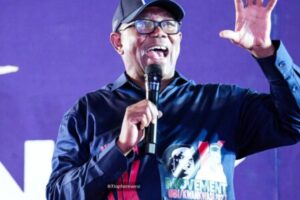






Prof. Chris Piwuna, a seasoned psychiatrist and vocal academic voice, has emerged as the newly elected President of the Academic Staff Union of Universities (ASUU), succeeding Prof. Victor Osodeke. Piwuna’s elevation, which took place during ASUU’s national executive council meeting, signals a potentially radical shift in the union’s leadership dynamics at a time when Nigerian tertiary education is teetering on the brink.
Prof. Piwuna, who also serves as Dean of Student Affairs at the University of Jos, assumes leadership of a union grappling with federal government apathy, funding shortfalls, and constant industrial actions. As an insider with years of union activism, he is expected to inject psychological acuity and political depth into ASUU’s longstanding struggle for institutional reform.
From Psychiatry to Power: The Unconventional Rise of Prof. Chris Piwuna
“ASUU is not a cult, but we are bound by a duty of care to Nigeria’s intellectual future,” declared Prof. Chris Piwuna in his first official remarks as ASUU president. With a medical background in psychiatry, his presidency marks a sharp departure from the conventional science-and-humanities dominated ASUU leadership of past decades.
As a consultant psychiatrist at the University of Jos Teaching Hospital, Piwuna brings an interdisciplinary lens to education policy. His rise challenges the status quo, reflecting ASUU’s possible intent to pursue a more cerebral, emotionally intelligent, and negotiation-savvy approach in the face of government inertia.
The End of the Osodeke Doctrine: ASUU Shifts Gears Under Piwuna’s Watch
Prof. Chris Piwuna inherits a fractured union and a fatigued academic community following Prof. Osodeke’s tenure, which was marked by prolonged strikes and a confrontational posture toward the federal government. Critics argued that under Osodeke, ASUU grew increasingly insular, losing the support of students and parents.
Piwuna, seen as a reconciliatory figure, has already hinted at deconstructing the “Osodeke Doctrine” of militant resistance. “While we maintain our principles, our methods must evolve,” he said. Insiders speculate that Piwuna may push for hybrid negotiations and advocacy-driven reforms rather than outright strikes.
Cracks in the Ivory Tower: Piwuna Faces Immediate Internal Backlash
Prof. Chris Piwuna’s election has not gone without internal resistance. Some senior members within ASUU argue that his background in mental health makes him less equipped to navigate the complex socio-political web of university unionism. A leaked internal memo from a zonal congress questioned the “medicalization of ASUU leadership.”
Despite the skepticism, Piwuna remains unflinching. “Leadership is not about academic discipline; it’s about strategic thinking,” he retorted. His appointment has already sparked heated debate within ASUU’s ranks and may set the tone for a more ideologically diverse union moving forward.
ASUU’s Future at Stake: Piwuna Confronts Policy Paralysis and Public Distrust
Prof. Chris Piwuna has acknowledged that one of his greatest hurdles is public disillusionment with ASUU’s perennial strike actions. With Nigerian students losing years to closed campuses, Piwuna is under pressure to deliver a more sustainable model of protest and policy engagement.
In an exclusive interview, he proposed a shift toward evidence-based advocacy, policy white papers, and university autonomy as long-term solutions. “We need to stop being reactive,” he warned, suggesting that ASUU could be more proactive in shaping national education policy beyond street protests and court battles.
Revolution or Retrenchment? Nigeria’s Education Watchers Eye Piwuna’s First 100 Days
As Prof. Chris Piwuna begins his tenure, expectations are high among education stakeholders who see his leadership as a litmus test for ASUU’s relevance in 21st-century Nigeria. Analysts believe the next 100 days could determine whether ASUU reclaims its intellectual leadership or continues to spiral into public disdain.
Already, Piwuna has scheduled regional consultations and stakeholder town halls in a move to decentralize union decision-making. “We’re entering a new phase of radical inclusion,” he said. If successful, this grassroots approach could rejuvenate ASUU’s base and reestablish its moral high ground in the education discourse.
Table of Contents
Discover more from OGM News NG
Subscribe to get the latest posts sent to your email.