







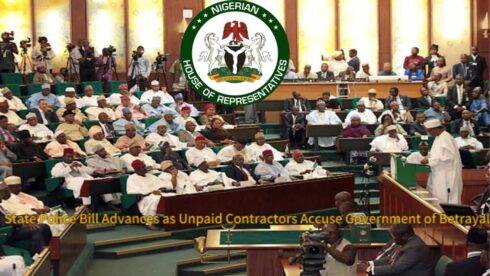
The House of Representatives has taken a bold and polarizing step by advancing deliberations on the much-contested State Police Bill, triggering a political and constitutional maelstrom across Nigeria. Lawmakers argue that devolving policing powers to states is no longer a luxury but a necessity, as rising insecurity continues to outpace the capacity of the overstretched federal police structure. Their legislative move follows mounting pressure from state governors, civil society, and regional groups demanding tailored security mechanisms to tackle banditry, terrorism, and local crimes.
This decisive step by the lower legislative chamber has rekindled hopes of true federalism but has also provoked fierce backlash from opponents who fear that state governors may misuse the forces to suppress dissent. As the bill gains momentum, the House must navigate a high-stakes legal and political labyrinth—one that tests the nation’s commitment to reform while preserving democratic safeguards.
House of Representatives: Lawmakers Defend Bill Amidst Accusations of Political Motive
The House of Representatives has defended the bill against allegations that it may open the floodgates to political thuggery and abuse of power. Speaking during plenary, several lawmakers emphasized that the proposed legislation includes strict constitutional boundaries, ensuring that state police units remain independent of partisan manipulation. “This is not about strengthening governors; it’s about protecting Nigerian lives,” one northern lawmaker declared.
Despite the assurances, critics remain unconvinced. Opposition parties and rights groups warn that many state leaders already operate with unchecked authority—adding armed police to that equation could embolden autocracy. Nonetheless, the House insists that the bill will empower communities, not politicians, and promises to include ironclad provisions for oversight, audits, and federal intervention where abuse is detected.
House of Representatives: State Governors and the House Forge Unprecedented Alliance
The House of Representatives has found unlikely but strategic allies in Nigeria’s state governors, 35 of whom have already backed the creation of state police. This rare consensus across political and geographic lines lends the bill significant weight and challenges the status quo of a unitary policing model in a federal system. Lawmakers describe the alliance as a “historic alignment of governance interests,” one that prioritizes the security of citizens above partisan divisions.
This collaboration, however, raises questions about the balance of power. Some lawmakers express concern that the bill may shift too much control to state executives, especially in regions prone to ethno-religious tension. Nevertheless, the majority in the House view this cooperation as a breakthrough moment, calling it “a tectonic shift toward responsive and decentralized governance.”
Constitutional Bottlenecks Threaten Legislative Breakthrough
The House of Representatives faces formidable constitutional hurdles, as any amendment affecting police powers must secure two-thirds support in both chambers and at least 24 state assemblies. This complex process, designed to prevent impulsive overhauls, now stands as the primary obstacle to implementing the new policing architecture. “We are not just passing a bill; we are rewriting the nation’s security blueprint,” said a senior House member.
Legal scholars caution that the devil lies in the details. Key issues such as the chain of command, funding structures, and inter-agency jurisdiction must be addressed to prevent institutional conflict. Lawmakers are under pressure to produce a flawless bill that not only wins votes but withstands legal scrutiny and operational challenges once implemented.
Public Sentiment Divided: Hope Meets Distrust
The House of Representatives acknowledges that public opinion on state police is sharply divided. In security-ravaged regions, citizens welcome the proposal as a potential lifeline against rampant crime and delayed federal responses. “We want police that know our terrain, speak our language, and protect us—not strangers from distant zones,” said a community leader in Zamfara, echoing a widespread sentiment in the North-West.
Conversely, in opposition strongholds and minority communities, fears persist about possible ethnic profiling and political victimization. Activists warn that local police could quickly devolve into instruments of oppression unless checks and balances are robust and enforceable. The House has pledged to hold town halls and public hearings to allay these concerns and shape the bill around citizen feedback.
A Defining Moment for Nigeria’s Federalism
The House of Representatives is now at the epicenter of what could become Nigeria’s most significant federal reform since the return to democracy. With the country teetering under the weight of nationwide insecurity, lawmakers see this as a defining moment to decentralize power and recalibrate governance. The bill, if passed and implemented, could redefine the role of both federal and state governments in law enforcement.
Still, the path ahead is fraught with ideological divisions, legal hurdles, and political risks. The House must balance urgency with caution, ensuring that the desire for security reform does not compromise Nigeria’s democratic principles. As lawmakers proceed, they do so with the weight of a nation’s hopes and fears on their shoulders.
Table of Contents
Discover more from OGM News NG
Subscribe to get the latest posts sent to your email.