









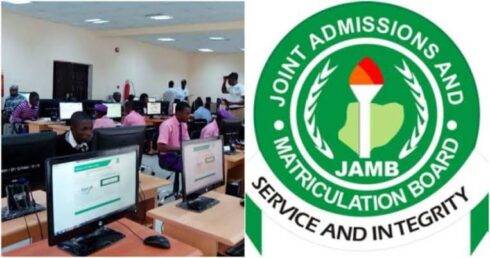
The Joint Admissions and Matriculation Board (JAMB) has released the results of the 2025 Unified Tertiary Matriculation Examination (UTME), unveiling a distressing trend: over 1.5 million candidates out of 1.9 million scored below the 200 mark. Given the UTME’s grading scale of 400, this score threshold is considered critical for university admissions, making the mass failure a profound national concern.
According to JAMB’s breakdown, 983,187 candidates (50.29%) scored between 160 and 199, while another 488,197 (24.97%) fell between 140 and 159. Only 334,560 candidates (17.11%) managed to score between 200 and 249—widely seen as the competitive range for most university courses. Even more troubling is the fact that only 12,414 candidates (0.63%) scored 300 and above, with a mere 4,756 (0.24%) scoring above 320.
Education stakeholders, analysts, and the public have decried these statistics as symptomatic of systemic decay in Nigeria’s educational system, pointing to deeper societal, infrastructural, and psychological factors impacting student performance.
Systemic Challenges and Operational Flaws
JAMB highlighted several challenges that hampered the 2025 examination process. These included biometric verification issues, which led to the rescheduling of affected candidates. Furthermore, 71,701 registered candidates were marked absent without explanation, adding another layer of concern about the exam’s integrity and the candidates’ circumstances.
The board also reported that 97 candidates were caught committing exam infractions, with an additional 2,157 under investigation for various forms of malpractice. These operational setbacks have compounded worries about the reliability of the UTME as a tool for measuring academic competence and readiness for tertiary education.
In addition, the results of blind candidates and participants under the Joint External Observer Group (JEOG) are still pending, while underage candidates evaluated under a special “exceptional ability” provision posted poor outcomes—only 467 out of 40,247 (1.16%) met the criteria for excellence.
UTME Failure:Public Outcry and Social Media Reactions
The disappointing results quickly sparked a heated conversation on social media, where concerned Nigerians, educators, and commentators voiced their opinions on the underlying causes of mass failure. Popular medical commentator @OurFavOnlineDoc lambasted JAMB for scheduling exams as early as 6:30 a.m., calling it unsafe and impractical. “You cannot set an exam for 6:30am in the morning… then express shock when these kids fail,” he wrote.
Similarly, education and career advocate Dr. Dipo Awojide attributed the failure to students’ poor attitude towards learning and the corrosive influence of social media and peer culture. “A generation that spends more than half their time on TikTok will never be able to score above 50%… School no be scam,” he emphasized, blaming the normalization of anti-education rhetoric among Nigerian youth.
Other users pointed to economic hardship and the decaying state of Nigeria’s educational institutions as root causes. @LightSkinMania observed, “If you look at the condition of the average Nigerian school and the living standard of the average Nigerian teacher you’d be surprised that the jamb failure rate isn’t like 90%.”
Changing Youth Priorities and Societal Rot
A growing number of Nigerians are expressing concern about what they see as a generational shift in values. Social commentator @UgwunnaEjikem tweeted, “Young people are more interested in gangsterism, drugs and fraud than they are in education.” Many believe this disturbing cultural shift is encouraged by influencers and entertainers who glorify materialism over academic success.
Others argue that the blame cannot be placed squarely on the youth. @Sportify stated, “Mass failure for 1.5m students… But let’s be realistic here, Nigeria is in a lot of economic mess and unbearable hardship. So who do we blame? GenZ or older generations?” This sentiment was echoed by @Abimbola, who noted that students’ academic decline mirrors the failings of their societal role models and leadership.
Overall, many agree that Nigeria is witnessing the repercussions of decades of neglect, poor funding, and a lack of accountability in the education sector. The latest UTME results are now being viewed not merely as an academic report but as a reflection of the nation’s broader identity crisis.
Call for Urgent Reform and Government Response
Education experts are calling on the government to treat the 2025 UTME outcome as a national emergency requiring immediate intervention. Suggestions include reviewing the UTME structure, revising the school curriculum, improving teacher welfare, and increasing investment in infrastructure and digital tools.
There are also growing calls for a national summit on education reform. “We need a complete overhaul—this is not just about exam results; it’s about the future of our country,” said an official from a leading education advocacy group.
JAMB is expected to address the nation in a scheduled press conference later this week, during which it will provide more context on the results, offer recommendations, and outline its roadmap for ensuring better performance in future assessments. For now, however, the 2025 UTME has reignited conversations around a deeply troubled education system that many believe is failing its most vulnerable—Nigeria’s youth.
Table of Contents
Discover more from OGM News NG
Subscribe to get the latest posts sent to your email.