







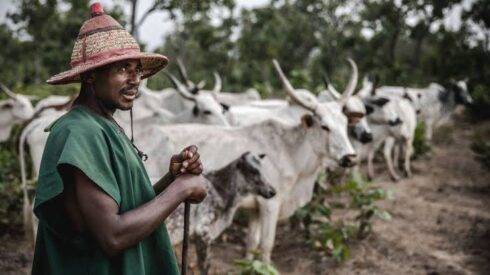
In a tragic escalation of violence in Plateau State, 37 cattle were slaughtered in Tashek community, Riyom Local Government Area, during a brutal attack that unfolded at about 1 p.m. on Sunday. The incident has once again highlighted the persistent insecurity afflicting pastoralist communities in the region.
Local witnesses reported that the attack, described as sudden and unprovoked, was carried out by unidentified assailants. The killing of the cattle—crucial to the herders’ livelihoods—has not only deepened economic distress but also intensified fear among pastoralist families, many of whom are now questioning their safety and survival in the face of repeated aggression in Plateau state.
Miyetti Allah Reacts: A Cry for Justice
The Plateau State chapter of the Miyetti Allah Cattle Breeders Association of Nigeria (MACBAN) condemned the attack in the strongest terms. Its chairman, Alhaji Ibrahim Babayo, labelled the killings as part of a “deliberate and orchestrated” plan to destabilize the pastoralist economy and render herders vulnerable.
“These killings are not random; they are part of a broader scheme designed to undermine our economy,” Babayo said. He called on security agencies to move beyond lip service and deliver tangible protection to pastoralists. He expressed dismay that repeated calls for assistance have gone largely unanswered, and that the identity of the attackers, often known within the community, remains cloaked in official ambiguity.
Security Response: Too Little, Too Late
Following the incident, security operatives reportedly visited the area to assess the damage. However, their response, while swift in terms of deployment, has done little to ease concerns among affected herders. The attackers, once again described vaguely as “unknown gunmen,” remain at large.
This recurring failure to apprehend culprits has exposed a glaring gap in intelligence gathering and community engagement. Despite repeated assurances from state authorities, herders feel increasingly abandoned by a system that appears unable—or unwilling—to protect them. The disconnect between Plateau state government statements and ground realities continues to fuel discontent and mistrust.
A Clash of Narratives: Accusations from Host Communities in plateau
Amidst rising tensions, alternate narratives have surfaced from within Plateau’s indigenous communities. Barrister Dalyop Nwantiri, National President of the Berom Youth Movement, offered a controversial perspective, accusing some herders of exploiting their cattle as cover for armed aggression against villages.
“We’ve seen situations where attackers hide among cattle to evade detection and launch surprise assaults,” Nwantiri claimed. This viewpoint has stirred further complications in the quest for peace, creating a cycle of blame that hampers reconciliation efforts. The friction between herders and farming communities continues to be fuelled by historical grievances and mutual suspicions in plateau state.
The Road Ahead: Calls for Action and Reconciliation
The recurring attacks have sparked renewed calls for a holistic, inclusive approach to resolving the insecurity plaguing Plateau State. Community leaders, advocacy groups, and affected residents agree that beyond reactive security measures, what is needed is a long-term peacebuilding initiative that addresses the root causes of the conflict.
“They are known in the communities,” Babayo insisted. “Yet justice remains elusive.” His words reflect a broader frustration that without meaningful investigations, community-based policing, and inter-group dialogue, the cycle of violence will only continue. As Plateau grapples with these challenges, only decisive and transparent actions from both government and local actors can pave the way toward sustainable peace.
Table of Contents
Discover more from OGM News NG
Subscribe to get the latest posts sent to your email.