





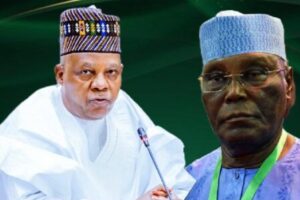




Adebayo Adelabu, Nigeria’s Minister of Power, has delivered a scathing rebuke of previous administrations, holding them responsible for the unrelenting failures of the country’s electricity supply. In a no-holds-barred statement released through his media aide, Bolaji Tunji, Adelabu lamented the culture of “policy paralysis” that plagued the sector for decades. He accused successive governments of offering empty rhetoric instead of tangible reforms, leaving the sector to decay under political convenience and bureaucratic inefficiency.
According to Adebayo Adelabu, the sector’s current dysfunction is a direct result of years of neglect in infrastructure development, poor regulatory enforcement, and lack of genuine commitment to systemic overhaul. “We’ve had a past we can’t be proud of. For too long, reforms were just lip service,” he stated. “You can’t repeat the same actions and expect different results.” His remarks come amid mounting public frustration over erratic electricity and soaring tariffs, sparking fierce debate across policy and civil society circles.
Power Grid on the Brink: GenCos Warn of Shutdown over N4 Trillion Debt
Adebayo Adelabu has warned that the electricity sector is at a breaking point as generation companies (GenCos) threaten a total shutdown over an unpaid N4 trillion owed by the Federal Government. In what is being described as an impending national crisis, GenCos say they cannot continue operations without immediate intervention. Alarmingly, N2 trillion of the debt stems from power supplied in 2024, during Adelabu’s current tenure, while N1.9 trillion is legacy debt that spans previous administrations.
Adebayo Adelabu did not shy away from acknowledging the gravity of the situation but reiterated that the root cause of the sector’s woes lies in the inherited liabilities and unsustainable financial frameworks. “We’re now focused on breaking away from that cycle,” he declared, promising that the Tinubu-led administration is working on a rescue package. He also hinted at a possible restructuring of the debt obligations in conjunction with fiscal authorities to avoid a nationwide blackout.
Rotten Infrastructure and Metering Chaos: The Real Enemies Within
Adebayo Adelabu underscored that the real cancer in Nigeria’s power sector lies not just in financial mismanagement, but in the physical rot of critical infrastructure. He cited the decaying state of transmission lines, transformers, and substations as key barriers to achieving stable power supply. “Many of our grid lines date back to the 1970s and have not seen proper upgrades. We’re running a modern economy on an ancient framework,” he explained.
Equally troubling, Adelabu pointed out, is the metering gap that continues to frustrate revenue generation. Over 50% of electricity consumers remain unmetered, leading to estimated billing, revenue leakages, and widespread distrust in the system. He stressed that until the metering shortfall is addressed, financial sustainability and customer satisfaction will remain elusive. His ministry has now prioritized smart metering schemes as a frontline reform policy.
Vandalism and Neglect: Double Blow to National Energy Hopes
Adebayo Adelabu did not mince words when condemning the ongoing vandalism of power infrastructure and the country’s entrenched culture of neglect. He described the twin challenges as “economic sabotage,” stressing that transformers and transmission lines are frequently destroyed or stolen, often with no consequences. “It’s one thing to have weak infrastructure, it’s another to have that limited asset base constantly under attack,” he noted with visible frustration.
He further criticized the lack of a maintenance culture, stating that decades of “build and abandon” syndrome have left the country with assets that are barely functional. “You can’t drive development without sustainability. What we’re doing now is not just building, but maintaining and protecting what we have,” Adebayo Adelabu insisted. The ministry is collaborating with security agencies and local communities to secure power assets from further degradation.
New Reforms in Motion: A Paradigm Shift or Political Rhetoric?
Adebayo Adelabu assured Nigerians that the current administration is not just recycling failed policies but initiating a total overhaul of the sector. He pointed to a range of new strategies including decentralization of the grid, incentivization of off-grid solutions, and aggressive private-sector partnerships. “This is a new direction. We are rethinking generation, transmission, and distribution from the ground up,” he emphasized.
Skeptics, however, argue that such promises echo the familiar political talking points of the past. Energy experts have urged the minister to publish specific implementation timelines and budget commitments. They warn that without transparent execution and legal safeguards, the sector may remain trapped in a cycle of failure. Adebayo Adelabu, however, maintains that Nigerians will soon begin to witness “measurable progress, not just hopeful statements.”
Public Confidence Wanes Amid Crisis: Time Running Out for Power Reforms
Adebayo Adelabu’s remarks come at a time when public confidence in the power sector is rapidly eroding. Citizens and civil society groups have taken to the streets and social media to protest worsening electricity supply despite rising tariffs. Many accuse the government of prioritizing revenue collection over service delivery. The frustration is further amplified by the high cost of alternative energy, especially diesel, which is now unaffordable for many households and small businesses.
In response, Adelabu urged patience and called for collective sacrifice as the country undergoes energy transition. “We didn’t get here overnight, and we won’t fix it overnight. But this time, we are not making empty promises,” he insisted. Whether these words will calm public outrage or fuel further unrest depends largely on what tangible improvements Nigerians begin to see in the months ahead.
Table of Contents
Discover more from OGM News NG
Subscribe to get the latest posts sent to your email.