









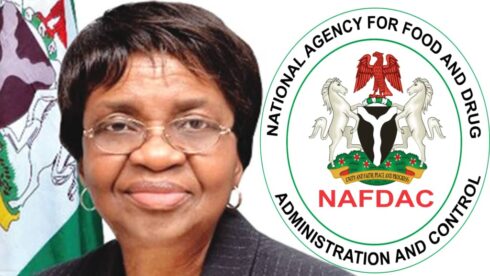
The National Agency for Food and Drug Administration and Control (NAFDAC) has escalated its fight against counterfeit and substandard medications, shutting down over 11,000 drug stores and arresting 40 individuals across Nigeria. This operation, which has been in the planning stages for over a year, marks one of the most extensive crackdowns in the agency’s history.
Prof. Mojisola Adeyeye, the Director-General of NAFDAC, revealed these details in Lagos, stating that the agency’s efforts are focused on dismantling networks that thrive on the sale of harmful pharmaceuticals. The agency’s enforcement teams have been conducting undercover surveillance for months to identify major distribution hubs of illicit drugs, leading to large-scale raids and confiscations.
Major Drug Markets Raided: Idumota, Ariaria, and Onitsha
On February 10, NAFDAC launched a massive enforcement operation at the Idumota open drug market in Lagos, the Ariaria market in Aba, and the Bridge Market in Onitsha—three hubs that reportedly control over 80% of Nigeria’s pharmaceutical trade. The agency’s objective is to remove unregistered, falsified, and hazardous medications from circulation.
In Onitsha alone, authorities seized 30 trucks filled with substandard drugs, while in Aba, more than 20 trucks were impounded. Lagos’s Idumota market saw 27 truckloads of counterfeit medications confiscated. This large-scale operation has sent shockwaves through the pharmaceutical black market, with traders scrambling to comply with regulations or risk permanent closure.
Mass Closures: Over 11,000 Drug Stores Shut Down
As part of the enforcement drive, NAFDAC has shut down 4,000 drug shops in Onitsha, 3,027 in Lagos, and another 4,000 in Aba. Many of these stores were found to be operating without proper licenses, selling unregistered products, or engaging in illegal distribution practices. The agency is now shifting its focus to conducting door-to-door inspections to identify compliant businesses and penalize violators.
Prof. Adeyeye emphasized that some traders operate legally but lack proper registration under the Pharmaceutical Council of Nigeria (PCN). This has made it necessary for NAFDAC to conduct thorough background checks to differentiate between legitimate businesses and those involved in illicit pharmaceutical activities.
Security Reinforcement: NSA Deploys Hundreds of Officers
Recognizing the risks involved in dismantling entrenched drug cartels, NAFDAC sought security reinforcements from the National Security Adviser (NSA). In response, the NSA provided 400 security operatives in Onitsha, 350 in Aba, and 250 in Lagos to protect NAFDAC officials from potential attacks.
This reinforcement was deemed necessary after past incidents where NAFDAC officials faced violent resistance during similar operations. Prof. Adeyeye recalled a major crackdown three years ago in Onitsha where agency officers narrowly escaped a fatal ambush. With enhanced security this time, the agency has been able to carry out operations without fear of retaliation.
Impact on Nigeria’s Pharmaceutical Industry
NAFDAC’s sweeping crackdown is expected to bring long-term changes to Nigeria’s pharmaceutical sector. By eliminating counterfeit drugs, the agency aims to restore confidence in locally available medications and improve public health outcomes. Experts have lauded the move, stating that the presence of unregulated drugs has contributed significantly to increased mortality rates and antibiotic resistance.
However, some stakeholders argue that shutting down thousands of drug stores could create temporary shortages of essential medications, especially in underserved areas. In response, NAFDAC has assured the public that the agency is working with legitimate pharmaceutical companies to ensure the continued availability of safe and certified drugs.
What’s Next? NAFDAC’s Next Phase of Action
With large-scale market raids nearing completion, NAFDAC is now preparing for a new phase of its enforcement strategy. The agency will conduct systematic inspections of individual shops to verify their registration status, ensuring compliance with pharmaceutical regulations. Those found guilty of selling unregistered drugs will face legal action, including possible jail time and hefty fines.
Prof. Adeyeye has also hinted at future collaborations with international regulatory bodies to further strengthen Nigeria’s drug safety framework. Moving forward, NAFDAC plans to introduce stricter penalties for drug counterfeiters and establish digital tracking systems to monitor the distribution of pharmaceutical products across the country.
Table of Contents
Discover more from OGM News NG
Subscribe to get the latest posts sent to your email.