






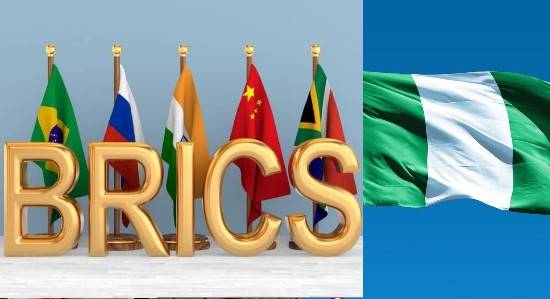
In a landmark decision, Nigeria has been admitted as a “partner country” to the BRICS bloc, which comprises Brazil, Russia, India, China, and South Africa. This announcement, made by Brazil—the current chair of the group—underscores the bloc’s commitment to fostering global economic cooperation and reforming international governance. The inclusion of Nigeria, Africa’s most populous nation and largest economy, highlights the bloc’s strategic focus on expanding its influence in the Global South.
BRICS was originally established to serve as a counterbalance to the Group of Seven (G7) leading industrialized nations. With Nigeria’s inclusion, the bloc’s partnership network now extends to nine countries, joining Belarus, Bolivia, Cuba, Kazakhstan, Malaysia, Thailand, Uganda, and Uzbekistan. This expansion reflects the bloc’s broader vision of fostering equitable global development.
Nigeria Joins BRICS: Significance of Nigeria’s Membership
Brazil, as the chair of BRICS, emphasized as Nigeria Joins BRICS this is pivotal role on the African continent. With over 200 million people and a rapidly growing economy, Nigeria represents a vital market and a key geopolitical player. Its inclusion is expected to strengthen BRICS’ collective bargaining power and enhance its initiatives aimed at promoting South-South cooperation.
Nigeria’s membership aligns with the bloc’s focus on addressing systemic inequities in global governance. As a key voice in African Union initiatives and an advocate for economic diversification, Nigeria’s participation in BRICS is anticipated to bolster collective efforts to reform international financial institutions and improve the representation of developing nations.
Recent Expansions and Future Prospects as Nigeria Joins BRICS
The BRICS bloc has recently invited Saudi Arabia to join its ranks and received formal membership applications from Turkey, Azerbaijan, and Malaysia. These developments indicate a growing interest among nations to align with the bloc’s goals of reducing reliance on Western-centric economic structures.
In its latest round of expansions, BRICS added Iran, Egypt, Ethiopia, and the United Arab Emirates. These additions signify the bloc’s strategic focus on regions with significant geopolitical and economic influence. By welcoming Nigeria, BRICS not only strengthens its presence in Africa but also enhances its collective capacity to address global challenges such as trade imbalances and economic inequality.
Nigeria Joins BRICS: Toward a Multipolar Economic System
BRICS leaders have expressed their commitment to developing a payment system independent of the U.S. dollar. This initiative is seen as a strategic move to reduce dependence on Western financial systems and foster economic resilience among member and partner countries. However, this proposal has faced resistance, including threats of 100% tariffs from U.S. President-elect Donald Trump if actions to undermine the dollar materialize.
The push for a multipolar economic order reflects BRICS’ broader vision of creating a fairer and more inclusive global financial system. With Nigeria’s inclusion, the bloc’s efforts to advance this agenda are likely to gain additional momentum, further challenging the dominance of established economic powers.
Nigeria’s admission as a partner country to BRICS marks a significant step in the bloc’s evolution and its mission to reshape global economic governance. As the group continues to expand its network and strengthen its initiatives, the inclusion of key players like Nigeria underscores its commitment to fostering inclusive development and addressing the challenges facing the Global South. This development sets the stage for a more balanced and equitable global economic landscape.
Table of Contents
Discover more from OGM News NG
Subscribe to get the latest posts sent to your email.