









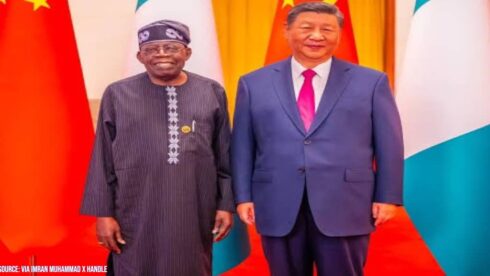
China and Nigeria have reaffirmed their commitment to economic cooperation by renewing their bilateral currency swap agreement. The People’s Bank of China (PBOC) announced on Friday that the agreement, valued at 15 billion yuan—equivalent to $2.09 billion or 3.28 trillion Nigerian naira—marks a significant milestone in the strategic partnership between the two nations. This pact, which is set to remain in effect for three years, demonstrates their shared goal of enhancing financial collaboration and fostering seamless trade relations.
The agreement provides a framework for financial transactions using local currencies, reducing dependence on the U.S. dollar and mitigating associated exchange rate risks. This initiative is expected to simplify cross-border trade and investment, making it more efficient and cost-effective for businesses in both countries. By leveraging their respective currencies, China and Nigeria aim to create a more resilient economic landscape, fostering growth and stability within their bilateral relationship.
China and Nigeria Bilateral Agreement: Strengthening Financial Cooperation
The renewal of the currency swap agreement is expected to deepen financial collaboration between the two countries. As highlighted in the PBOC’s statement, the deal will promote the use of the Chinese yuan and the Nigerian naira in cross-border transactions, fostering a more integrated financial ecosystem.
This initiative aligns with China’s broader objective to internationalize the yuan and Nigeria’s efforts to strengthen its economic ties with Asia’s largest economy. By reducing currency conversion costs, the agreement is poised to encourage more businesses to engage in trade, further cementing the economic partnership.
China and Nigeria Bilateral Agreement: Facilitating Bilateral Trade and Investment
With the renewed currency swap agreement, trade and investment between China and Nigeria are likely to witness significant growth. This arrangement simplifies transactions for importers and exporters, eliminating exchange rate uncertainties and streamlining financial operations.
China remains one of Nigeria’s largest trading partners, with a substantial volume of imports and exports flowing between the two nations. By leveraging this currency swap mechanism, businesses in both countries can access more predictable and stable financial pathways, potentially leading to increased trade volume and mutual economic benefits.
China and Nigeria Bilateral Agreement: Supporting Nigeria’s Economic Diversification Agenda
For Nigeria, the renewed currency swap agreement aligns with its economic diversification strategy. By easing trade and investment processes, the deal provides Nigerian businesses with opportunities to explore Chinese markets and attract Chinese investors into non-oil sectors.
As Nigeria seeks to reduce its dependence on oil revenues, this agreement offers a valuable tool for fostering industrial and agricultural exports. The simplified currency exchange framework enables local businesses to compete effectively in international markets, boosting the country’s economic growth prospects.
China and Nigeria Bilateral Agreement: Advancing China’s Yuan Internationalization Goals
China’s commitment to promoting the yuan as a global currency is further underscored by the renewal of this agreement. The currency swap with Nigeria is part of China’s larger strategy to expand the yuan’s footprint in international trade and finance, particularly in emerging markets.
By facilitating yuan-based transactions in Nigeria, China strengthens the currency’s appeal in Africa. This development not only enhances China’s global economic influence but also solidifies its role as a key partner in Nigeria’s economic development.
China and Nigeria Bilateral Agreement: Enhancing Regional Financial Stability
The renewed currency swap agreement also has broader implications for regional financial stability. By reducing dependence on the U.S. dollar, the deal mitigates the impact of global currency fluctuations on both economies, providing a more stable trading environment.
For Africa, this agreement serves as a model for fostering economic cooperation with global powers while maintaining financial autonomy. It sets a precedent for other African nations to explore similar partnerships, contributing to a more balanced global economic landscape. The currency swap renewal between China and Nigeria is a strategic move that underscores the growing importance of bilateral economic partnerships in shaping global trade dynamics.
Table of Contents
Discover more from OGM News NG
Subscribe to get the latest posts sent to your email.