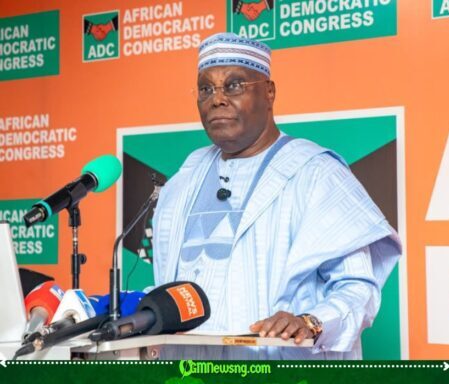








The African Democratic Congress (ADC) has stated firmly that it will not be pressured into making an early decision regarding the zoning of its presidential ticket ahead of the 2027 general elections. According to the party, internal consultations are ongoing, and a final position will be announced at what it describes as the “appropriate time.”
The ADC position comes amid growing political activity and alignments less than a year before the next presidential race, with other major parties already taking decisive steps on zoning and candidate selection.
ADC Maintains Strategic Silence on Zoning
Speaking on a televised programme, ADC spokesman Bolaji Abdullahi emphasized that the party is engaged in strategic discussions but will not succumb to external pressure to disclose its plans prematurely.
He stated that zoning remains a key issue under consideration but declined to provide further details, noting that such decisions require careful deliberation. Abdullahi stressed that the party is prioritizing long-term strategy over immediate political expectations.
His remarks highlight the ADC’s cautious approach as it seeks to position itself as a viable alternative in Nigeria’s evolving political landscape. By delaying its zoning decision, the ADC appears to be keeping its options open in a highly competitive environment.
Political Context and Competing Party Moves
The ADC’s stance comes shortly after the Labour Party (LP) announced that its 2027 presidential ticket will be zoned to the southern region. Similarly, the All Progressives Congress (APC) has adopted incumbent President Bola Tinubu as its consensus candidate.
These developments have intensified public interest in the African Democratic Congress’s direction, especially as it has recently emerged as a platform attracting opposition figures and coalitions seeking to challenge the ruling party.
Political observers note that zoning decisions often play a critical role in Nigeria’s electoral dynamics, influencing regional support and party unity. The ADC’s delay may therefore reflect an attempt to build broader consensus within its ranks before committing to a specific regional arrangement.
ADC Rejects Claims of Political Bias, Calls for Unity
Addressing allegations that the ADC is being positioned as a platform for former Vice President Atiku Abubakar, Abdullahi dismissed the claims, insisting that the party remains open to all aspirants.
He clarified that theAfrican Democratic Congress is not aligned with any individual ambition, adding that potential candidates such as Peter Obi and Rotimi Amaechi are equally free to contest under its platform. According to him, suggestions of preferential treatment are unfounded.
Abdullahi also expressed concern over what he described as increasing pressure on opposition parties, accusing the current administration of creating conditions that weaken political competition. He called on opposition groups to unite, warning that fragmentation could strengthen the existing power structure and limit democratic choices for Nigerians.
As the countdown to the 2027 presidential election continues, the African Democratic Congress’s measured approach underscores the complexity of political strategy in Nigeria. While other parties have taken clear positions, the African Democratic Congress appears focused on internal cohesion and broader alliance-building before making a decisive move on zoning.
Table of Contents
Discover more from OGM News NG
Subscribe to get the latest posts sent to your email.