





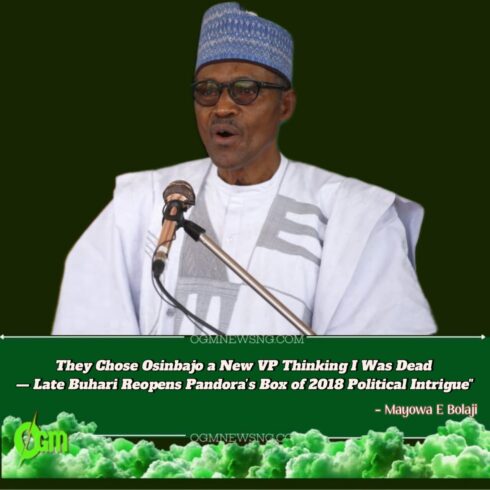
Muhammadu Buhari, the late former Nigerian president, stunned political observers when he nonchalantly addressed the widespread 2018 rumors of his death. Speaking on August 12, 2018, he declared, “It’s really me, I assure you.” With visible amusement, he revealed that some individuals had already approached Vice President Yemi Osinbajo to consider them for the Vice Presidential slot, assuming Buhari had passed on.
This revelation shocked many who once dismissed the rumors as mere political distraction. The subtle sarcasm in Buhari’s tone—especially the reference to being “harassed by grandchildren”—exposed the emotional toll and public mistrust that shadowed his presidency. His declaration rekindles questions about media manipulation, elite silence, and the fragility of leadership trust in Africa’s most populous democracy.
Osinbajo’s Silent Loyalty: Betrayal or Tactical Obedience?
While Muhammadu Buhari openly laughed off the rumors, his statement dragged Vice President Osinbajo into a sensitive light. Did Osinbajo know about the backroom moves? Or was he simply the calm figure maintaining state continuity amidst uncertainty? Political insiders now say the silence from Aso Rock in 2018 was calculated, with Osinbajo reportedly fielding offers from desperate power-seekers.
Yet, Osinbajo never publicly addressed the issue, fueling speculations that he was either protecting Buhari’s image or subtly preparing for a sudden transition. His perceived loyalty is now being re-evaluated in the harsh light of Buhari’s open confession. Was Nigeria dancing on the edge of constitutional crisis under the guise of “business as usual”?
The ‘Muhammadu Buhari Clone’ Theory: How Conspiracy Fueled Global Disgrace
During Muhammadu Buhari’s extended medical leave in the UK in 2017 and 2018, conspiracy theories exploded online, with many Nigerians believing he had died and was replaced by a Sudanese clone named “Jubril.” Buhari’s flippant 2018 dismissal—“It’s really me, I assure you”—did little to satisfy doubters who had already weaponized the theory to destabilize the political climate.
Rather than extinguishing the rumor, Buhari’s late rebuttal deepened the distrust among citizens. Global media picked up the bizarre theory, leading to Nigeria becoming a laughingstock in international circles. The damage to institutional credibility and digital literacy remains a sore wound for the country’s global reputation.
Political Opportunists and the Race to Replace Muhammadu Buhari
Muhammadu Buhari’s comment that “some people reached out to Osinbajo” laid bare the dark underbelly of Nigeria’s political elite. These unnamed individuals allegedly saw Buhari’s silence and health issues as a golden opportunity to reposition themselves for power. The VP’s proximity to succession made him the obvious target for covert lobbying.
This political vulture culture revealed how quickly alliances crumble in Nigeria’s corridors of power. Analysts argue that the rush to capitalize on Buhari’s assumed demise demonstrates a systemic rot—where ambition trumps loyalty, and where governance is a game of survival, not service.
Grandchildren, Not Graveyards: Buhari’s Most Humanizing Moment
Amidst the controversy, Buhari’s remark about being “harassed” by his growing number of grandchildren added an oddly human touch to the saga. In an age of misinformation and distrust, his attempt at humor served to reframe him as more than a stoic general. Still, critics argue it was a miscalculation that trivialized the weight of the national anxiety.
Whether intentional or not, Buhari’s family reference sparked fresh conversations about legacy, longevity, and what it means for African leaders to transition from power to private life. The once-distant leader painted himself as a grandfather rather than a ghost—yet many Nigerians remain unconvinced, asking: why wait until now to joke about it?
A Crisis of Transparency That Still Haunts Nigeria
Buhari’s delayed and casual response to death rumors highlights a deeper crisis: the lack of transparency in Nigerian leadership. For months, the nation was in a fog of official silence, misinformation, and eerie calm. The government’s refusal to provide timely medical updates fueled the public’s imagination—and now, the president’s own words confirm that others believed he was gone too.
This saga underscores the need for institutional reforms that prioritize openness and consistent communication from those in power. Nigeria may have moved on politically, but the wounds from 2018—when silence was louder than truth—still bleed into today’s conversations about trust, democracy, and national dignity.
Table of Contents
Discover more from OGM News NG
Subscribe to get the latest posts sent to your email.