








Venezuela is located in the northern part of South America, bordered by Colombia to the west, Brazil to the south, Guyana to the east, and the Caribbean Sea along its northern coast, giving it direct maritime access to key regional trade and security routes.
This positioning places Venezuela at the heart of significant commercial pathways, naval patrol zones, and energy distribution corridors that connect the Americas. The country’s northern coastline creates a wide interface with Caribbean island nations and U.S.-influenced maritime territories, allowing it to serve as a gateway for international commerce, naval mobility, and geopolitical influence. This critical access underscores why major world powers, economic partners, and military strategists maintain a vested interest in developments inside Venezuela.
This strategically positioned nation occupies a vital spot that allows influence over both Atlantic and Caribbean maritime corridors, making it a significant player in regional security considerations. It can exert pressure — or provide support — to nations dependent on these routes for trade, oil transport, or military surveillance. As global supply chains remain sensitive to disruptions, Caracas’ ability to impact these waters introduces a complex layer to regional policy, especially in times of heightened political tension or conflict.
Venezuela is home to diverse terrain including coastal plains, the Andes Mountains, and the vast Orinoco River Basin, providing the nation with important natural barriers and logistical advantages that have historically shaped its defensive military posture. This wide array of landscapes allows for fortified strongholds in mountain ranges, rapid troop movement along river systems, and concealed deployments in the Amazon-influenced south — creating a layered defense structure that complicates any theoretical invasion or pressure campaign from external adversaries.
Venezuela has long leveraged its geographic and natural resource strength—especially oil—as key elements in global geopolitics, influencing diplomatic relationships with major world powers seeking access to its energy reserves. Despite economic struggles under sanctions and mismanagement, Venezuela still commands one of the world’s largest proven oil reserves, maintaining leverage even while its economy suffers. The country’s leadership often utilizes this resource dominance to sustain crucial alliances and negotiate support that shields the regime from full international isolation.
Venezuela remains under intense international observation as shifts in its military strategy could have immediate consequences for security, trade, and diplomatic interactions across the entire Caribbean and South American region. Neighboring nations that rely on border stability, maritime safety, and refugee controls see any Venezuelan militarization as a potential crisis accelerator. As a result, analysts closely monitor Caracas for signs of escalation or regional destabilization linked to leadership decisions.
Venezuela’s Rapid Arms Procurement and Russian Support
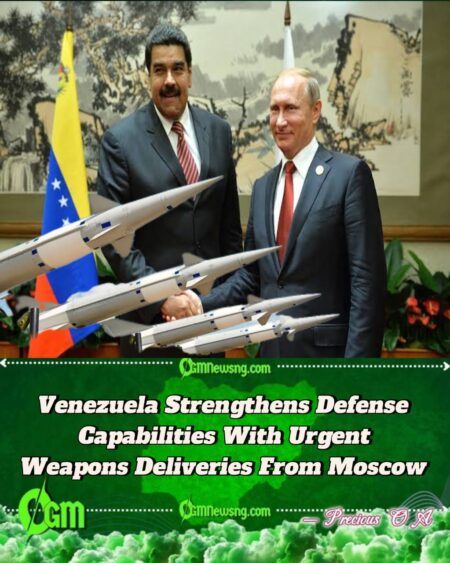
Venezuela has reportedly initiated urgent arms purchases from Russia, with military transport aircraft tracked arriving in the country carrying weapons and specialized military equipment. These deliveries are believed to include advanced air defense systems, upgraded armored vehicles, precision-guided munitions, and potentially surveillance technologies intended to strengthen domestic command-and-control networks. The frequency of these flights strongly indicates a coordinated expansion rather than routine maintenance.
Russian military cooperation appears to be deepening as the deliveries suggest not merely maintenance replenishment but the strengthening of operational readiness for potential confrontation. Intelligence experts believe this may involve joint planning for defensive strategies, greater integration of Russian-trained Venezuelan officers, and preparation for potential external threats. Such collaboration suggests Moscow sees Caracas as a valuable foothold in the Western Hemisphere — a strategic counterbalance to NATO influence elsewhere.
Venezuela continues to justify these military acquisitions as necessary defensive measures aimed at countering perceived threats, although critics argue they are aligned more with regime security than national protection. The Maduro administration frequently references potential U.S. intervention, border disputes with Guyana, and alleged plots from political opponents to justify dramatic increases in defense capability. Human rights observers argue that as pressure mounts inside the country, military empowerment becomes a tool to suppress civilian dissent rather than repel foreign forces.
Venezuela is seen deepening its longstanding security partnership with Russia, strengthening ties that extend beyond arms trade into training, intelligence infrastructure, and strategic cooperation that rivals influence from Western powers. This growing alignment symbolizes a deliberate political stance — one that embraces Russian backing as a shield against sanctions while positioning Venezuela within a bloc of nations resisting Western dominance. The symbolism is as significant as the weaponry delivered.
To Venezuela’s internal leadership, these rapid acquisitions signal a message of resilience and sovereignty. To neighboring nations and global defense analysts, they represent a turning point that could transform a political crisis into a military one if pressure continues escalating. The ambiguity of intent — whether defensive or aggressive — fuels the rising concern that the smallest spark in a tense environment could ignite wider conflict.
Venezuela’s Implications for Regional Security and Tensions
Venezuela is increasingly viewed as a possible flashpoint in the Western Hemisphere, as neighboring states and the United States analyze the intentions behind this rapid military expansion. Regional governments are now updating emergency plans, strengthening border defenses, and heightening naval readiness in anticipation of shifts that may require fast response.
Concerns are growing that the acquisition of advanced capabilities could heighten confrontations, particularly in the Caribbean and along disputed border regions where long-standing political tensions remain unresolved. The Essequibo territorial dispute with Guyana is of particular global interest — analysts fear new armaments could embolden Caracas to escalate the conflict, transforming a political disagreement into a military confrontation with international implications.
Venezuela’s internal instability — characterized by economic collapse, humanitarian crises, and political repression — is now intersecting with external militarization, creating a complex environment that heightens regional anxiety. The mass exodus of millions of Venezuelans has already reshaped population demographics in Colombia, Brazil, and beyond. Intensified military posture could worsen displacement and strain services in countries already overwhelmed by refugee inflows.
Venezuela now stands at the center of escalating geopolitical concern, with analysts warning that continued military strengthening, foreign involvement, and domestic volatility could trigger a major confrontation if not urgently addressed. Diplomatic interventions are being encouraged by international organizations, but deep distrust between key players — and Caracas’ continued reliance on Moscow — raises doubts about finding a peaceful resolution before tensions peak.
Table of Contents
Discover more from OGM News NG
Subscribe to get the latest posts sent to your email.