




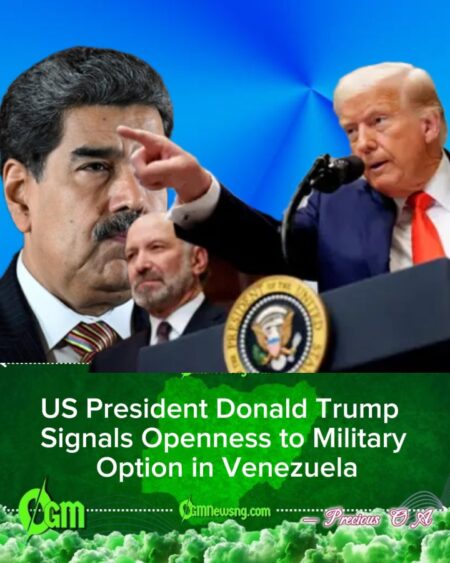
U.S. President Donald Trump has stated that he will not rule out sending American military forces to Venezuela, signaling a potential adjustment in Washington’s approach toward the South American nation amid ongoing political instability. His remarks have sparked renewed conversations in diplomatic circles, in the media, and among international policymakers about U.S. foreign policy priorities and the conditions under which such a decision might be considered appropriate. Analysts and observers are scrutinizing the president’s statements to understand whether this signals a shift toward a more assertive posture or merely a reiteration of existing strategic options.
Trump emphasized that, at present, no immediate action has been announced or planned, but his administration continues to monitor the complex political, economic, and humanitarian developments in Venezuela with close attention. He underscored the importance of keeping all options available while maintaining diplomatic channels to address ongoing challenges and avoid unnecessary escalation.
The president’s comments arrive at a time when regional alliances, economic challenges, and increasing diplomatic pressures have converged to create a particularly tense environment around Venezuela’s leadership and governance. As international attention continues to focus on the country’s internal crises, the U.S. administration’s statements carry significant weight and have already prompted discussions among allies, partners, and critics alike about the potential implications of a U.S. military presence in the region.
Escalating Regional Dynamics
Trump noted that the situation in Venezuela remains fluid, with ongoing political tensions, economic hardships, and social unrest continuing to shape developments within the country. He highlighted that while dialogue and diplomatic efforts remain essential, Washington must also remain prepared to respond to developments that could threaten U.S. interests or regional stability. The president indicated that his administration is carefully analyzing the political landscape, the balance of power within Venezuelan institutions, and the potential responses of both allies and adversaries.
Regional observers have pointed out that neighboring Latin American countries are likely to view any external military presence, particularly from the United States, with caution. Countries such as Colombia, Brazil, and other members of the Organization of American States have historically emphasized the importance of sovereignty and regional solutions while expressing concern over foreign military involvement. Trump’s remarks appear to acknowledge these sensitivities while signaling that the United States will not entirely rule out action if circumstances require it.
Trump has suggested that Washington would consider action only if conditions deteriorate significantly, particularly if Venezuelan instability threatens the safety of U.S. citizens, regional security, or broader international interests. He reiterated that any steps taken would be calculated, deliberate, and grounded in both national security imperatives and humanitarian considerations, balancing the need for strategic readiness with the preference for measured, diplomatic approaches.
Humanitarian and Economic Considerations
Trump highlighted that humanitarian conditions in Venezuela remain a central concern for the United States, emphasizing the ongoing shortages of food, medicine, and essential services. He noted that the migration of Venezuelans to neighboring countries continues to strain regional infrastructure and exacerbate existing social and economic pressures. Trump framed these challenges as a key factor in determining how the U.S. might respond, asserting that humanitarian considerations would weigh heavily in any decision-making process.
Relief organizations and humanitarian groups, which have monitored the crisis for years, continue to report significant challenges, including disrupted supply chains, limited access to healthcare, and rising levels of malnutrition and disease. These conditions have resulted in a mass exodus of Venezuelan citizens seeking safety and stability, placing additional pressure on countries such as Colombia, Brazil, and other regional neighbors. Trump acknowledged these reports and emphasized that his administration is actively reviewing how international aid, economic support, and diplomatic pressure could address these issues without immediate recourse to military action.
Trump affirmed that any potential U.S. decision would weigh both the suffering of Venezuelan citizens and the potential consequences of military involvement. He indicated that while the United States is prepared to protect its interests and respond to threats, humanitarian considerations remain central to shaping policy options, reflecting a careful balance between strategic priorities and moral responsibility in international affairs.
Diplomatic Channels and International Reactions
Trump stated that diplomatic efforts remain the preferred path for addressing the Venezuelan crisis, underscoring that engagement with international partners and regional stakeholders continues to be a primary strategy. He stressed that while military options are being considered, they would only be used in the context of a broader diplomatic and strategic framework. Trump emphasized that the administration remains committed to pursuing sanctions, negotiations, and other diplomatic tools to influence outcomes in Venezuela.
European partners, responding to his remarks, reiterated their preference for dialogue, sanctions, and humanitarian coordination rather than military intervention. These partners have consistently emphasized the importance of respecting sovereignty while encouraging meaningful political reforms and solutions through negotiation rather than force. Trump acknowledged their position while noting that U.S. policy would remain independent and driven by its own assessment of national and regional interests.
Trump also acknowledged that international pressure, whether economic or political, continues to be a key instrument in shaping outcomes in Venezuela. He emphasized that coordination with allies, multilateral organizations, and regional governments forms an integral part of the administration’s approach, with the ultimate goal of achieving stability, promoting democratic governance, and protecting vulnerable populations without unnecessary escalation.
U.S. National Security Calculations
Trump indicated that national security interests are a critical factor in determining whether military involvement should ever be considered. He highlighted that the United States maintains a strong presence in the Western Hemisphere and continues to assess threats that could compromise the safety of its citizens, assets, and regional security commitments. The president underscored that any consideration of military deployment would be grounded in careful evaluation of potential risks, logistical requirements, and broader strategic consequences.
Security analysts argue that any American deployment would require extensive planning, resources, and coordination with both allies and local actors. They emphasize that such an action carries the potential for far-reaching geopolitical consequences, making careful deliberation essential. Trump appears to acknowledge these risks while maintaining that the U.S. must remain prepared to act decisively if circumstances demand.
Trump emphasized that the protection of U.S. citizens, assets, and diplomatic personnel would guide the administration’s strategic decisions. He reiterated that the United States is committed to safeguarding its interests while pursuing measured, responsible approaches to international crises, carefully weighing military readiness against the potential for conflict escalation or unintended consequences.
Congressional and Public Response
Trump’s comments have prompted reactions in Washington, where lawmakers remain divided on the appropriate course of action regarding Venezuela. Some members of Congress have praised the president’s willingness to keep all options available, citing concerns over regional instability and threats to American interests.
Other lawmakers, particularly those focused on foreign affairs and diplomatic strategy, have expressed concern about escalating tensions without a clear plan, broad international support, or defined objectives. They emphasize the importance of consultation with regional partners, allies, and multilateral organizations before considering military involvement.
Trump appears prepared to consult with congressional leaders should future decisions move beyond statements and toward actionable policy. He highlighted the importance of coordination with legislative stakeholders while maintaining executive authority to protect U.S. interests, signaling that any potential action would be part of a comprehensive, deliberative process rather than a unilateral or impulsive decision.
Table of Contents
Discover more from OGM News NG
Subscribe to get the latest posts sent to your email.