








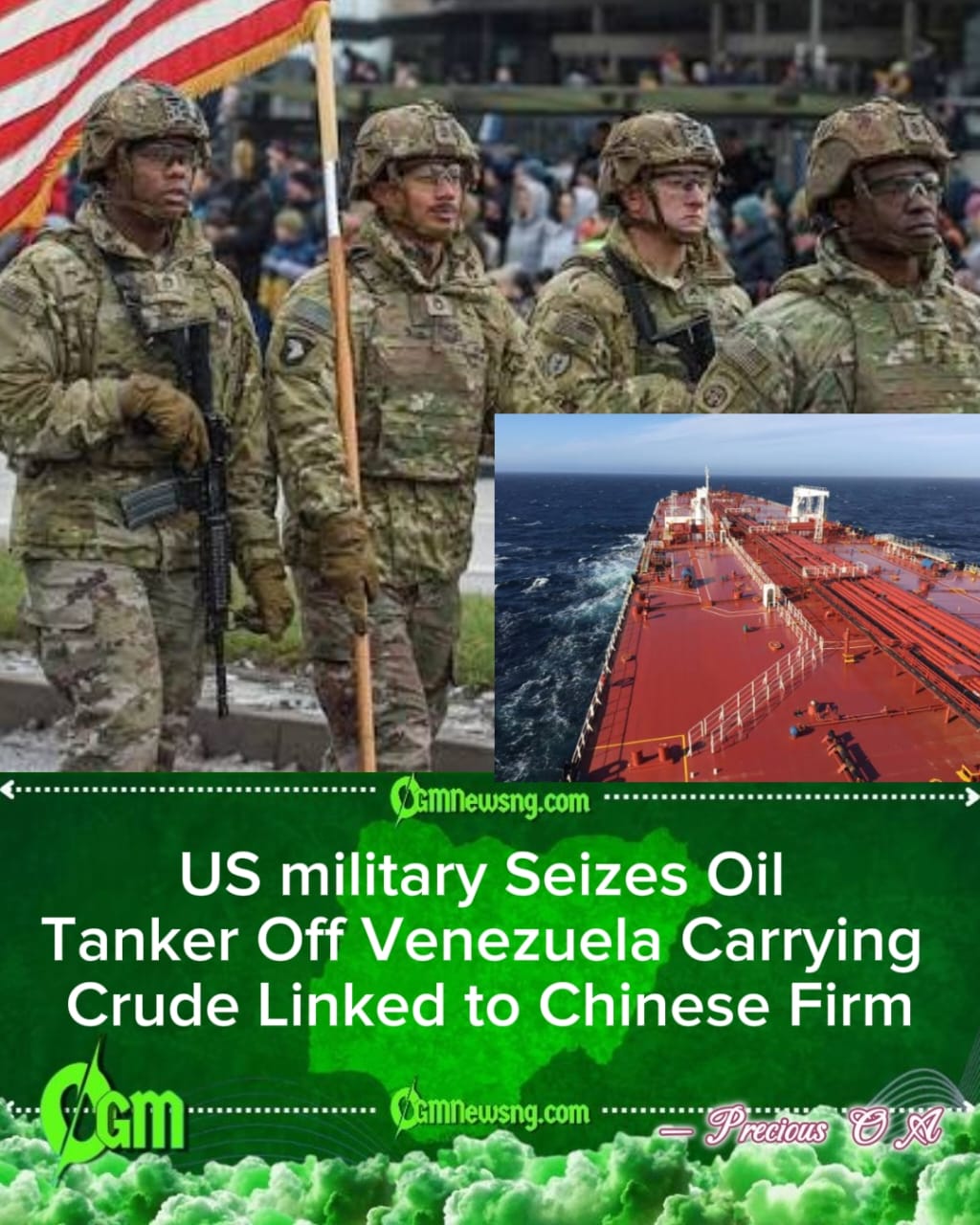
US military officials confirmed that American forces have seized an oil tanker operating off the coast of Venezuela that was carrying roughly two million barrels of crude oil allegedly owned by a Chinese company. The action, carried out during a maritime interdiction operation, immediately drew international attention due to the scale of the cargo and the geopolitical sensitivities surrounding Venezuela’s oil trade and China’s growing global energy footprint.
Defense officials said the seizure was conducted under existing authorities related to sanctions enforcement and maritime security. The tanker was reportedly operating in contested waters and was flagged for activities that raised concerns among U.S. naval commanders monitoring shipping routes in the region.
The incident underscores ongoing tensions involving energy transportation, sanctions compliance, and great-power competition. It also places renewed focus on U.S. military involvement in monitoring and enforcing restrictions on oil movements tied to sanctioned or high-risk actors.
Maritime Operation and Seizure
US military sources described the operation as a coordinated naval action involving surveillance assets and surface vessels positioned in the Caribbean region. According to officials, the tanker was tracked for several days before forces moved in to secure the vessel without reported injuries or resistance.
The boarding team reportedly conducted a standard inspection, verifying the cargo and ownership documentation while ensuring the safety of the crew. Initial findings suggested discrepancies between declared shipping records and intelligence assessments previously compiled by U.S. authorities.
The tanker was subsequently redirected under U.S. control pending further legal and diplomatic review. Officials emphasized that the operation followed established maritime procedures and international norms governing interdictions.
Ownership and Cargo Details
US military assessments indicate that the oil cargo—estimated at approximately two million barrels—was linked to a Chinese company involved in international energy trading. While the firm’s identity has not been officially disclosed, defense and treasury officials are reportedly examining whether the transaction violated sanctions or export controls.
Industry analysts note that shipments of this size represent a significant financial asset, potentially valued in the hundreds of millions of dollars depending on market conditions. The scale of the cargo has amplified scrutiny of how sanctioned oil finds pathways to global markets.
The involvement of a Chinese-linked entity has added complexity, raising questions about oversight, transparency, and enforcement mechanisms within global energy supply chains.
Venezuela’s Oil Trade Under Scrutiny
Venezuela’s oil sector has long been a focal point of international sanctions and enforcement actions. The country continues to export crude despite restrictions, often relying on opaque shipping practices and intermediary firms.
US military officials said the seizure reflects broader efforts to disrupt networks that facilitate oil exports deemed unlawful under U.S. and allied sanctions regimes. These networks, officials argue, undermine both economic pressure strategies and regional stability.
Experts suggest that continued interdictions may increase operational risks for vessels operating near Venezuelan waters, potentially reshaping shipping routes and insurance calculations across the energy sector.
International and Diplomatic Reactions
US military leaders acknowledged that the seizure could prompt diplomatic engagement, particularly with China, given the reported ownership of the cargo. Pentagon officials stressed that the action was not directed at any nation but was instead focused on enforcing maritime and sanctions-related regulations.
Chinese officials have historically criticized unilateral enforcement actions, arguing that they interfere with legitimate trade. Observers expect diplomatic channels to be used to clarify the circumstances surrounding the tanker and its cargo.
Regional governments are also monitoring developments closely, wary of escalation in waters that are already politically sensitive and strategically significant.
Legal and Strategic Implications
From a legal standpoint, the seizure raises questions about jurisdiction, enforcement authority, and the disposition of the oil cargo. Legal experts say such cases often involve prolonged court proceedings and negotiations before assets are forfeited or released.
US military strategists argue that visible enforcement actions serve as deterrents, signaling that illicit or sanction-evading shipments carry substantial risk. They contend that maritime operations remain a key tool in broader economic and security strategies.
At the same time, critics warn that aggressive enforcement could heighten tensions with major trading partners, potentially triggering retaliatory measures or disputes in international forums.
Broader Geopolitical Context
US military analysts frame the incident within a wider context of competition over energy resources and influence in the Western Hemisphere. China’s expanding role in global oil markets has increasingly intersected with U.S. security and economic interests.
Energy experts note that Venezuela’s crude remains attractive to buyers willing to navigate legal and political risks, making enforcement actions a recurring feature of the geopolitical landscape.
As investigations continue, the tanker seizure is likely to remain a reference point in discussions about sanctions enforcement, maritime security, and the evolving dynamics between Washington, Beijing, and Caracas.
Table of Contents
Discover more from OGM News NG
Subscribe to get the latest posts sent to your email.