








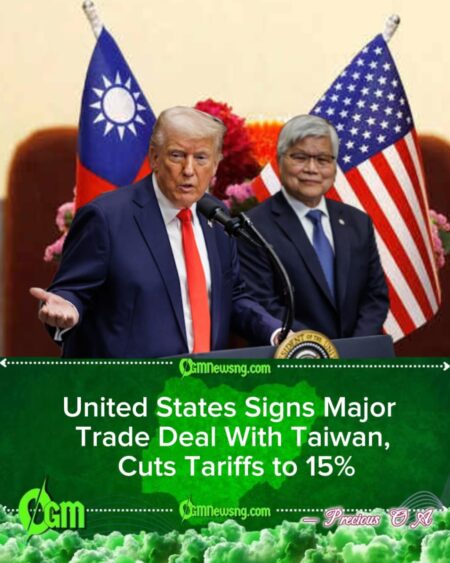
United States officials confirmed the signing of a new trade agreement with Taiwan that will reduce tariffs on certain goods to 15 percent, marking a significant development in bilateral economic relations. The agreement also includes commitments from Taiwan to remove what negotiators described as “99 percent” of existing trade barriers affecting American exports.
United States representatives framed the deal as a mutually beneficial arrangement designed to strengthen supply chains, enhance market access, and expand commercial ties between the two economies. The announcement emphasized projected gains for American manufacturers, agricultural producers, and technology firms.
The agreement comes amid broader efforts to diversify trade partnerships and reduce vulnerabilities in key industries. Trade analysts note that Taiwan occupies a strategic position in global semiconductor production and advanced manufacturing.
Key Provisions of the Agreement
United States negotiators highlighted the reduction in tariff rates as a central feature of the pact. Lowering duties to 15 percent is expected to ease cost pressures on certain imports and provide greater predictability for businesses operating across the Pacific.
United States officials also pointed to Taiwan’s pledge to purchase $84 billion worth of American goods over a defined period. These purchases are expected to include agricultural products, energy exports, industrial equipment, and advanced technologies.
The removal of “99 percent” of trade barriers, as described in official statements, covers regulatory restrictions, licensing requirements, and quota limitations that previously affected U.S. exporters. Implementation details will likely determine how quickly companies experience tangible benefits.
United States Trade Strategy and Regional Context
United States policymakers have increasingly prioritized economic partnerships in the Indo-Pacific region. Strengthening ties with Taiwan aligns with broader goals of reinforcing economic resilience and supporting strategic industries.
United States trade policy in recent years has balanced tariff adjustments with negotiated commitments aimed at expanding export opportunities. Supporters argue that targeted agreements can both protect domestic interests and enhance global competitiveness.
The regional context adds complexity to the agreement. Taiwan’s position in global technology supply chains, particularly in semiconductor manufacturing, makes trade policy toward the island both economically and geopolitically significant.
Economic Implications for Both Sides
United States officials estimate that expanded market access could benefit farmers, energy producers, and manufacturing firms seeking growth in Asian markets. Increased export volumes may contribute to job stability in sectors tied to international trade.
United States analysts caution, however, that purchase commitments depend on sustained demand and market conditions. Large headline figures often reflect projected volumes over multiple years rather than immediate transactions.
For Taiwan, reduced tariff exposure may help stabilize export costs and strengthen trade flows with a key partner. The island’s export-driven economy relies heavily on predictable trade relationships to maintain growth.
Political and Legislative Considerations
United States lawmakers are expected to review elements of the agreement, particularly provisions involving long-term purchase commitments and tariff schedules. Congressional oversight often shapes how trade agreements are implemented and monitored.
United States trade authorities may also need to coordinate regulatory adjustments to align domestic law with new commitments. Such processes can involve consultation with industry stakeholders and public comment periods.
Trade agreements frequently generate debate regarding their distributional effects. While export-oriented industries may benefit, critics sometimes raise concerns about domestic sectors facing increased competition.
Broader Strategic Outlook
The deal underscores an ongoing shift toward targeted bilateral arrangements rather than sweeping multilateral frameworks. Policymakers argue that focused agreements allow for tailored provisions addressing specific economic priorities.
Observers note that economic engagement often intersects with broader diplomatic considerations. Trade ties can reinforce political relationships, but they may also draw scrutiny from other global actors monitoring regional developments.
As implementation begins, attention will turn to measurable outcomes: export growth, tariff compliance, and the fulfillment of purchase commitments. The agreement’s long-term impact will depend not only on its written terms but also on how effectively both sides execute and sustain their obligations.
Table of Contents
Discover more from OGM News NG
Subscribe to get the latest posts sent to your email.