









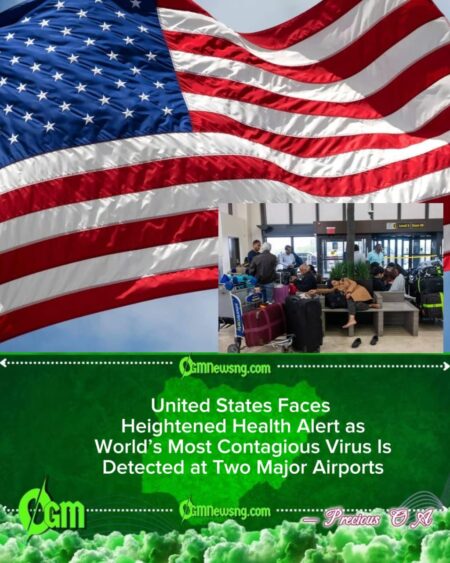
United States public health authorities confirmed this week that the world’s most contagious virus has been detected at two major international airports, triggering an immediate escalation of surveillance, screening, and emergency preparedness protocols. The discovery, made through routine traveler testing and wastewater monitoring, has placed federal and state health agencies on high alert as officials race to prevent wider domestic transmission.
Health officials say the detection was not linked to a single large outbreak but rather to multiple isolated travel-related cases that were flagged through enhanced monitoring systems. These systems were quietly expanded in recent months to track early warning signals at major travel hubs, particularly those handling high volumes of international passengers.
United States airport administrators have since activated incident response plans, coordinating closely with the Centers for Disease Control and Prevention to ensure rapid identification, isolation, and follow-up testing of travelers who may have been exposed. Authorities stress that early detection has significantly improved the chances of preventing broader community spread.
How the Virus Was Detected
Wastewater surveillance at terminal facilities first raised red flags when viral markers were identified in samples collected from restroom systems servicing international arrival areas. Follow-up testing of select passengers then confirmed the presence of the virus in multiple individuals arriving on different flights.
United States laboratory teams were able to sequence the viral samples within hours, confirming that the strain matched variants known for extremely high transmissibility. This allowed officials to quickly assess risk levels and determine which international routes required intensified screening.
Health departments also began contact-tracing procedures, notifying potentially exposed passengers and recommending testing and temporary self-monitoring. Officials emphasized that these measures are precautionary and are designed to stay ahead of any possible escalation.
Why This Virus Raises Concern
United States medical experts describe the virus as one of the most contagious pathogens ever documented, capable of spreading rapidly in enclosed and crowded environments such as airport terminals, aircraft cabins, and public transportation systems.
The virus is known to transmit easily through respiratory droplets and close contact, making busy travel corridors especially vulnerable to rapid amplification events if detection is delayed. This is why airports have become a central focus of early-warning monitoring programs nationwide.
Public health specialists note that while many infections may be mild, the virus can pose significant risks to immunocompromised individuals, older adults, and those with underlying respiratory conditions, which adds urgency to containment efforts.
Immediate Federal Response
Federal agencies moved quickly after confirmation, issuing guidance to airport operators, airlines, and border health units outlining expanded screening and sanitation requirements.
United States officials authorized additional on-site medical staff at the affected airports, ensuring that any traveler displaying symptoms can be evaluated immediately without disrupting airport operations or causing panic among passengers.
The Department of Transportation has also advised airlines to enhance onboard sanitation procedures and to review ventilation and filtration systems, further reducing the potential for in-flight transmission.
Measures at Affected Airports
United States airport authorities began deploying thermal scanners, symptom-screening questionnaires, and targeted testing programs in arrival halls within hours of confirmation. Enhanced cleaning teams were also mobilized to disinfect high-touch surfaces, restrooms, seating areas, and boarding gates.
Information booths have been set up to provide travelers with health guidance, symptom awareness materials, and instructions on what to do if they feel unwell after travel.
Local health departments are coordinating with airport management to ensure rapid data sharing, which allows authorities to respond quickly if additional cases are identified.
Public Health Messaging
United States health leaders have emphasized that the detection does not signal a national emergency but rather demonstrates that surveillance systems are working as designed. Officials stress that transparency and early response are key tools for preventing widespread outbreaks.
Travelers are being advised to maintain good hygiene, wash hands frequently, and seek medical advice if they experience symptoms after travel. Airlines are also reminding passengers to stay home when sick and to use provided sanitation materials onboard.
Public health campaigns are now being refreshed across digital and broadcast platforms to reinforce awareness without causing unnecessary alarm.
What Travelers Should Know
United States authorities encourage travelers passing through major airports to remain alert to posted health notices and to cooperate with screening procedures. These steps are meant to protect both passengers and airport staff while maintaining the smooth flow of travel.
Passengers who recently traveled through the affected airports are advised to monitor their health for several days and to consult healthcare providers if symptoms appear, even if mild.
Officials reiterated that early reporting of symptoms significantly reduces the risk of further spread and ensures timely care.
Looking Ahead
United States health agencies say they will continue expanding airport-based surveillance programs to additional travel hubs in the coming months, strengthening the country’s ability to identify emerging health threats early.
Data from the current response will be used to refine screening algorithms, improve contact-tracing speed, and enhance coordination between federal and local health authorities.
Experts believe that continued investment in early detection systems will play a critical role in preventing future outbreaks and maintaining public confidence in national travel safety.
Ongoing Monitoring
United States officials confirmed that daily reporting, testing, and environmental sampling will continue at the affected airports until health authorities are confident that transmission risks have been fully contained.
Regular public updates will be issued to keep travelers informed and to ensure transparency throughout the monitoring process.
For now, authorities say the situation remains under control, with preparedness measures designed to stay ahead of any potential spread while keeping national travel operations running safely and efficiently.
Table of Contents
Discover more from OGM News NG
Subscribe to get the latest posts sent to your email.