









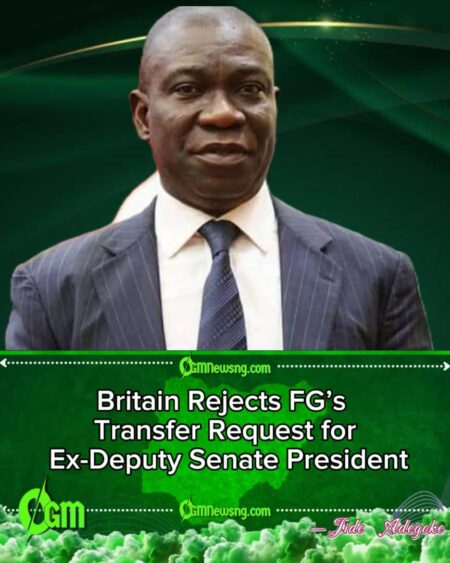
The United Kingdom UK has formally declined Nigeria’s request to have former Deputy Senate President, Ike Ekweremadu, transferred home to complete his remaining prison sentence. Ekweremadu, who was convicted in 2023 for conspiring to facilitate the exploitation of a young man’s kidney, is currently serving a nine-year, eight-month sentence in a UK correctional facility. The British government’s refusal marks a significant setback in diplomatic efforts aimed at securing his return under prisoner-transfer arrangements.
Ekweremadu: UK Rejects the Federal Government’s Request for His Transfer
The UK authorities stated that their decision is rooted in the country’s legal framework governing prisoner transfers, which requires strict evaluation of eligibility, risk, and compliance with international criminal justice standards. According to United Kingdom officials, Ekweremadu does not meet the criteria required to qualify for repatriation under existing bilateral arrangements.
The rejection also reflects the gravity with which the UK justice system views organ trafficking offences. British officials emphasized that the sentence, handed down after a widely publicized trial in 2023, must be served in accordance with United Kingdom law to reinforce global commitments against human exploitation. The ruling thus closes the door, at least for now, on Nigeria’s diplomatic request for leniency through prisoner relocation.
Ekweremadu: UK Rejects the Federal Government’s Transfer Bid Amid Ongoing Sentence
Nigeria’s request, initiated through the Ministry of Foreign Affairs and supported by legal representations, argued that Ekweremadu could serve the remainder of his term in a Nigerian correctional facility without undermining the sentence’s integrity. Officials cited humanitarian, political, and domestic oversight considerations. However, the British Home Office maintained that the UK must retain jurisdiction over offenders convicted within its territory.
The development has triggered renewed discussion on the limits of diplomatic influence when criminal convictions occur abroad. Legal analysts note that while such transfer requests are not unusual, success often depends on the nature of the offence, bilateral treaty obligations, and the convict’s compliance with eligibility conditions. With this refusal, Ekweremadu is expected to remain in the United Kingdom system until he becomes eligible for parole or completes his full term.
Table of Contents
Discover more from OGM News NG
Subscribe to get the latest posts sent to your email.