









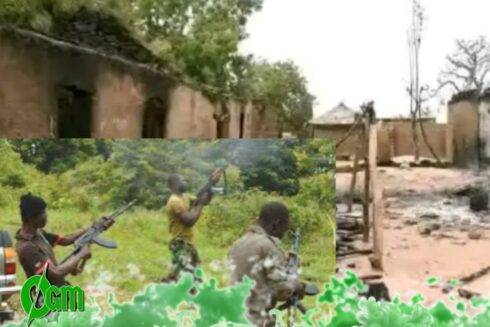
Between the night of Friday, June 13, and the early hours of Saturday, June 14, 2025, the quiet village of Yelewata in Guma Local Government Area of Benue State was thrown into chaos and mourning following a deadly and coordinated assault. Eyewitnesses described scenes of horror as heavily armed attackers descended on the community, setting homes ablaze and opening fire indiscriminately on residents attempting to flee.
According to Amnesty International Nigeria, the attack left at least 100 people dead, with many still missing and more than a hundred others injured. Dozens of homes were burned to the ground, with entire families trapped and incinerated in their rooms. Survivors who managed to escape described the chilling cries of women and children consumed in flames. The local police confirmed the incident but declined to disclose official casualty figures, citing ongoing investigations.
–Possible Motives and Broader Conflict in the Benue state communities
Though no group has taken responsibility for the massacre, security experts and local observers believe the attack is yet another manifestation of the persistent and bloody farmer–herder conflict that has plagued Benue State for years. The crisis—fueled by competition over land, grazing routes, and water—has repeatedly turned deadly, with rural communities often caught in the crossfire.
This latest incident is not isolated. In early May 2025, Gwer West LGA of Benue state! witnessed a similar bloodbath when gunmen killed at least 20 villagers. Earlier this year, communities in Katsina-Ala LGA suffered fatal attacks, resulting in the deaths of more than a dozen residents. Most of these incidents, authorities suspect, were carried out by heavily armed herders clashing with farming communities over access to land and resources.
The cyclical nature of these assaults points to deep-seated structural issues—land ownership disputes, weak enforcement of security, and an absence of long-term mediation—worsened by the proliferation of small arms and the growing influence of criminal elements.
Benue State Government Response and Security Measures
Reacting to the tragedy, Governor Hyacinth Alia of Benue State strongly condemned the massacre, describing it as a “heinous and senseless act of terror against innocent citizens.” On Sunday, June 15, Governor Alia revealed that special tactical teams and response squads have begun arriving in the state to reinforce security and protect vulnerable communities.
In a statement issued by his Chief Press Secretary, Mr. Tersoo Kula, the governor confirmed that more joint security operations were being mobilized across the state. “The Benue State government is not relenting in its commitment to defend lives and property,” he said, noting that efforts were underway to strengthen collaborations with federal forces, community leaders, and traditional institutions to prevent further attacks.
The deputy governor, Mr. Sam Ode, also visited Yelewata to sympathize with victims and assess the extent of the destruction. Governor Alia appealed to the public to report suspicious movements and maintain calm, while urging religious and political leaders to discourage inciting confrontations that could escalate tensions.
🔍 Humanitarian Needs and Challenges on the Ground
Beyond the death toll, the Yelewata attack has left behind a trail of devastation: hundreds of displaced families, destroyed homes, and a traumatized population with little access to immediate medical care or shelter. Many survivors are now camped in makeshift locations, lacking food, clothing, and medical supplies. The already overstretched local healthcare system is struggling to cope with the influx of wounded and displaced persons.
The lack of a coordinated emergency response and long-term recovery plan continues to hamper relief efforts in Benue State communities. While the governor’s office has sent a delegation to support the affected communities, aid groups have called for urgent federal and international assistance to address the humanitarian fallout.
The challenge is compounded by chronic underfunding of security forces in the region, and the Benue state’s limited capacity to provide social services in conflict-affected rural areas. Without sustained intervention, experts warn, Yelewata and other vulnerable communities may remain at risk of further violence.
–A Call for Peace and Lasting Solutions in Benue State
The massacre in Yelewata marks one of the deadliest attacks in Benue’s recent history and is a grim reminder of the state’s deepening security crisis. The failure to resolve the farmer-herder clashes and the slow pace of justice have contributed to growing frustration and fear among local populations.
Governor Alia has reaffirmed his administration’s resolve to pursue peace and security through strategic dialogue, intelligence-sharing, and stronger inter-agency cooperation. However, analysts stress that only a holistic approach—combining community reconciliation, enforcement of anti-open grazing laws, sustainable land reforms, and improved intelligence infrastructure—can offer a permanent solution.
As the people of Yelewata bury their dead and begin the painful journey of rebuilding their lives, the urgent call echoes louder than ever: Benue State needs peace. And it needs it now.
Table of Contents
Discover more from OGM News NG
Subscribe to get the latest posts sent to your email.