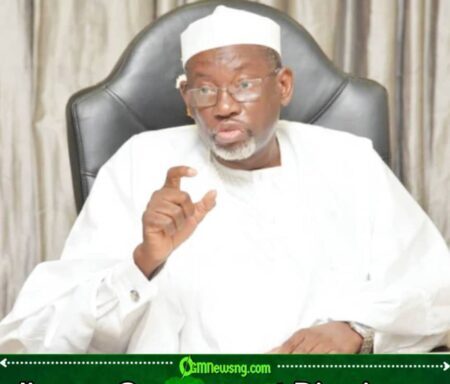






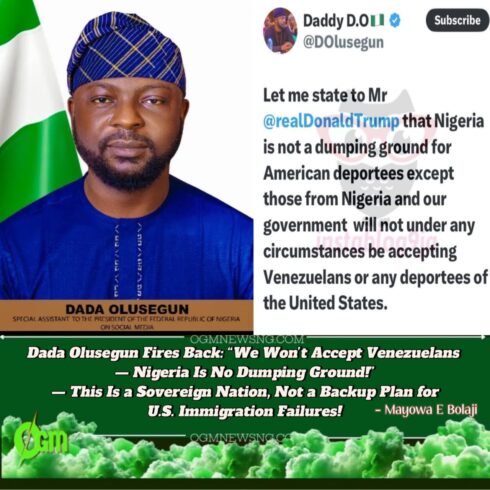
Dada Olusegun, a prominent aide to President Bola Ahmed Tinubu, has stirred diplomatic waters following bold comments rejecting alleged efforts by the United States to deport Venezuelan nationals into Nigeria. In a fiery post on X (formerly Twitter), Dada addressed what he called “backdoor coercion,” warning the U.S. against even attempting to reroute non-Nigerian deportees into West Africa’s largest economy.
“Let me state to Mr. @realDonaldTrump that Nigeria is not a dumping ground for American deportees, except those from Nigeria,” Dada’s statement read, sending political shockwaves across social media and diplomatic circles. His words sparked immediate global attention, setting the stage for a potential standoff between Abuja and Washington.
U.S.–Nigeria Relations Face Strain Over Deportation Politics
The alleged U.S. pressure to redirect Venezuelan deportees into Nigerian territory has caused an uproar among policy experts and civil society groups. While no formal communication has been made public, insiders suggest ongoing bilateral negotiations involving U.S. Homeland Security and Nigerian immigration officials, which may have triggered Olusegun’s statement.
This latest development could undermine U.S.-Nigeria relations, especially in the context of increasing geopolitical tension and rising anti-immigration sentiment in Western countries. Nigeria, already burdened with internal displacement, economic strain, and regional instability, is in no position to take on foreign deportees with no ancestral or legal ties to its soil.
Venezuelan Deportee Allegation: A Misstep or a Test of Sovereignty?
Dada Olusegun’s words may also serve as a firm assertion of Nigerian sovereignty, especially as African countries face growing external pressure to absorb migrants and asylum seekers rejected by Western nations. Critics have called the deportation policy a veiled form of neocolonialism, with developing nations being forced to shoulder problems created elsewhere.
The Venezuelan angle, specifically, raises serious legal and ethical concerns. What linkage exists between citizens of South America and the Federal Republic of Nigeria? None—yet rumors of forced relocation agreements persist, suggesting either a gross misunderstanding or deliberate testing of Nigeria’s diplomatic resolve.
Nigerians React: “Let Them Go Home!” Trends Nationwide
Social media erupted shortly after Dada Olusegun’s post, with hashtags like #NigeriaIsNotADumpingGround, #KeepYourDeportees, and #RespectOurBorders topping Nigerian Twitter trends. Many users applauded the boldness of the statement, calling for increased immigration scrutiny and foreign policy transparency.
However, some civil rights advocates urged caution, warning that aggressive rhetoric could escalate tensions with the U.S. and disrupt aid, investment, and visa arrangements. Nonetheless, the majority sentiment favored Olusegun’s stance, with many describing it as a long-overdue pushback against Western imposition.
Historical Context: Dumping Deportees in Africa Is Nothing New
Historically, African nations have been the unwilling recipients of migrants and deportees from Europe and the U.S., often under dubious agreements or emergency clauses. Libya, Ethiopia, and Rwanda have all faced similar situations where non-African migrants were forcibly relocated to their territories in exchange for financial compensation or political concessions.
Dada Olusegun’s fiery rejection of such tactics reawakens the debate around African agency in international policy decisions. Nigeria, as a regional power, appears poised to take a stand that could embolden other nations to reject exploitative migration deals dressed as humanitarian efforts.
What’s Next? Eyes on the U.S. State Department
As of this report, there has been no official response from the U.S. State Department regarding the allegation or Dada Olusegun’s public statement. Analysts believe that Nigeria’s bold rejection might force the U.S. to clarify its deportation strategy or risk further diplomatic tension.
Meanwhile, the Tinubu administration has yet to release a formal communiqué, but sources close to the presidency confirm that internal consultations are ongoing. All eyes are now on both Abuja and Washington as the world watches to see whether this turns into a full-blown diplomatic standoff or a quietly resolved misunderstanding.
Table of Contents
Discover more from OGM News NG
Subscribe to get the latest posts sent to your email.