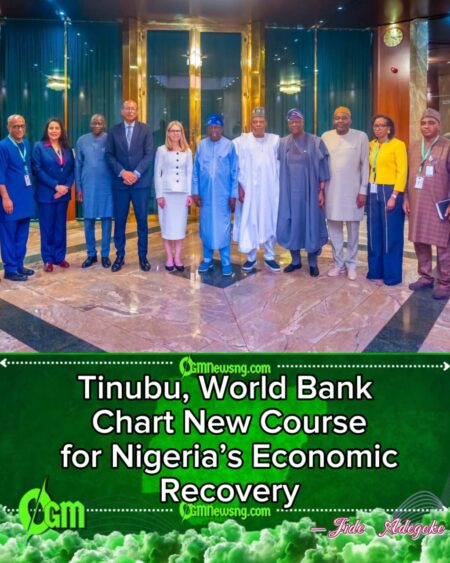
President Bola Ahmed Tinubu on Monday received a high-level delegation from the World Bank at the State House, Abuja, in a meeting focused on Nigeria’s economic reforms, development financing, and strategies for inclusive growth. The visit underscored the continuing partnership between Nigeria and the Bretton Woods institution as the country pursues fiscal stability, poverty reduction, and expanded social investment. Discussions centred on ongoing reform programmes, energy transition, human capital development, and measures to strengthen investor confidence in Africa’s largest economy.
Strengthening Economic Reforms and Fiscal Stability
President Tinubu used the meeting to reaffirm his administration’s commitment to difficult but necessary economic reforms aimed at stabilising public finances and restoring macroeconomic balance. Tinubu told the delegation that policies introduced in the last year—including subsidy reforms and tax restructuring—were designed to create a more resilient economy capable of attracting long-term investment. According to him, government remains focused on protecting vulnerable citizens while ensuring that public resources are deployed more efficiently.
World Bank representatives commended Nigeria for the progress recorded so far, noting that the reforms had begun to yield positive signals in revenue growth and transparency. They emphasised the importance of sustaining the momentum through improved governance, expansion of the tax net, and targeted social programmes. Both parties agreed that consistent policy implementation would be critical to achieving measurable improvements in living standards.
Investment in Human Capital and Infrastructure
Another major highlight of the engagement was the need for increased investment in education, healthcare, and critical infrastructure. The World Bank delegation stressed that Nigeria’s youthful population remained its greatest asset and that greater funding for skills development would unlock productivity across sectors. They expressed readiness to support programmes that enhance digital literacy, primary healthcare delivery, and agricultural value chains.
President Tinubu, in response, outlined government plans to prioritise power supply, transportation networks, and food security as pillars of national development. He assured the visitors that Nigeria was open to innovative financing models and public-private partnerships capable of accelerating infrastructure delivery. The discussions also touched on climate-smart agriculture and renewable energy as tools for sustainable growth.
Deepening Partnership for Inclusive Growth
Both sides described the meeting as productive and forward-looking, with agreements to strengthen collaboration in poverty reduction and job creation. The World Bank pledged continued technical and financial support for programmes that directly impact ordinary Nigerians, particularly women and rural communities. Emphasis was placed on accountability mechanisms to ensure that development funds achieve intended outcomes.
Closing the session, President Tinubu reiterated Nigeria’s determination to remain a reliable partner to international development institutions. He noted that while challenges remained significant, the government was confident that coordinated efforts would place the country on a firmer economic footing. The delegation expressed optimism that the renewed engagement would translate into tangible benefits for millions of Nigerians.
Table of Contents
Discover more from OGM News NG
Subscribe to get the latest posts sent to your email.