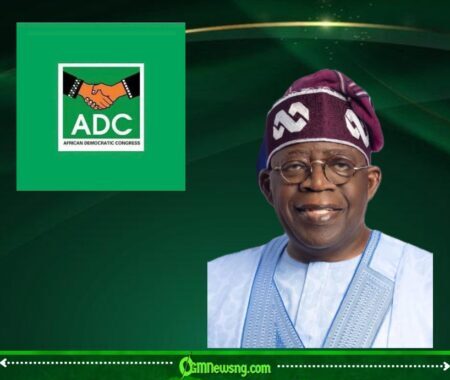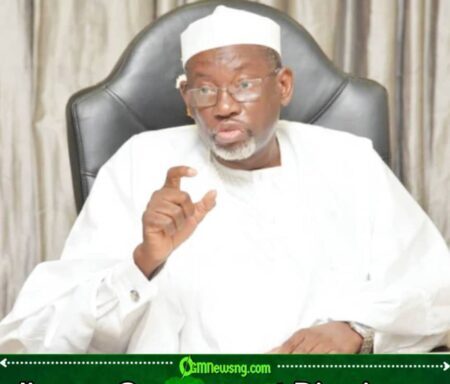

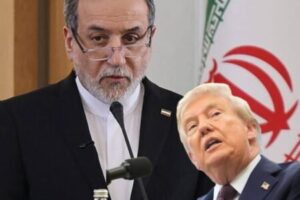

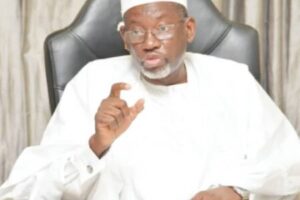


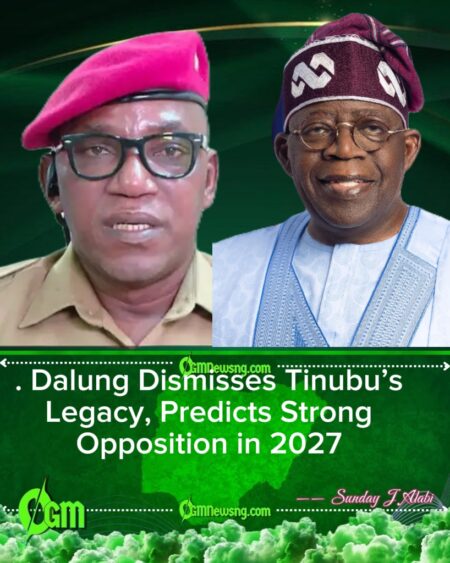
Former Minister of Sports and Youth Development, Solomon Dalung, has launched a sharp critique of President Bola Tinubu’s political standing, describing him as a “dwarf” in Nigeria’s political history. Speaking on Sunday Politics, a current affairs programme on Channels Television, Dalung argued that President Tinubu should not be compared with Nigeria’s revered political icons, insisting that true leadership is measured by legacy, service, and tangible impact on the lives of citizens.
Dalung, who served under the administration of former President Muhammadu Buhari, also used the platform to project a strong challenge to President Tinubu ahead of the 2027 general election. According to him, the African Democratic Congress (ADC), recently adopted by a coalition of opposition figures, has the depth and calibre of politicians capable of mounting a credible contest against the ruling All Progressives Congress (APC).
Dalung’s Critique of Tinubu’s Political Legacy
Dalung’s comments centred on what he described as the absence of a defining legacy under President Tinubu’s leadership. He maintained that Nigeria’s great political leaders earned their status through service and enduring contributions, citing figures such as Sir Ahmadu Bello, the Sardauna of Sokoto, and Chief Obafemi Awolowo as examples of leaders whose legacies continue to shape the nation’s political and social development.
According to Dalung, leadership greatness cannot be established through speculation or political branding. Instead, he said it must be demonstrated through policies and actions that directly improve the welfare of the people. He argued that until such legacies are evident, comparisons between President Tinubu and Nigeria’s historical political giants remain misplaced.
“If Tinubu is a great politician as being speculated, let us see this translated into action,” Dalung said on the programme, emphasising that history ultimately judges leaders by their service to the people rather than by political influence or electoral success alone.
ADC and the 2027 Presidential Contest
Beyond his criticism of the president, Dalung expressed confidence in the ability of the African Democratic Congress to challenge the ruling party in the next presidential election. He said the ADC’s strength lies in the diversity and experience of its membership, noting that defeating an incumbent president requires a collective and well-coordinated effort.
Dalung revealed that several prominent political figures have aligned with the ADC, making it a formidable platform for opposition politics. He stated that the party’s roster includes experienced leaders who have previously contested for the presidency or held key positions at both state and federal levels.
“So I think we have so many people to challenge Tinubu,” Dalung said, adding that even he could decide to contest and would be prepared to challenge the president. His remarks underscored a growing confidence within the opposition coalition as preparations gradually begin for the 2027 polls.
Political Heavyweights, Internal Concerns, and APC’s Response
The ADC currently houses several notable politicians, including former Vice President Atiku Abubakar; former Labour Party presidential candidate, Peter Obi; former Rivers State governor and ex-minister, Rotimi Amaechi; former Osun State governor, Rauf Aregbesola; former APC national chairman, John Odigie-Oyegun; and a former Senate President, David Mark, among others.
However, critics have cautioned that the party’s strength could also become a weakness. Some analysts argue that the ADC may face internal challenges, particularly during its presidential primary, given the number of high-profile aspirants and competing ambitions within its ranks.
The ruling APC has dismissed suggestions that the ADC poses a serious threat. Party leaders point to the APC’s control of 30 state governments and its overwhelming majority in the National Assembly as evidence of its continued dominance. Despite this confidence, Dalung’s comments reflect a broader debate within Nigeria’s political space over leadership, legacy, and the shape of opposition politics ahead of 2027.
Table of Contents
Discover more from OGM News NG
Subscribe to get the latest posts sent to your email.