








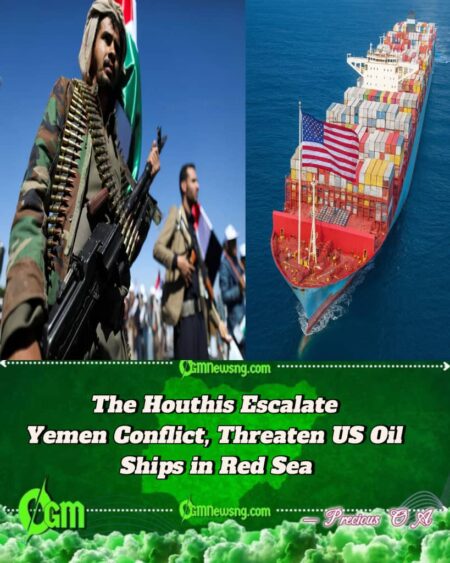
Houthis have evolved from a little-known religious-political movement in Yemen’s northern Saada province into one of the Middle East’s most formidable armed groups. Originally called Ansar Allah, the group began by opposing corruption and marginalization but has since transformed into a heavily armed faction controlling much of northern Yemen, including the capital, Sanaa.
Houthis declared on Tuesday that any U.S.-linked oil tanker transiting the Red Sea or the Gulf of Aden would be treated as a “legitimate target.” The warning marks a dramatic escalation, signaling that the group is prepared to extend its conflict far beyond Yemen’s borders and into vital international shipping lanes.
For years, the group has demonstrated increasing sophistication, deploying drones, ballistic missiles, and explosive-laden boats against Saudi-led coalition forces. Analysts say their capacity to strike at sea—once doubted by military planners—has been steadily improving, thanks in part to advanced missile and radar systems recovered from past operations.
Houthis maintain that their campaign is a direct response to what they call “American aggression” and continued U.S. support for Saudi Arabia. By threatening oil shipments, the movement is attempting to pressure Washington economically and politically, portraying itself as a champion of resistance against Western influence in the region.
Their rise has been aided by external support. U.S. and Gulf officials accuse Iran of supplying them with weapons and training, a charge both Tehran and the group deny. Yet evidence of Iranian-designed missile parts recovered from previous attacks strongly suggests that they now possess a level of technology previously unseen in Yemen’s war.
Threat Sends Shockwaves Internationally
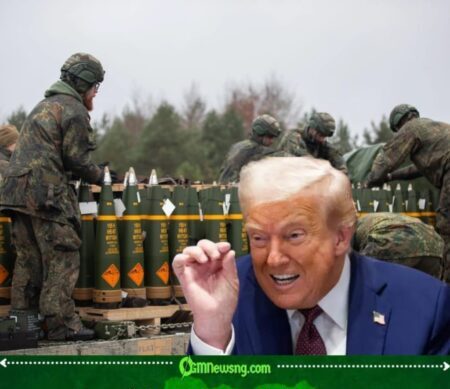
Houthis’ announcement drew swift condemnation from Washington. President Trump’s administration labeled the warning a “serious escalation” and vowed to protect American ships and interests. Senior defense officials confirmed that U.S. naval assets in the Red Sea have been placed on heightened alert, with destroyers equipped with advanced missile-defense systems repositioned to guard strategic shipping lanes.
Regional governments are equally alarmed. Saudi Arabia and the United Arab Emirates, both locked in a years-long conflict with the Yemeni group, accused it of endangering global commerce. Oman and Kuwait, which have acted as mediators in the Yemen conflict, warned that transforming the Red Sea into a battleground would jeopardize regional stability.
Houthis’ rhetoric has also unsettled global markets. International shipping companies are reassessing their routes, and insurance firms are recalculating premiums, some quoting rates double those seen just a month ago. Even the threat alone sent oil prices higher on global exchanges, reflecting the Bab el-Mandeb Strait’s critical role as one of the world’s busiest maritime chokepoints.
The United Nations has urged restraint, expressing “deep concern” about the potential for a catastrophic escalation. UN officials emphasized that Yemen’s humanitarian crisis remains one of the worst worldwide and warned that increased military action could undermine fragile peace talks between the group and other Yemeni factions.
Houthis appear to be using the international spotlight to gain leverage in negotiations. By openly challenging a major world power, they are signaling that they will not be sidelined in any settlement of the Yemen conflict. Analysts say this tactic fits a broader pattern—provocative moves to strengthen bargaining positions.
At the Center of a Global Shipping Crisis
The decision to target U.S. oil ships underscores how Yemen’s war has spilled beyond its borders and into global trade. Energy experts say the Bab el-Mandeb Strait is too critical to ignore: roughly six million barrels of oil pass through the narrow waterway daily, making any prolonged disruption a worldwide economic issue.
President Trump has reiterated that the United States “will defend its ships and its people” while hinting at possible military responses if attacks occur. At the same time, administration officials stress that diplomacy remains the preferred path, suggesting that back-channel communications may already be underway to defuse tensions.
Houthis’ warning has already had tangible effects on the industry. Shipping firms have begun quietly implementing contingency plans, including rerouting schedules and increasing onboard security personnel. Insurance firms are also reassessing risk premiums, and some maritime trade groups are pressing Washington to work with regional partners to establish a temporary “safe corridor” for oil tankers.
Global leaders, including those from the European Union and Japan, have urged restraint and called for an emergency session of the UN Security Council to address the crisis. They stress that the safety of international shipping lanes is a shared responsibility that transcends regional politics.
Houthis have achieved at least one immediate goal: drawing international attention to their cause. Whether they follow through on their threats or use them as leverage in negotiations will shape not only the future of Yemen’s conflict but also the security of one of the world’s most important maritime corridors.
Table of Contents
Discover more from OGM News NG
Subscribe to get the latest posts sent to your email.