



Small business owners and civil society organizations (CSOs) have strongly condemned the Federal Government’s plan to increase electricity tariffs for customers outside the Band A category. This follows the federal government’s disclosure that the move is aimed at improving liquidity in the Nigerian Electricity Supply Industry (NESI).
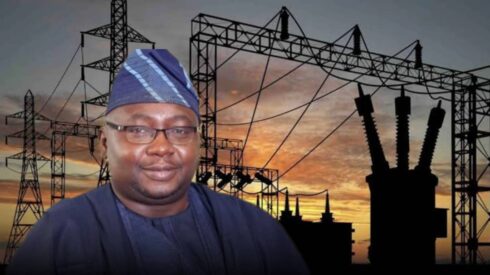
At a public presentation of the National Integrated Electricity Policy (NIEP) and Nigeria Integrated Resource Plan (NIRP) in Abuja, Minister of Power, Chief Adebayo Adelabu, stated that the government can no longer sustain the N3 trillion power sector subsidy. He also revealed that debts owed to power generation companies (GenCos) have risen to N4 trillion, making the current financial model unsustainable.
“We will look at the tariff again. I’m not saying that we’re going to increase the tariff. We will look at it and see how we can improve on our modest achievement of last year,” Adelabu said. He noted that Band B customers, who receive about 18 hours of electricity daily, currently pay N63/kWh, creating a disparity between them and Band A customers.
SMEs Fear Business Collapse Amid Rising Costs
The Association of Small Business Owners of Nigeria (ASBON) has warned that any further electricity tariff hike will force many small enterprises to shut down. According to ASBON President, Dr. Femi Egbesola, small and medium enterprises (SMEs) heavily rely on federal government-supplied electricity, and any increase in tariffs will raise production costs, ultimately leading to inflation and reduced business viability.
“Majority of SMEs are dependent on electricity supplied by the federal government, and further hike in tariff will definitely lead to inflation, low sales necessitated by high cost of production, which may ultimately lead to ailing or death of some businesses, particularly micro and small businesses, which are the most vulnerable,” Egbesola stated.
Several manufacturers have also decried the move, noting that already, about 60% of them rely on self-generated power due to the fragile national grid. The federal government estimates that transitioning from self-generation to grid-supplied power will require $29.23 billion in investment by 2035, with total investments hitting $122 billion by 2045.
CSOs Mobilize Against Proposed Hike by Federal government
Civil society organizations have vowed to resist any further electricity tariff increase, citing poor service delivery and frequent grid collapses. The Education Rights Campaign (ERC), through its National Coordinator, Hassan Taiwo, has criticized the proposal, arguing that Nigerians are still suffering from previous tariff hikes without corresponding improvements in power supply.
“Any thought of increment in electricity tariff for any band of customers will be met by a determined mass resistance of the Nigerian people. Over the past year, Nigeria has experienced almost bi-monthly incidents of power grid collapse. So, what would be the moral justification for an increase in electricity tariff when there’s no improvement in service delivery?” Taiwo asked.
He added that many businesses, hospitals, and federal government institutions, such as the University College Hospital (UCH), Ibadan, are struggling to pay electricity bills, leading to operational difficulties. CSOs have called for mass mobilization to protest against the tariff hike, emphasizing that the increase would further burden Nigerians who are already struggling with high inflation and economic hardship.
Experts Criticize Private Electricity Operators
The Movement for Socialist Alternative (MSA) has accused private electricity distribution companies (DisCos) of prioritizing profits over service delivery. According to MSA’s General Secretary, Dagga Tolar, the Band A tariff structure was designed to divide consumers and justify an eventual increase for all customers.
“For over a decade, the federal government has privatized the electricity sector, yet there has been no significant investment in power generation. Private profiteers are making billions in revenue without investing in additional megawatts for the country,” Tolar stated.
He further argued that electricity workers are among the worst-paid labor force, with most operating under casual employment. MSA called on labor unions, including the National Union of Electricity Employees (NUEE) and the Nigerian Labour Congress (NLC), to mobilize workers for mass action against the federal government’s policies.
“With inflation at 34%, the working masses are suffering. The federal government must be held accountable, and electricity should be returned to public ownership under democratic management by electricity workers and consumers,” Tolar emphasized.
NERC Unveils Customer Bill of Rights
Amid the growing controversy, the Nigerian Electricity Regulatory Commission (NERC) has introduced a Customer Bill of Rights and Obligations to protect electricity consumers and ensure fair service delivery.
According to NERC Senior Manager, Pious Bakom, consumers are entitled to clear information on electricity rates, service terms, and connection procedures. The Bill also outlines consumer obligations, including timely bill payment, allowing meter installations, and compliance with safety regulations.
NERC emphasized that its Customer Protection Regulations (CPR 2023) were introduced to align Nigeria’s electricity service standards with global best practices. The commission urged consumers to familiarize themselves with their rights to ensure transparency and accountability in the electricity sector.
As debates over the tariff hike continue, Nigerians await further clarification from the federal government on the potential impact of the proposed policy on businesses and households.
Table of Contents
Discover more from OGM News NG
Subscribe to get the latest posts sent to your email.