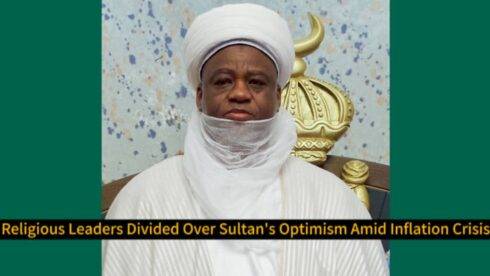
Sultan of Sokoto, His Eminence Sa’ad Abubakar III, has delivered a rare and deeply reflective message amidst Nigeria’s worsening economic conditions, declaring that “despite the hardship, there is hope for Nigeria.” Speaking during a national interfaith summit in Abuja, the Sultan acknowledged the unbearable cost of living, rising unemployment, and unchecked insecurity but insisted that the nation must not descend into despair. According to him, hopelessness is the enemy of national unity and recovery.
Sultan of Sokoto urged both the government and the governed to renew their commitment to equity, justice, and transparency. “Leadership must rise above selfishness. And the masses must rise above apathy,” he emphasized. His statement quickly sparked nationwide debate, with some hailing it as a spiritual wake-up call, while others criticized it as a tone-deaf dismissal of everyday suffering.
Religious Leaders Divided Over Sultan’s Optimism Amid Inflation Crisis
Sultan of Sokoto’s assertion of hope has created division among religious and civic leaders, some of whom argue that his message downplays the severity of Nigeria’s economic collapse. At a time when inflation has surged past 33% and basic food items have become luxuries, many clerics and civil society actors questioned whether optimism alone could put food on the table or restore lost livelihoods.
Sultan of Sokoto, however, doubled down on his stance, urging religious leaders to preach resilience and national healing, not fear and division. “If religious institutions collapse into despair, the nation has no moral compass left,” he warned. His remarks have now become a lightning rod in Nigeria’s polarizing public discourse, with hashtags like #HopeOrHunger trending across social media platforms.
Citizens React Fiercely as Sultan’s Message Sparks Online Firestorm
Sultan of Sokoto’s declaration that there is hope for Nigeria drew mixed reactions from the public, particularly on social media, where millions of frustrated Nigerians voiced their anger. While a minority praised the Sultan’s spiritual foresight and calming influence, the majority saw his message as disconnected from ground realities. “Hope can’t cook soup,” tweeted one angry user, echoing the frustration of millions grappling with economic paralysis.
The backlash intensified as videos surfaced online showing long queues for subsidized food and jobless youth protesting outside government buildings. Sultan of Sokoto’s office later released a follow-up statement, clarifying that his message was not an endorsement of the government but a spiritual appeal for national unity. Still, critics argue that symbolic hope cannot substitute for systemic reform.
Political Analysts Deconstruct Sultan’s Timing — Strategic or Spiritual?
Sultan of Sokoto’s comments have led political observers to question the timing and underlying intent of his message. With political discontent growing and the 2027 general elections already casting a shadow over national discourse, some analysts believe the Sultan’s remarks could serve as a pre-emptive stabilizer — aimed at calming a restless electorate. Others, however, suggest it was a subtle critique of the current administration cloaked in diplomatic language.
While Sultan of Sokoto has traditionally avoided direct involvement in partisan politics, his influence on the moral and cultural psyche of the nation is undeniable. Political risk consultants have noted that his statement may pressure government institutions to take the people’s plight more seriously, especially as the country risks tipping into widespread civil unrest if economic relief fails to materialize soon.
Economic Experts Demand Tangible Action Beyond ‘Hopeful Rhetoric’
Sultan of Sokoto’s optimistic message has reignited a pressing debate among economists who argue that hope without policy change is simply not enough. Nigeria’s GDP growth remains sluggish, foreign investment has stalled, and the naira continues to slide. Experts insist that unless the federal government enacts urgent reforms — including cutting waste, boosting local production, and restructuring subsidies — public confidence will erode further.
Sultan of Sokoto has responded to these criticisms by calling for a “convergence of moral and fiscal responsibility.” He urged policymakers to align governance with empathy and foresight, noting that only such a balance can lead Nigeria out of its current malaise. His moral appeal now places additional pressure on political and economic leaders to deliver measurable change.
Youth Movements Mobilize Around Sultan’s Call, But Demand Real Reform
Sultan of Sokoto’s message has inadvertently ignited a wave of youth-led civic movements who are rallying around the idea of “hope with action.” Grassroots coalitions such as FixNaijaNow and RiseUp9ja have launched digital campaigns blending the Sultan’s message of hope with demands for legislative accountability, education reform, and anti-corruption audits. They insist that hope must be followed by verifiable change or risk becoming another national slogan.
Sultan of Sokoto welcomed the civic awakening, stating that Nigeria’s youth hold the compass to the country’s future. “Hope is not passive. It is the fire that fuels resistance against injustice,” he remarked in a subsequent podcast interview. Whether his words will inspire systemic change or simply echo into the void remains to be seen, but one thing is certain — the Sultan has reshaped the national conversation.
Table of Contents
Discover more from OGM News NG
Subscribe to get the latest posts sent to your email.