





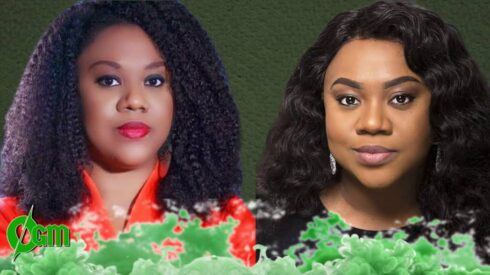
Veteran Nigerian actress and singer, Stella Damasus, has opened up about the silent struggles that many African actors face in Hollywood — a supposed land of opportunity that comes with invisible cultural gatekeeping. In a revealing interview, she expressed that African talents are often pressured to abandon their authentic voice in favor of an “acceptable” Western accent, creating a mental tug-of-war between career advancement and cultural identity.
Stella Damasus, who relocated to the United States several years ago, noted that her journey in the international film industry has not been without challenges. While the global entertainment space celebrates diversity on the surface, the reality for many African actors is a subtle form of assimilation — where being “too African” may hinder casting opportunities in mainstream productions.
Accent Policing: A Subtle Form of Erasure
According to Stella Damasus, one of the most persistent obstacles is “accent policing”, where casting directors subtly or overtly suggest that African actors must neutralize or Westernize their accent to fit into predefined roles. “They force our people to put on a particular accent,” she emphasized, revealing how this practice undermines the authenticity and depth African actors bring to their roles.
This issue goes beyond mere pronunciation — it affects the emotional truth of a performance. By insisting on an accent change, filmmakers often erase cultural nuances that could enrich a character, resulting in a watered-down portrayal of African identities. For Stella Damasus, this practice doesn’t only strip actors of their voice but also perpetuates a narrow, Western-centric view of what it means to be “global.”
Casting Bias and the “African Quota”
Stella Damasus also pointed out the existence of a perceived “African quota” in Hollywood — an unofficial limit to how many African actors can appear in prominent roles at a time. “Sometimes, you feel like there’s a box we’re all forced into,” she lamented, noting that Africans are often stereotyped into specific character types such as refugees, house helps, or war victims.
These limited roles fail to capture the full range of African experiences and talents. Despite years of experience and accolades in Nollywood, actors like Stella often find themselves overlooked in favor of newer faces who meet the Western industry’s expectations of how an African should behave, speak, or look.
Nollywood Stars in a Globalized Arena
The clash between local credibility and international acceptance is another major struggle. Stella Damasus, whose work in Nollywood spans over two decades, feels that African actors must constantly reprove themselves in foreign markets, regardless of their accomplishments at home. This harsh reset can be disheartening for many.
While Nollywood is globally recognized as the second-largest film industry by volume, many of its veterans find their resumes devalued when auditioning for Hollywood roles. Instead of being embraced as global collaborators, they are treated as cultural outsiders needing “retraining” — a sentiment Damasus strongly criticized.
A Call for Authentic Representation
Stella Damasus is using her platform to advocate for a more inclusive and respectful representation of African talent in global cinema. She emphasized the need for producers and casting agents to appreciate the depth, intelligence, and versatility African actors possess — without demanding that they fit into a Eurocentric mold.
She called on stakeholders in Hollywood to move beyond tokenism and embrace authenticity, not just in casting, but in storytelling. African actors, she argued, should be allowed to play lawyers, doctors, CEOs, and superheroes — roles that reflect the real-life diversity of African people, both on the continent and in the diaspora.
Hope, Resilience, and The Way Forward
Despite the challenges, Stella Damasus remains hopeful. She noted that progress, although slow, is beginning to show with the emergence of platforms like Netflix and Amazon Prime, which are amplifying African stories and creating space for more authentic voices in global film and television.
Her message to young African creatives is one of resilience: “Don’t lose yourself trying to fit in. Your story, your voice, your identity — that’s your power.” With more actors like her speaking up, the future may hold a more inclusive Hollywood where accents aren’t corrected but celebrated, and African talent isn’t filtered but fully embraced.
Table of Contents
Discover more from OGM News NG
Subscribe to get the latest posts sent to your email.