









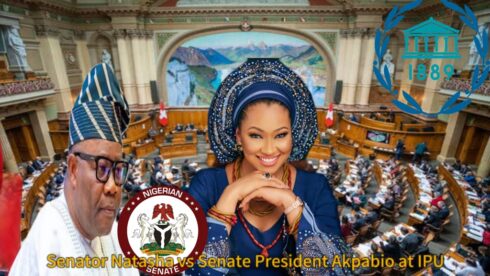
Senator Natasha Akpoti-Uduaghan was suspended from the Nigerian Senate for six months. The suspension, announced on March 6, 2025, was officially attributed to violations of Senate rules, including refusal to sit in her assigned seat, speaking without recognition, and making abusive remarks against the Senate leadership.
However, underlying this disciplinary action is a more contentious issue: Senator Natasha Akpoti-Uduaghan’s accusation of sexual harassment against Senate President Godswill Akpabio. The senator alleged that Akpabio made inappropriate advances during a visit to his residence in December 2023. Akpabio has categorically denied these allegations, and the Senate’s ethics committee dismissed the complaint on procedural grounds.
The Inter-Parliamentary Union Address: Senator Natasha Akpoti-Uduaghan’s Plea for Global Intervention
Following her suspension, Senator Natasha Akpoti-Uduaghan took her grievances to the international stage, addressing the Inter-Parliamentary Union (IPU) meeting at the United Nations in New York. In an emotional plea, she described her suspension as “illegal” and emblematic of the systemic challenges faced by women in Nigerian politics. She called for justice and intervention from global democratic institutions, highlighting her case as a reflection of the broader crisis of women’s political representation in Nigeria.
During her address, Akpoti-Uduaghan expressed concerns over her personal safety, indicating fears of potential repercussions for speaking out on such a prominent platform. Her emotional testimony underscored the gravity of her allegations and the perceived risks associated with challenging entrenched power structures within Nigeria’s political system.
Senate President Godswill Akpabio: Allegations and Denials Amidst Political Turbulence
Senate President Godswill Akpabio, a seasoned politician with a storied career, finds himself at the center of this controversy. Akpabio has vehemently denied Natasha Akpoti-Uduaghan’s allegations, labeling them as baseless and politically motivated. The Senate’s ethics committee, siding with Akpabio, dismissed the sexual harassment complaint on procedural grounds, further complicating the narrative.
Critics argue that the swift dismissal of the allegations without a thorough investigation reflects a broader issue of impunity within Nigeria’s political elite. This incident has reignited discussions about the treatment of women in politics and the challenges they face when confronting powerful male counterparts.
Legal Battles and Accusations: Senator Natasha Akpoti-Uduaghan’s Fight for Justice
Undeterred by her suspension, Natasha Akpoti-Uduaghan has initiated legal proceedings against Akpabio, seeking 100 billion naira (approximately $64,000) in damages for defamation. She contends that her suspension violates principles of natural justice, fairness, and equity, asserting that she remains a legitimate senator despite the Senate’s actions.
This legal battle has further polarized public opinion, with some viewing Natasha Akpoti-Uduaghan as a courageous whistleblower challenging systemic misogyny, while others perceive her actions as politically motivated. The outcome of this lawsuit could set a significant precedent for how sexual harassment allegations are handled within Nigeria’s political sphere.
Senate’s Stance: Upholding Discipline or Silencing Dissent?
The Nigerian Senate maintains that Senator Natasha Akpoti-Uduaghan’s suspension is solely a consequence of her misconduct and disregard for Senate rules, unrelated to her sexual harassment allegations against Akpabio. Senate Leader Bamidele Opeyemi emphasized that her actions represented a direct challenge to the Senate’s authority and violated standing orders, necessitating disciplinary measures to uphold the institution’s integrity.
However, this justification has been met with skepticism by various advocacy groups and political analysts, who argue that the suspension serves as a tactic to silence dissent and discourage other women from speaking out against misconduct. This incident has sparked debates about the balance between maintaining legislative discipline and protecting individual rights within democratic institutions.
Implications for Women’s Representation in Nigerian Politics
Senator Natasha Akpoti-Uduaghan’s suspension has cast a spotlight on the broader issue of women’s underrepresentation and marginalization in Nigerian politics. With only four women among the 109 senators, Nigeria’s legislative gender disparity is glaring. This incident underscores the systemic challenges that female politicians face, including gender-based violence, discrimination, and institutional biases.
Advocates argue that such high-profile cases deter women from pursuing political careers, perpetuating a cycle of exclusion and reinforcing patriarchal norms. Addressing these challenges requires comprehensive reforms, including the implementation of policies that promote gender equality, protect whistleblowers, and ensure that allegations of misconduct are investigated impartially and transparently.
Table of Contents
Discover more from OGM News NG
Subscribe to get the latest posts sent to your email.