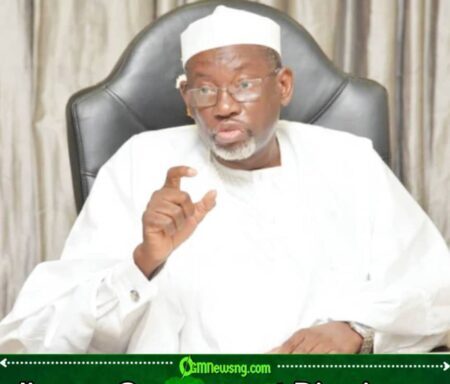





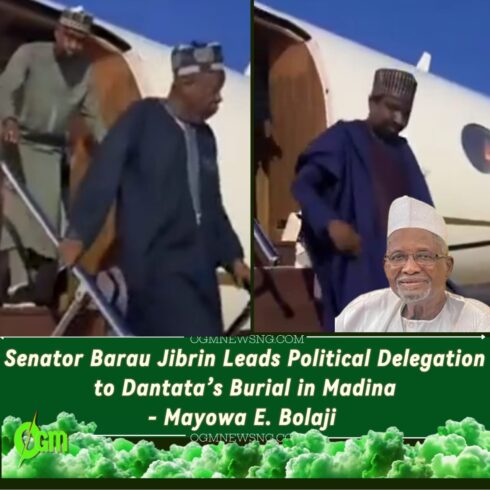
Senator Barau Jibrin, Deputy Senate President of Nigeria, arrived early Tuesday at the Prince Mohammad Bin Abdulaziz International Airport in Madina, Saudi Arabia, alongside former APC National Chairman, Dr. Abdullahi Umar Ganduje. Their mission: to attend the solemn funeral rites of prominent northern business magnate, Alhaji Aminu Alhassan Dantata. The funeral, attended by influential figures across the Islamic world, marked the passing of a man whose name shaped commerce, philanthropy, and Hausa cultural heritage.
Barau Jibrin’s presence at the burial signals more than a personal tribute—it reflects the geopolitical and socio-religious weight of Dantata’s legacy. Many observers viewed the gesture as a blend of deep reverence and subtle political positioning within Nigeria’s power corridors. The imagery of Nigerian politicians performing solemn Islamic rituals on sacred ground was not lost on a watching public already sensitized to elite travels abroad.
Ganduje and Barau Jibrin’s Unannounced Visit Stirs Diplomatic Speculation
Senator Barau Jibrin acknowledged that no prior public announcement had been made before their departure, sparking speculation about the diplomatic undercurrents surrounding the trip. Some political commentators argue that their quiet arrival was a strategic maneuver, designed to avoid domestic scrutiny amid ongoing controversies in the APC and Kano State’s evolving political scene.
Dr. Ganduje’s inclusion in the delegation was especially eye-catching. As a former APC National Chairman recently engulfed in intra-party power struggles, his public reappearance beside Barau Jibrin reignited debates about his political rehabilitation or potential resurgence. Critics argue that their presence in Saudi Arabia may double as a form of image laundering, wrapped in the solemnity of a revered elder’s funeral.
Saudi Sojourn Amid Domestic Unrest Raises Questions
Senator Barau Jibrin defended the timing of their trip, emphasizing the religious and cultural significance of paying homage to Alhaji Dantata. “This is not politics; it is about honoring a man who gave so much to humanity,” he told reporters briefly. Yet, the Nigerian public remains divided, with some questioning whether the timing was sensitive, given rising economic and security concerns back home.
As inflation continues to bite, and public universities simmer with unresolved strikes, critics argue that high-level government officials embarking on international trips—even for personal reasons—reinforce the perception of disconnected leadership. Social media has been awash with commentary calling out the optics of government elites traveling abroad while basic infrastructure and public services in Nigeria continue to decline.
Religious Diplomacy or Political Strategy?
Barau Jibrin’s frequent alignment with powerful Islamic institutions has not gone unnoticed, and the Saudi visit adds another layer to his growing religious-political profile. While he maintained that his presence in Madina was strictly spiritual, political analysts argue that appearances at events of global Islamic significance help him bolster his image among Nigeria’s Muslim electorate.
Moreover, with Nigeria’s 2027 political calendar slowly taking shape, some believe Barau is positioning himself for higher national relevance. “Whether it’s the National Mosque in Abuja or the Prophet’s Mosque in Madina, Barau knows the power of faith optics in Nigerian politics,” one northern analyst remarked. The subtle blend of faith, tradition, and politics in the Saudi visit was both strategic and symbolic.
Dantata’s Legacy and Northern Power Reconfiguration
Senator Barau Jibrin described Alhaji Aminu Dantata as a “giant of dignity, generosity, and legacy,” adding that his passing marks the end of an era for northern Nigeria. The Deputy Senate President emphasized Dantata’s role in mentoring countless entrepreneurs and shaping intergenerational business practices in the North. “We have lost more than a man—we’ve lost a model,” he said during a condolence session.
However, Dantata’s death may also accelerate shifts in the socio-political power structures in Kano and beyond. With the elder statesman gone, political gladiators are expected to jostle for symbolic succession in influence and legitimacy. Ganduje and Barau’s immediate appearance at the burial may reflect early signals of such recalibration. It’s a subtle contest for moral authority in a region where tradition still wields tremendous political capital.
APC Internal Dynamics and the Optics of Unity
Senator Barau Jibrin’s visible camaraderie with Dr. Ganduje during the trip comes at a critical moment for the APC, as the party faces renewed factional battles in Kano and internal fractures at the national level. Observers noted the optics of the two politicians moving together again after months of silence on alleged party rifts and governance misalignments.
Some party insiders suggest that the joint appearance may signal a temporary truce or a calculated show of unity in anticipation of political restructuring. “The funeral was symbolic, yes—but it was also a coded political handshake,” said a source close to the Kano APC. While the party has refrained from issuing official statements, the ripple effect of the Saudi trip could reshape internal conversations heading into the next political cycle.
Table of Contents
Discover more from OGM News NG
Subscribe to get the latest posts sent to your email.