





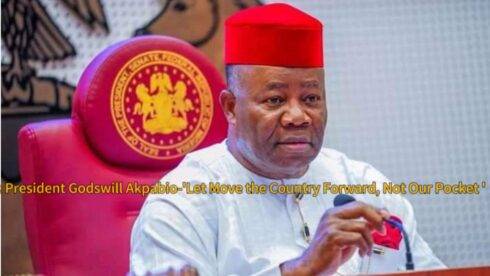
Senate President Godswill Akpabio ignited controversy as he addressed lawmakers returning to the chambers with a piercing statement: “Let’s move the country forward, not our pockets.” The bold remark, delivered during the first plenary session of the new legislative quarter, immediately struck a nerve. His rhetoric was not just a call for patriotism but a veiled indictment of recurring allegations that the Senate has evolved into a self-serving elite club.
The statement drew gasps in the gallery and silence among his colleagues, some of whom have been under the public microscope for years due to the opacity surrounding constituency allowances and lifestyle perks. Analysts say Akpabio’s choice of words signals a subtle rebellion against the entrenched culture of excess, potentially setting the tone for a new era of legislative accountability—if his convictions hold firm.
“If we cannot lead by example, we have no moral right to legislate for the people,” Akpabio Declares
Godswill Akpabio did not stop at rhetoric; he pressed further, saying, “If we cannot lead by example, we have no moral right to legislate for the people.” In a chamber often accused of hypocrisy and double standards, this declaration landed like a thunderclap. His speech veered into dangerous territory—naming the very dysfunction many in the National Assembly would rather ignore.
The statement has reignited national debate about the astronomical allowances and questionable legislative expenses that frequently overshadow the Senate’s output. Nigerians on social media platforms, civil society organizations, and think tanks have seized on Akpabio’s words, demanding a practical roadmap toward fiscal discipline. With inflation and debt weighing heavily on the nation, citizens argue the time for virtue-signaling is over.
“Some of us have forgotten we are servants, not monarchs,” — Akpabio Points to Disconnect
“Some of us have forgotten we are servants, not monarchs,” Godswill Akpabio continued, voicing what many Nigerians have long felt but few leaders admit. His statement alludes to the imperial demeanor and entitlement that has become synonymous with many members of the legislative arm. Lavish motorcades, foreign trips, and five-star retreats have drawn growing outrage from citizens barely surviving on minimum wage.
The disconnect between the lawmakers and the Nigerian people appears more severe than ever. Akpabio’s speech, though brave, could set off internal Senate tensions. There is growing speculation that several Senators are uneasy with this sudden moral crusade, especially those whose wealth and influence are directly tied to the systemic rot Akpabio now condemns. Political watchers predict factional power plays could emerge in response.
“No meaningful reform will happen if we continue this charade,” Akpabio Warns
“No meaningful reform will happen if we continue this charade,” Godswill Akpabio asserted, acknowledging a bitter truth: that the system is deeply broken. His use of the word “charade” raised eyebrows—suggesting that some legislative processes are mere window dressing, serving no real national purpose. It was a public acknowledgment of what watchdogs like SERAP and BudgIT have documented for years.
From inflated budgets to ghost projects and legislative duplication, the Senate’s image has suffered persistent credibility damage. Godswill Akpabio’s acknowledgment is significant, but critics insist that without concrete legislative overhauls—such as publishing expenditure records, halting frivolous spending, and reforming constituency projects—the Senate risks sinking deeper into public distrust.
“We cannot escape the eyes of the people anymore,” — Akpabio Acknowledges Growing Civil Pressure
“We cannot escape the eyes of the people anymore,” Godswill Akpabio admitted, referencing the rise of digital accountability and civic technology platforms exposing Senate excesses. Unlike the past, citizens now track motions, budgets, and spending in real time, with tools like TrackaNG revealing misappropriated constituency funds and unfulfilled project promises.
This growing civil surveillance has emboldened Nigerians to demand ethical leadership. For the first time in decades, the Senate appears cornered between its historic impunity and modern transparency. Akpabio’s remarks are timely, but he must now match them with the courage to lead reform bills, amend outdated financial practices, and face down any legislative cabal that prefers opacity.
“If this house won’t reform itself, history will remember it as a betrayal,” Godswill Akpabio Closes with Ultimatum
“If this house won’t reform itself, history will remember it as a betrayal,” Godswill Akpabio concluded, issuing what many interpret as an ultimatum to his colleagues. The language was not only grave—it was historic. It suggests that Akpabio is ready to tie his legacy to institutional reform, even if it risks alienating his political base within the chambers.
The Senate President’s closing remarks have now set the stage for a defining battle over the soul of Nigeria’s legislature. Will the Senate heed the call for genuine transparency and reform, or will it retreat into old habits masked by token gestures? The next few sessions will be watched closely, not just by Nigerians but by global observers eager to see whether this moment is a turning point or just more political theatre.
Table of Contents
Discover more from OGM News NG
Subscribe to get the latest posts sent to your email.