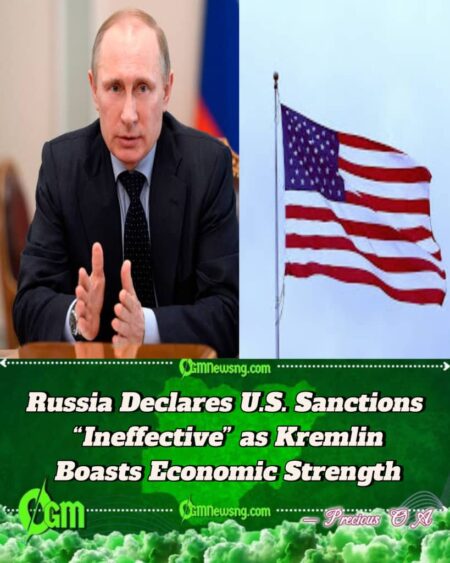
Russia — the world’s largest nation by landmass, stretching across Eastern Europe and northern Asia, and a major player in global energy supply and international geopolitics — maintains that new U.S. sanctions will not disrupt its economic stability. The Kremlin insists its economy has grown resilient over years of external pressure, making it structurally prepared to absorb restrictions without major harm, and emphasizing that national planning and long-term economic strategy have been calibrated to withstand such shocks.
Officials in Moscow argue that the sanctions, while politically aggressive, are nothing more than another attempt to weaken its global influence. They highlight that the country has spent years building alternative trade networks, strengthening domestic production, and investing in sectors that reduce dependency on Western financial systems, ensuring that external measures cannot inflict significant damage.
Russia underscores that its energy sector, particularly oil and gas exports, remains robust and continues to serve as the backbone of national revenue. Even if Western markets tighten restrictions, Moscow believes that alternative buyers, regional energy partnerships, and carefully structured financial workarounds will keep the economy afloat, minimizing the risk of economic instability.
Russia accuses Washington of using sanctions as a tool to dictate global power dynamics rather than to promote diplomacy or constructive engagement. Leaders in Moscow insist that the pressure only strengthens national unity and encourages more independent economic development, while also solidifying domestic confidence in government policies and strategic planning.
Western pressure, according to the Kremlin, risks deepening global divisions and unsettling energy-dependent regions. Moscow warns that further escalation could trigger unpredictable consequences in both geopolitical and economic systems worldwide. Officials emphasize that such unilateral measures may ultimately undermine global market stability and energy supply chains, creating ripple effects that could extend far beyond the immediate target.
Russia’s View of U.S. Strategy
Russia frames the sanctions as a calculated attempt by Washington to restrict access to critical revenue streams and weaken its global standing. The Kremlin notes that the U.S. specifically targets major Russian industries, including banking, shipping, and advanced technology, in a bid to apply economic pressure on multiple fronts simultaneously.
According to economic advisers in Moscow, these measures extend far beyond mere political disagreement. They believe the approach is designed not only to punish Moscow but also to discourage neutral or friendly nations from engaging in business with Russian enterprises, effectively isolating the country from key markets and financial networks.
Russia claims it has adapted to the reality that Western financial systems may no longer operate in its favor. Over the past years, the country has established new payment alternatives, strengthened internal production lines, expanded cooperation with nations across Asia, the Middle East, and Africa, and developed contingency plans to maintain trade even under strict sanctions.
Economic realignment has become a major talking point within the Kremlin. Officials emphasize that the push toward self-reliance is no longer a temporary measure but a deliberate long-term strategy aimed at reducing vulnerability, ensuring that Russia’s critical industries, energy sector, and domestic markets remain functional and competitive even under sustained external pressure.
Trade restrictions, they argue, often fail to produce the political outcomes expected by those who impose them. Instead, they can disrupt global markets, create new alliances, and incentivize nations to diversify trade partnerships away from sanctioning powers. Moscow believes that by resisting external coercion, Russia is positioning itself as an independent economic actor capable of withstanding foreign interference.
The Road Ahead: Economic and Global Impact
Russia acknowledges that sanctions may raise operational costs and require adjustments in trade and financial planning. However, it emphasizes that these hurdles are manageable, carefully planned for, and will not break the backbone of the economy or disrupt critical domestic industries, which remain largely insulated from Western influence.
Energy experts suggest that global oil and gas prices could fluctuate as sanctions evolve, especially if markets anticipate temporary disruptions in Russian exports. Such volatility, they note, could place pressure on consumers in Europe, Asia, and other regions, illustrating the interconnected nature of global energy markets and the limited leverage sanctions alone have in controlling outcomes.
Russia remains firm that its alliances outside the West will strengthen over time. The Kremlin is confident that trade redirection, regional partnerships, and strategic cooperation with emerging economies will offset most losses, even if it results in slightly lower profit margins in the short term. This approach, officials note, is part of a broader strategy to make the economy more resilient and globally competitive.
Russia insists that its domestic workforce, industrial capacity, and critical infrastructure will remain stable. Government officials say local industries are receiving additional support, incentives, and resources to ensure no major economic sectors collapse under sanctions pressure, highlighting that internal cohesion is central to sustaining long-term resilience.
The prevailing belief in Moscow is that resilience, national unity, and expanding international partnerships will prevent the sanctions from achieving the economic damage Washington hopes for. Analysts observe that while the immediate impact may appear limited, the strategic positioning, long-term adaptability, and global maneuvering undertaken by Russia could ensure that the country continues to thrive despite ongoing geopolitical and economic tensions.
Table of Contents
Discover more from OGM News NG
Subscribe to get the latest posts sent to your email.